
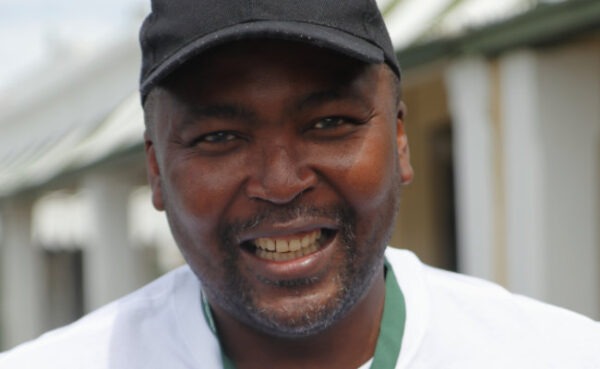
Mphuthumi Ntabeni
Mphuthumi Ntabeni is a writer.
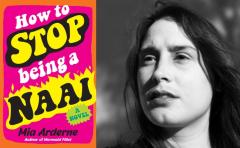
How to stop being a naai: Mphuthui Ntabeni interviews Mia Arderne
2026-10-19Mphuthui Ntabeni talks to Arderne about the inspiration behind the novel, her writing process and how she deals with family and friends who might feel that their stories could just have slipped into these pages. Then Ardene deftly turns the tables and starts asking the questions.
Mini-seminar on AI: AI-generated writing
2026-10-19"In my own opinion, the task before writers, then, is not simply to keep machines out of literature, but to preserve the human responsibilities that literature demands, whether or not machines have become part of the process."
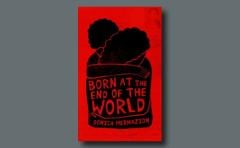
On Donica Merhazion’s Born at the end of the world: a gift from the grave of history
2026-10-14"That is a gift from the grave of history, not the promise that the dead can be restored, or that the past can be made innocent, but the knowledge that their lives need not end with them. Someone can still bear witness."
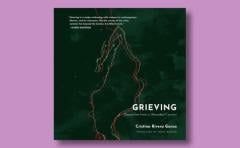
Grieving in the first person plural: Writing as we grieve, grieving as we write
2026-10-06"This latest wave of gender-based violence has sent me back to a book I read a few years ago: Cristina Rivera Garza’s Grieving: Dispatches from a wounded country, translated by Sarah Booker. I haven’t been able to put it down since."

Absalom, Absalom! by William Faulkner: a discussion
2026-09-21"Lastly, I am stupefied as to why it took me so long to read Faulkner, and am happy I began with Absalom, Absalom!. We both seem to be using the historical novel to explore how the violence of the past survives within the lives, memories and identities of later generations. Both our novels treat history as a fragmented, contested inheritance, reconstructed through memory, oral stories, silence and competing perspectives."
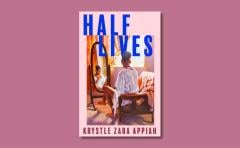
Mphuthumi Ntabeni speaks to Krystle Zara Appiah
2026-09-09Her debut novel was Rootless. Her second novel, Half lives, is the subject of this interview.
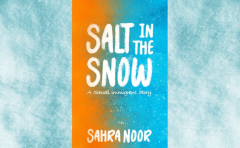
Salt in the snow by Sahra Noor: a book review
2026-09-02"Overall, it is a deeply affecting, accessible and significant memoir, with particular strength in its evocation of Somali family life, displacement, intergenerational memory and the complicated relationship between cultural inheritance and individual freedom."

PenAfrican: Before we hit the ground by Selali Fiamanya
2026-08-21"Before we hit the ground by Selali Fiamanya is a literary novel about migration, grief, memory, belonging and return. The narrative opens with a Ghanaian family in Scotland packing up a house after the death of their son, Elom. Rather than using bereavement as melodrama, Fiamanya presents grief as something embedded in ordinary life routines – the wiping of kitchen tiles, packing Tupperware, preserving photographs and deciding what belongs in storage, memory and the bin. The emotional restraint is one of the novel’s greatest strengths."

The folly of cancelling one another: Why Africa cannot afford a competition in moral purity
2026-08-12"South Africa’s recurring Afrophobic violence, meanwhile, is too often explained solely through the language of prejudice. That explanation is necessary, but insufficient."

PenAfrican: Nolan’s Odyssey and the Xhosa tradition
2026-08-10"Perhaps that is why reading Homer after university felt less like discovering a foreign classic than recognising a distant relative for me. I was not entering an unfamiliar world. I was returning to one I had known all along."
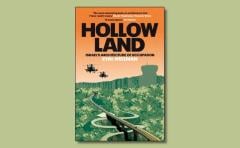
The geography of power: Hollow land: Israel’s architecture of occupation by Eyal Weizman
2026-07-22"The occupation, he insists, is not merely administered through architecture and engineering, but is the architecture of conquest."

Nuremberg: Justice, memory and the selective morality of history
2026-07-15"Nuremberg succeeds as a courtroom drama and as an exploration of the psychology of evil. It is less successful as an examination of the broader political and nationalist currents that produced Nazi Germany."
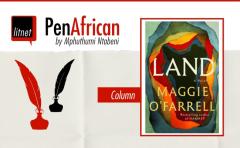
PenAfrican: Land by Maggie O’Farrell – a book review
2026-07-06"Land is among the finest historical novels of recent years: intellectually ambitious, emotionally resonant, politically alert and written with extraordinary grace. It confirms Maggie O’Farrell as one of the most accomplished novelists writing in English today."
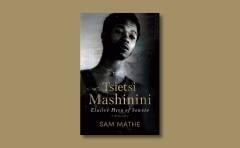
Tsietsi Mashinini: Elusive hero of Soweto on Youth Day 2026 – a sociopolitical and biographical analysis
2026-06-15"Viewed in its entirety, Mathe’s biography is ultimately a meditation on memory, political ownership and historical erasure."

PenAfrican: Taiwan Travelogue by Yáng Shuāng-zǐ – a book review
2026-06-03"In many ways, this is not merely a historical novel about Taiwan under Japanese rule, but a novel about every colonised society where the coloniser arrives convinced of their own sophistication while remaining blind to the humanity standing beside them."