

...
Memory as narrative engine is hardly new to fiction. What distinguishes Tan’s treatment is the degree to which he destabilises its authority.
...
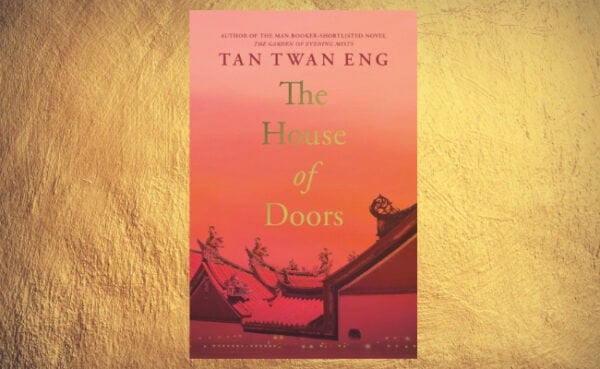
The house of doors can, at first glance, be approached as a kind of literary curiosity: a novel orbiting W Somerset Maugham, set in colonial Penang and stitched together from intrigue, memory and the faint charge of scandal. But that description is too narrow for what this novel actually does.
This is not, in any substantive sense, a novel about Maugham. It is a novel about the dangerous intimacy between storytelling and power – about who gets to narrate, who is rendered into material, and what it means to live in close proximity to artists, especially writers whose primary mode of being is observation. To be a friend, a confidant or even a passing acquaintance to such a figure is to risk a subtle form of dispossession that can be a quiet surrender of one’s own life into the verisimilitude of narrative exposure.
Here, Tan Twan Eng situates himself within a growing body of hybrid literary works – texts that blur the boundaries between fiction, biography and essay. One thinks of Julian Barnes’s Departure(s), Ben Lerner’s Transcriptions and, closer to home, Antjie Krog’s Blood’s inner rhyme. These are works preoccupied not simply with storytelling, but with its ethics – its trespasses, appropriations and quiet forms of violence. In a way, The house of doors belongs to this company.
The novel opens in a landscape of deceptive calm – colonial domesticity rendered with almost painterly ease. We are ushered into a social world that feels at once intimate and self-contained – the church bazaars, the stengahs and gin pahits, the small rivalries over melktert competitions. One of its most beautiful images arrives early: “like animals coming together at the watering hole, we gathered on the verandah for drinks” (55). The simile naturalises the scene, lending it an air of inevitability, even innocence. But it also quietly introduces the idea of instinct, of hierarchy and latent danger. This is a world so thoroughly arranged around its own comforts that it no longer perceives the structures underwriting those comforts, or the predatory colonial logic sustaining them.
Against this tropical sociability, the novel’s framing device operates as counterpoint. Lesley’s retrospective voice emerges from the austere South African Karoo – a landscape of absence rather than abundance: “I live on the shores of a different sea now, a sea of silent stone and sand” (11). At one point, she watches the morning “decanting its light down the slopes of the far mountains” (17), before noting that it is the autumn equinox, a moment of perfect balance: “The world is at an equilibrium, but I myself feel unsteady, off-balance” (17). This counterpoint – between external order and internal instability – becomes the novel’s governing rhythm. The landscape is composed, symmetrical, even serene; the subjectivity inhabiting it is anything but.
From this position of retrospective unease, the novel establishes its central anxiety, that is, the refusal of memory to remain fixed. Memory here is not archival but fluid. It drifts, distorts and resurfaces without warning, returning as sensation – heat, smell, texture – pressing against the present until it erodes its boundaries. Early in the narrative, a character reflects that a story, “like a bird of the mountain, can carry a name beyond the clouds, beyond even time itself” (11). The line operates as both consolation and warning. Stories endure – but in enduring, they detach. They travel beyond their origins, beyond their subjects and ultimately beyond the control of those who first lived them. Once told, a life no longer belongs to the one who lived it.
Memory as narrative engine is hardly new to fiction. What distinguishes Tan’s treatment is the degree to which he destabilises its authority. The novel continually reminds us that what we are reading is already mediated: Lesley remembering Maugham; Maugham observing Lesley; and beneath both, the persistent suggestion that lived experience is always being shaped into something literary. It is a hall of mirrors – but one with moral consequences.
Maugham, as rendered here, is not romanticised. He is observant to the point of intrusion, emotionally guarded and at times almost clinically detached. Even his vulnerabilities – his illness, his financial anxieties – are filtered through an unmistakable writerly instinct: the compulsion to register, to catalogue and to give himself a taste of his own medicine. His first response to crisis is not purely emotional, but observational. That detail is decisive. It signals a consciousness for whom experience is never merely lived, but always simultaneously processed as potential material. Lesley recognises this instinct, even if she cannot fully articulate it. There is a watchfulness, a withholding, in her also. She understands intuitively that proximity to a writer like Maugham entails a particular kind of exposure – not the theatrical exposure of scandal, but something quieter and more invasive: the transformational encounter of one’s life put into narrative form. This, as the novel suggests, can feel less like honour than violation.
This tension between lived experience and narrative appropriation is where The house of doors does its most incisive work. It joins a broader contemporary inquiry into the ethics of art and into the degree to which literature feeds on the lives of others – and whether that act of transformation can ever be fully innocent.
Set against the richly textured world of colonial Malaya, the novel’s descriptive precision is never merely ornamental. The houses, gardens and layered social hierarchies of Europeans, Chinese and Malays are rendered with tactile clarity. But these details do more than situate the narrative; they also construct its moral atmosphere. Surfaces are orderly, even elegant, but beneath them lies instability. The colonial setting is not simply a backdrop, but a condition that shapes what can be said, what must remain unsaid and who has the authority to speak at all.
Structurally, the novel mirrors this uncertainty. It moves between temporalities and perspectives without ever settling into a single authoritative account, always suggesting something withheld, refracted or reconfigured in the act of recollection. The narrative occupies an in-between space: part historical reconstruction, part psychological study and part meditation on storytelling itself.
What is notable is how quietly this hybridity operates. Unlike more self-consciously experimental works, The house of doors does not announce its formal ambitions. It proceeds with restraint, almost invisibly. If there is a limitation, it lies precisely in that restraint. The novel’s emotional temperature rarely rises to the point of rupture; everything is filtered through a polished, reflective distance. For some readers, this will register as elegance. For others, this emotional withholding will feel like frustrating impotency. But I think it is deliberate. This is, after all, a novel about people who do not say what they mean, about histories that resist full articulation, and about truths that surface only obliquely – in gesture and implication, rather than declaration.
What you are left with, finally, is an accumulation of atmosphere: lives conducted partly in the open and partly in concealment; stories moving across continents and decades; a writer who converts experience into fiction; and a woman who must inhabit the afterlife of that transformation. She must carry with her a sharpened sense of an unsettled past that is continuously rewritten, and the subversive nature of memory when it is negotiated, revised and revised again as an instrument of consolation.