

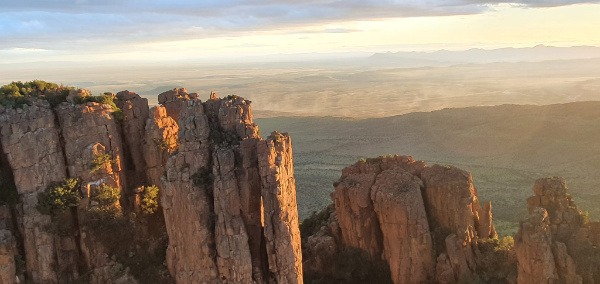
Sunset at Camdeboo National Park
...
Lauren Muller and I have finally arrived back in Cape Town after our marathon Great Karoo trip.
...
Steven Robins shared his Karoo trip on Facebook:
24 December 2022
No swimming in the sea in Durban today as the E.coli have occupied the ocean.
We have just spent two days driving through the Karoo and Eastern Cape, stopping over in Graaff-Reinet on the first night. The following day we had a guided tour with Karoo Connection’s David McNaughten of the ‘rewilding’ initiatives taking place at the Camdeboo National Park and, later in the day, we met the local Museum’s Kim Imrie.
Kim introduced us to an exhibition of an extraordinary Graaff-Reinet resident – Robert Sobukwe.
The Museum also has an exhibition on the environmental hazards of fracking put together by the German activist couple Stefan and Erika Cramer.
In this short, but jam-packed visit, we also met up with Chriszanne Janse van Vuuren, an engaging and committed local community activist of the Support Centre for Land Change, as well as the lawyer and Chair of the Graaff-Reinet Development Forum, Derek Light. Derek told us about the Forum’s ongoing infrastructural repair and maintenance work on the dam and water and waste issues in the town.
It was inspiring to witness the commitment of local residents and activists to this Karoo town.
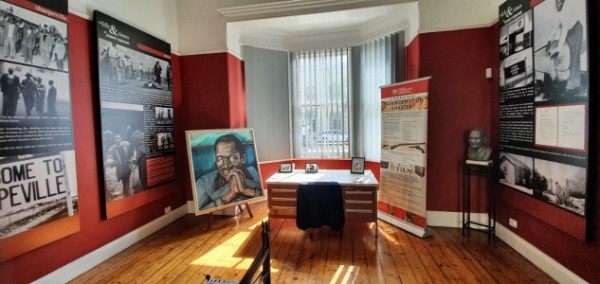
Robert Sobukwe exhibition at Graaff-Reinet
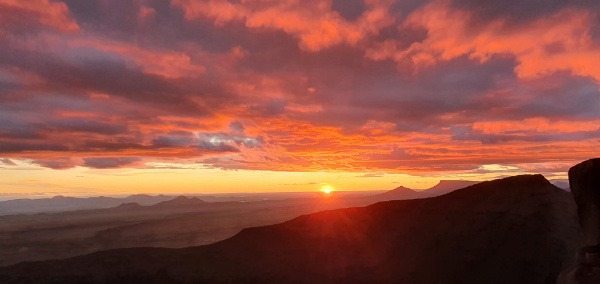
Sunset at Camdeboo National Park
2 January 2023
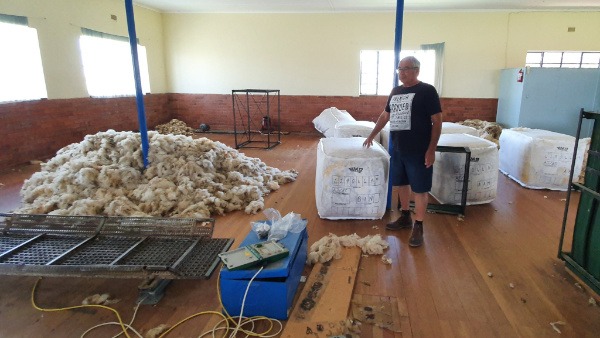
This morning I visited Wilfred Jacobsen, a third-generation Jewish sheep farmer in the small Free State town of Philippolis in the Free State. Wilfred told me that there was once quite a thriving Jewish community in this Transgariep town. He and his brother Benjamin are virtually the last of the ‘boerjoods’ in the area. We stayed two nights at Groenhuis, a guesthouse run by the wonderful hosts, Jens and Neil, and one night at Madeleine Cilliers’ very comfortable B&B in the town centre.
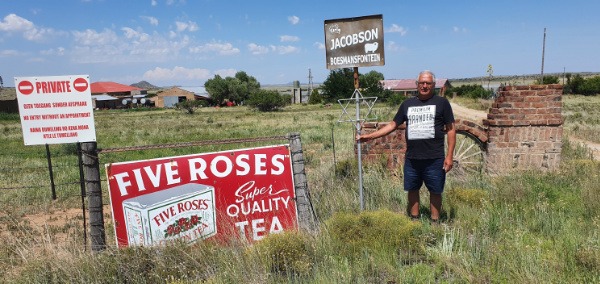
Philippolis was the 19th century Transgariep political centre of the Griqua under the Captaincy of Adam Kok II.
The Captaincy, which established itself at the London Missionary Station (LMS) in Philippolis, lasted from 1826 to 1861, when this Griqua community relocated to Kokstad. With support from the LMS’s John Philip, Kok managed to claim control of a vast area in Transgariep at a time when highly armed white farmers were increasingly intruding from the south. Tim Keegan (2016) writes that, for Philip, preserving the land for the Griqua and their followers would help to keep it out of the hands of encroaching white colonists, and thereby extend the influence of the ‘civilising mission’ of the LMS enterprise further north.
In the 1830s, Philip sought to establish a Griqua protectorate at Philippolis as part of a treaty of mutual defence and support along similar lines to the arrangement with Andries Waterboer at Griquatown to the west. These Griqua mini-states of the mid-19th century were influential in the 1850s; yet, a decade later, Adam Kok II left for Griqualand East (Kokstad) following the withdrawal of British support in the face of intense and violent pressure from land- and water-hungry Boer farmers and the OFS Republic.
This governance experiment at Philippolis ultimately collapsed, as did Philip’s dream of ‘an empire of Christian liberty' in ‘Transorangia’ (Keegan 2016:106). This brought to an end what Keegan describes as Philip’s LMS vision of an ‘empire of righteousness’ at Philippolis.

Like so many other parts of South Africa, traces of this transient moment of precarious black autonomy are few and far between in this vast landscape of white commercial sheep farming.
7 January 2023
Driving along the highway towards Calvinia, some five kilometers outside this small Karoo town, we stumbled across a memorial dedicated to Abraham Esau. We knew about Esau from the historian Bill Nasson’s fascinating writings on Esau, a pro-English ‘Coloured’ carpenter and blacksmith who gathered intelligence on Boer rebels in the Calvinia area during the South African War of 1899-1901. Esau was later brutally tortured and murdered by Boer guerrillas, and subsequently became a martyr for pro-English Coloureds in Calvinia and other Karoo towns.
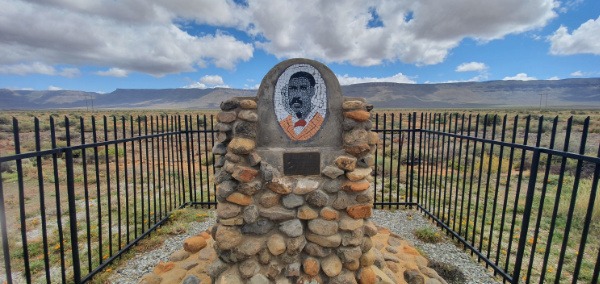
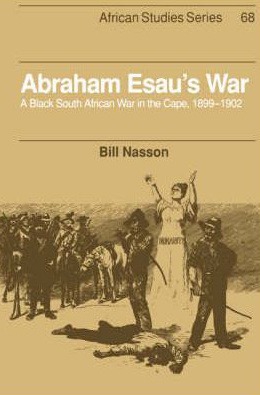 Nasson writes about how the myths and folk memory that surround Esau represent him as a ‘Coloured Englishman’ who resisted the iron grip of a dominant racist and repressive local Boer community. Nasson also sees these myths as emblematic of a neglected history of 'Coloured' allegiance to the British Empire as part of Black resistance to Boer racial domination and violent conquest.
In both his 1988 article and his 2003 book, Nasson writes against the grain of much of South African historiography by identifying the roots of Black anti-Boer resistance during the South African War in expressions of identification with imperial power. This position emerged from a belief that such an identification could protect the rights and status of Black South Africans as subjects of the British Empire. Unfortunately, this promise of protection was ultimately betrayed.
We were unable to visit the Calvinia Museum to see how the complicated and marginalised history of Black participation in the South African War is represented – this will have to wait until I visit Calvinia again in February. (See Bill Nasson, 1988, “Abraham Esau's war, 1899–190: Martyrdom, myth, and folk memory in Calvinia, South Africa” published in African Affairs, Vol. 87, No. 347, pp. 239-265); also see Nasson’s 2003, Abraham Esau’s War: A Black South African War in the Cape, 1899-1902, African Studies Series 68, Cambridge University Press).
8 January 2023
Lauren Muller and I have finally arrived back in Cape Town after our marathon Great Karoo trip.
Our last night in the Karoo was in the small town of Williston where we stayed with the knowledgeable local historian, Else van Schalkwyk.
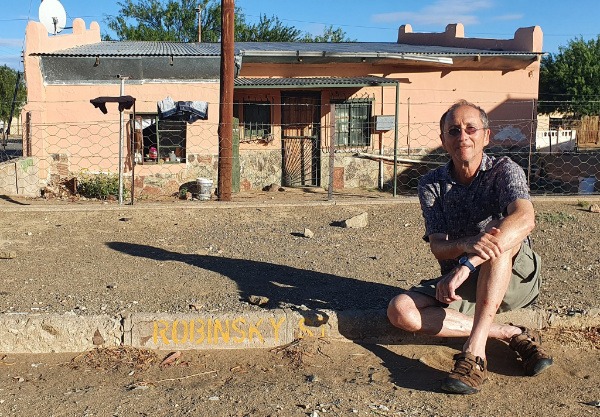
Robinsky Street in Williston
Williston is where my great-uncle Eugen Robinsky once lived.
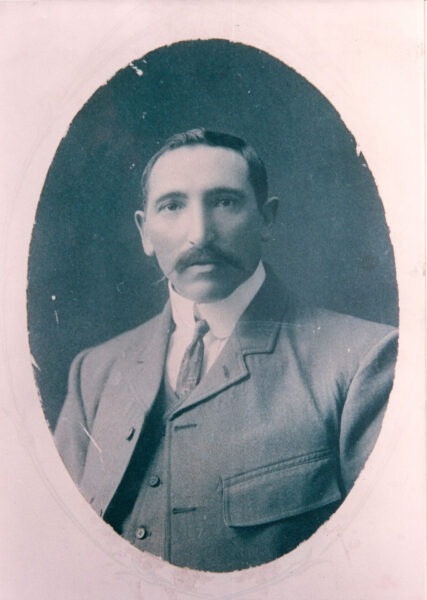
Portrait of Robinsky, n.d.
In my 2016 book Letters of Stone I write about how East European Jews such as Eugen Robinsky became part of the dominant white colonial society in small Karoo towns in the late 19th and early 20th centuries in the aftermath of brutal colonial violence and the dispossession of indigenous and ‘mixed-race’ people, including the San, Khoi, Griquas and Basters.
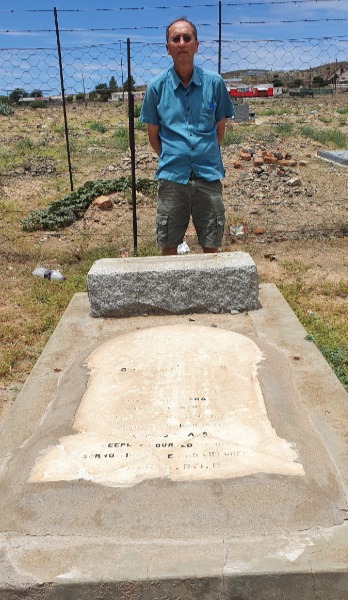
Eugen Robinsky's tombstone in Williston set horizontally to avoid a repeat of earlier acts of vandalism
Eugen had fled East Prussia in the late 1880s, and soon after his arrival he managed to insert himself in the colonial social order in Williston, first by becoming a smous, then a businessman, sheep farmer and hotel owner, and eventually he became the mayor of the town. He apparently made donations to the local Dutch Reform Church and this act of philanthropy led to the street opposite the Church being named after him. (My cousins Jill and Jos Thorne are writing a book that includes accounts of our shared ancestor Eugen).
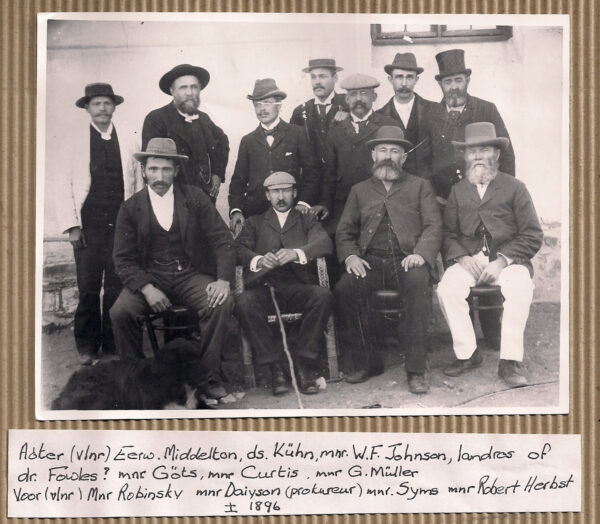
Williston's white town elders (1896)
While driving thousands of kilometres across this dry and sparsely populated region, Lauren and I tried to imagine what the landscape was like before it was so dramatically transformed by settler colonialism. Typically, the museums we visited were silent about the Black histories of violent conquest and dispossession. Lauren was struck by how most of these museum displays were arranged as distinct histories with separate rooms for white colonial culture and artefacts; displays of San and Khoi people and Late Stone Age artefacts; apartheid history and so on. None of the displays explored the unequal colonial relationships between these peoples.
Occasionally, we did come across public memorials dedicated to the complicated, and marginalised, Black histories of the Griqua, and Black participation in the South African War, for instance the memorial to Abraham Esau on the side of the road into Calvinia. But in this vast Karoo landscape, such Black histories tend to be buried beneath layer upon layer of white colonial silence, denial and hubris. These silences also obscure the historical processes of colonial violence and dispossession that directly contributed to the widespread racialised poverty so visible throughout the Karoo. The land itself, with its immense vastness and wall-to-wall commercial sheep farms, seems to collude in keeping these inconvenient truths out of sight and out of mind. There is clearly much work to be done to uncover the buried traces of these submerged pasts.
See also:
Imbongis of the Karoo: Tony Jackman talks to Chris Marais and Julienne du Toit
Seen on Facebook: The history of slavery has somehow gone beneath the radar