

For a woman who died in 1920, Olive Schreiner is having quite a year. Her unfinished novel has a new ending by JM Coetzee and an Afrikaans translation by Antjie Krog. In Cradock, new exhibitions include her letters, medicine pouch and pen case.
Nobel Prize-winning novelist JM Coetzee has written his own closing chapter for From man to man, the novel Schreiner worked on for more than 40 years without finishing. Poet and journalist Antjie Krog has translated his edited and adapted version into Afrikaans. Published by Human & Rousseau in August 2026, Van man tot man follows two sisters growing up on a Great Karoo farm. It appears a century after Schreiner’s husband first published the unfinished novel in 1926.
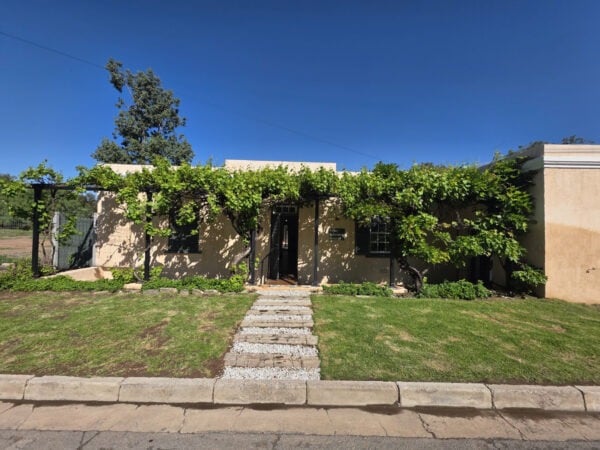
Schreiner lived at 9 Cross Street in Cradock from 1867 to 1870. Today, Schreiner House is a satellite museum of Amazwi South African Museum of Literature. New exhibitions, completed in June this year, include newly acquired objects on display for the first time. If your last visit was a school outing, you have some catching up to do.
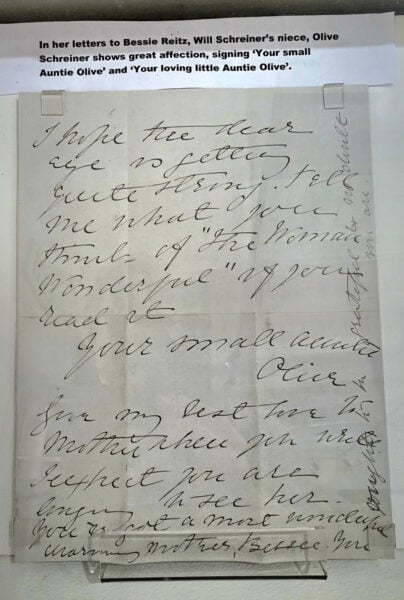
On the museum’s “Freethinker” panel, a letter to her brother Will sets out her views on who should have the vote. In 1898, she argued that every adult should have it, regardless of race, sex or wealth. Those with the least power, she believed, needed it most.
“The new exhibitions have more specific information about her life as a writer and her family,” says Liza Badenhorst, heritage officer at Schreiner House. They offer “a deeper insight into all she stood for, not just feminism”.
Badenhorst is interested in Schreiner’s belief in the connection between people and the natural world. She points readers to Waldo, Lyndall and Em in The story of an African farm, first published in 1883. “I think all she fought for is still relevant today,” she says.
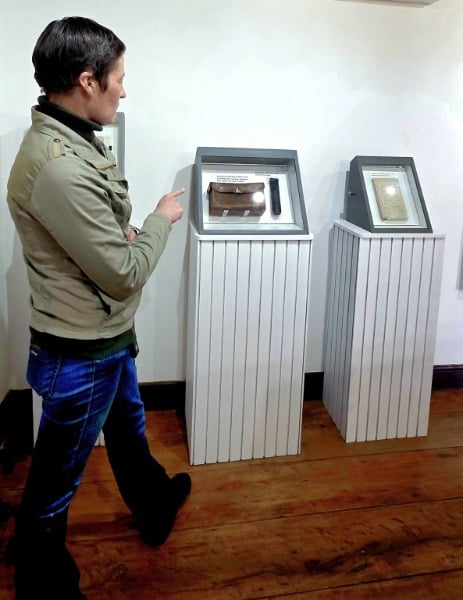
When I asked which object had helped her understand Olive better, Badenhorst chose Schreiner’s medicine pouch. The brown leather pouch once held remedies for Schreiner’s asthma. It sits beside her pen case: two small possessions belonging to a woman who had writing to do and an illness to manage. The pouch “helped me understand her in her later life, a little better,” Badenhorst says.
A QR code on the letters display directs visitors to Olive Schreiner Letters Online, where they can read transcriptions of her correspondence at home. There is something rather pleasing about reaching for a cell phone to find out what a woman born in 1855 had to say.
The museum also works with local schools. In September, Schreiner House hosted a Grade 10 Set Works Challenge. Badenhorst says the activities were designed to help learners understand the characters and stories in their prescribed texts.
Badenhorst works alongside Bulelani Matiso, the museum’s general attendant. The museum arranges transport for the events it hosts, but schools cannot always spare learners for a full day. Sometimes the museum team goes to the classroom instead.
During a September visit to Michausdal Primary School, organised with International Literacy Day in mind, Badenhorst and Matiso played alphabet and spelling games with a grade one class. Then the children read them a book. It was the adults’ turn to listen.
Schreiner House is at 9 Cross Street, Cradock/Nxuba. The museum lists weekday opening hours as 9:00 am – 3:00 pm, with visits on weekends and public holidays available by appointment.
Enquiries: schreinerhouse@amazwi.museum
Visit Amazwi’s website: https://www.amazwi.museum/schreinerhouse/
See also:
Schreiner’s legacy attracts international contributors to Cradock
Emily Hobhouse en Olive Schreiner: Twee koppiges in die Karoo