

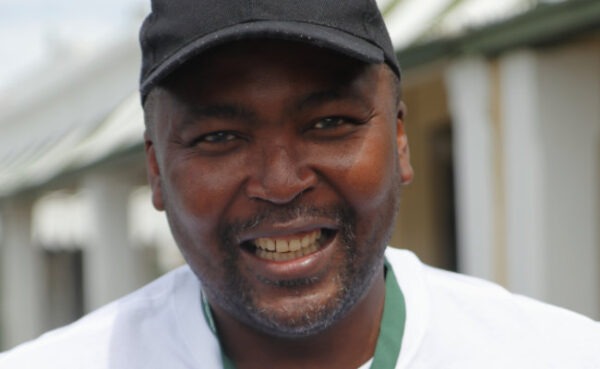
Picture of Mphuthumi Ntabeni: Izak de Vries
In the month of Human Rights Day, Naomi Meyer asks Mphuthumi Ntabeni about his views on human rights, metaphorically speaking, and about language rights and recent developments at UCT.
Below is Mphuthumi Ntabeni’s response:
I recently observed a rude interchange on social media regarding a post about the University of Cape Town recognising Xhosa as one of its official languages. The person who initiated the post was celebrating the belated (in my opinion, since Afrikaans, English and Xhosa have been official languages of the Western Cape for almost 30 years now) move by UCT. Someone with a fake blue-tick Twitter/X profile (blue ticks are now bought on X; they’re not signs of authenticity) cynically enquired what carbon dioxide is called in Xhosa. This solicited a rude reply from the owner of the status. My interest in the exchange is the condescending attitude demonstrated by the Suid Afrikanis Neanderthalensis profile, of the extinct Neander Valley people, the Neanderthals.
UCT adds isiXhosa to official list of languages https://t.co/QcjPoUEORe
— Eyewitness News (@ewnupdates) March 16, 2025
The Constitution of the Republic of South Africa, 1993 (Act No 200 of 1993), enshrines and guarantees multilingualism, and the right of individuals to use their preferred language is enshrined in the Constitution. It is often ignored and even belittled when it comes to indigenous and sign languages. Because, let us be honest, the use of language is at the shaping centre of political and socioeconomic power.
...........
The Constitution of the Republic of South Africa, 1993 (Act No 200 of 1993), enshrines and guarantees multilingualism, and the right of individuals to use their preferred language is enshrined in the Constitution. It is often ignored and even belittled when it comes to indigenous and sign languages. Because, let us be honest, the use of language is at the shaping centre of political and socioeconomic power.
.............
The use, misuse and disuse of language in our recent past as a tool of oppression, suppression and hegemonic enterprising is the reason why some people, like Liyema above, are sensitive to overtly racist, ironic questions by Suid Afrikanis Neanderthalensis.
It is pertinent that UCT chose the month of March, when we celebrate Human Rights, to make this long overdue announcement about adding Xhosa as one of its official languages. Globally, throughout the United Nations, the protection of minor or native languages is an urgent human rights issue. South African indigenous languages are not minority but majority languages, yet they’re still suppressed, especially by the hegemonic preference for English. I have nothing against English as a “language of business”. Ideally, it shouldn’t be our lingua franca, because our country has more Zulu- and Xhosa-speaking people than English.
Also read:
BAQONDE, boosting the use of African language in education: an interview with Bassey Antia
BAQONDE and multilingual education in South Africa: An interview with Lorna Carson
BELAB and mother tongue education: an interview with Mphuthumi Ntabeni