
Opinion
LitNet contributors voice their opinions about current affairs.

The removal of art at UCT: interview with Wamuwi Mbao
2016-04-26"One way to decolonise objects in a meaningful way is to let go of the Ozymandian idea that art has to last in one form, for all time, in order to have meaning or force. After fire, new things grow."

The removal of art at UCT: Marilyn Martin's response
2016-04-18"I am totally opposed to the kind of direct action that was taken in Cape Town and now in other places. It precludes discussion and I think a democracy is based on the idea that when you have differences you can talk about it … it’s fundamental …"

The removal of art at UCT: interview with Alex Dodd
2016-04-18"On a more constructive note, colonial artworks can be curated in such a way that they reveal and expose the inner workings of colonialism. They can be set in dialogue with contemporary works that bring out fresh valences in their content or they can be used as conceptual raw material for the creation of radical new artworks."

The removal of art at UCT: interview with Edward Tsumele
2016-04-14"Let the art prevail, colonial or not colonial. This is an expression of how certain artists interpreted what they saw at certain times in history."
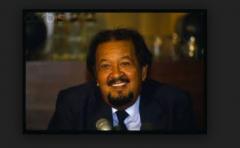
A letter by Allan Hendrickse
2016-03-16"I ask that you accept that whatever I have done, I have done in accordance with the dictates of my conscience ..."

Student protests and books to protest by
2016-03-14"Student grievances have been the subject of some of the best post-apartheid novels. These are not books that appeared briefly in print, sold a few hundred copies and disappeared without trace. They have been prescribed for school and university, reprinted many times, and translated into different languages."

The much-debated swimming excursion of the late Rev Allan Hendrickse
2016-03-08"So, did Hendrickse, who was chairperson of the Ministers’ Council in the House of Representatives at the time, and also a member of the Botha cabinet, really apologise to Botha for the swim, as is widely believed?"

Misdirected anger towards Afrikaans
2016-03-04"Why is there such lethargy and dithering on the commitment to the effective recognition and implementation of multilingual policy, especially with regard to the indigenous languages of South Africa? Why do these languages not play a central role in society in general and education in particular?"

US-konvokasie 2016: Courage, Compassion and Complexity - Reflections on the new Matieland and South Africa
2016-01-27"Ladies and gentlemen, something is brewing in South Africa. I do not know the name of that something, but I know that it is irreversible and will continue to brew and boil over, whether we give it permission to do so or not."

Jason Lloyd’s Open Letter to Redi Tlhabi
2016-01-22"Where was the evidence which suggested Van Rooyen's incompetence?"

University Seminar 2016: Achille Mbembe on the new politics of the South African student
2016-01-21"The students ... It’s a generation of people who are more and more convinced that they have been sold a lie ... And they are determined to put on the table some of the questions we have put under the carpet for a long time. All those difficult issues we have not tackled enough. And that shift, that cultural shift it seems to me is much more important than anything else, and it signals a new form of politics, at least on campuses."

This cannot go on
2016-01-13"And I ask: How would you feel, today, if your dad weren’t once allowed into Claremont at night? If you knew that your family had been systematically and purposely undermined for hundreds of years?"

Remembering and forgetting: Reflections on Francois Smith’s novel Kamphoer
2015-12-08"We tend to say so easily, forget about the past and go on to the future; it just does not work. The real challenge is to remember, perpetrators as well as victims, to remember what needs to be worked through and what needs to be forgiven. And then try and work against the natural tendency of continuing the pattern of oppression, with only a reversal of the roles from time to time."

Priorities for research in the field of education
2015-12-02"Resisting the popular media projection that education is in crisis, I ask instead what kind of research is able to bring the complexity of our current educational experiences into fuller view."

Monolingualism, not Afrikaans, must fall
2015-12-02"Afrikaans does not pose a problem that can be resolved simply by replacing it with English."

Niq Mhlongo on the writer as an agent of change
2015-11-23"Let me declare that the reading culture among the black South African youth is changing very fast."

Reclaiming Multilingualism
2015-11-18"'Colonialism,' Achille Mbembe wrote, 'rhymes with monolingualism.'"

The heart has spaces – the love letters of André Brink and Ingrid Jonker
2015-11-18Karina Magdalena Szczurek on André Brink and Ingrid Jonker: "No other woman in André’s life had left as indelible a mark on him as Ingrid. No other haunted me as much in the beginning of our relationship."

On gender and violence
2015-11-17"He turned to walk away and then turned back and stared at my legs. For what felt like a long time. He then looked up, licked his lips in a suggestive manner and walked away."

The fall of Afrikaans, and the rise of English
2015-11-16"One can only wonder what Hector Pieterson may have made of this 'new dawn'."