

This reader’s impression was written and sent to LitNet on the writer’s own initiative.
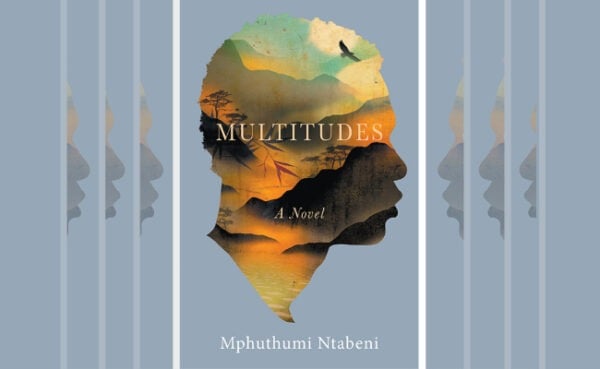
Title: Multitudes
Author: Mphuthumi Ntabeni
ISBN: 9780795711572
Publisher: Kwela
I first encountered Mphuthumi Ntabeni when reading The broken river tent. It was a bold novel in which a modern-day narrator, Phila, encountered the long-dead Nkosi Maqoma on a bus. They became friendly and had interesting discussions throughout the novel.
Maqoma was a fascinating man who opposed the British occupation of the Eastern Cape. For a long time, he had managed to lead a guerrilla war against the British, who used vastly superior weapons. Maqoma ended up on Robben Island, was released and then eventually got sent back to the island.
In The broken river tent, Ntabeni created his own form of what some would call magical realism. Like Gabriel García Márquez or local author Etienne van Heerden, Ntabeni simply allowed the historical Maqoma to worm himself into the life of our modern-day narrator.
Tellingly, The broken river tent starts at a community meeting where protesters were complaining about the police using force “to evict people who had illegally invaded land on the slopes of Hangberg” (8). In this way, Ntabeni anchored his story in modern-day politics of land use. The speakers that day were varied, many speaking Afrikaans and many claiming a Khoi heritage. As Phila, the narrator, reflected (9):
The irony, in the twenty-first century, was that the players were still the same as before. You had the KhoiKhoi people on the slopes of Hangberg, and the Xhosas – mostly from the Eastern Cape, where their forefathers had fought the British colonial powers – on the slopes of Karbonkelberg where Imizamo Yethu informal settlement was situated. And then in the affluent valley down below were mostly the white people, progeny of the settlers from the 1800s.
The broken river tent won the UJ prize for a South African fiction debut in 2019.
In 2021, Ntabeni’s novel The wanderers got published. It followed the story of a young woman looking for her biological father who had gone into exile during the apartheid years. He never returned home after the start of democracy.
Phila is back
It took many years, but Phila, whom we met in The broken river tent, is back in Multitudes. He is older, wiser and a lot more battle-scarred. He is also more interesting.
At the start of Multitudes, Phila lives in a comfortable flat in Cape Town, in an affluent area. Phila’s Scottish wife, simply called H throughout the novel, has gone back to Scotland, and she has taken the couple’s two daughters with her. In the flat next door to Phila lives Kyuri, of Japanese and Chinese origin. She has become Phila’s lover and is carrying his child.
H dies, too young. Phila has to fetch his daughters and bring them back to South Africa. This allows Dyani (Jan) Tshatshu, a historical figure, to enter the story. Tshatshu worked as an interpreter for Dutch and English missionaries, and eventually he travelled to the UK to speak on behalf of the Xhosa people who were losing land, lives and dignity due to white settlements in South Africa. More of the storyline I am not too keen to tell.
Multitudes
Phila has not lost his ability to communicate with the dead. In Multitudes, he often encounters Ntsusa, a fearless princess who once led an army in the Eastern Cape. She enters Phila’s life in the same easy manner as Nkosi Maqoma managed to do in The broken river tent. Others from beyond the River Stix join them in their conversations.
Ntsusa understands home to be a place ripped apart by greed. Her story is a fascinating one, which Phila shares with his daughters in chapter 25.
Towards the end of the novel, another wanderer appears: Phila promised to write a book on Bloke Modisane, the South African actor and reporter who fled apartheid South Africa, wrote a best-selling novel, Blame me in history, and was never able to find solace or a place called home. Modisane’s entrance into the story happens just as Phila is about to enrol his Scottish daughters into a South African boarding school.
But that is not all. Phila also has many ways in which he hears from or maintains contact with H, who has recently passed away. Yes, there is one particular moment when H appears in a dream, but often the reader encounters H in letters (some unsent), manuscripts (some unpublished) or videos. This is how the multitudes enter Phila’s narrative through texts, intertexts and dreams.
A very catholic book
Phila was baptised in a Protestant church, but he attended a Catholic school. After a time of atheism, he began to understand Catholicism and felt comfortable in the church and its traditions.
Catholicism has closer ties with the saints who have passed away than any of the Protestant traditions. That is one reason why Phila likes the Catholic tradition. He also likes the rituals and sacraments. Yet, the church and Christianity are not without blame (260):
“What the Church had done in the Americas,” he said, “it would later repeat in Africa – only this time with refinements, with footnotes, with the polished language of ‘improvement’!” He returned, as he often did, to Inter Caetera, that papal bull of 1493 which had sanctified Spain's imperial claims. It was, to him, less a theological document than a legal fiction of enormous consequence, a moment when doctrine was transmuted into a title deed, and conquest into legitimacy. Land was declared empty not because it lacked inhabitants, but because it lacked Christians.
Phila’s regular (but varied) engagements with the Xhosa warriors of centuries ago, as well as with his dead mother and his dead wife, all reflect in some way the Catholic tradition of praying for the souls of the departed, and the belief of saintly interventions. While watching the election of Pope Leo, Phila says (249): “In the old days, on Sundays, our people gathered for iNgcawe inside the kraals – the Vatican Square is a modernised version of a kraal.” Kyuri, too, brings spiritual beliefs and rituals from the East.
Saints, in Multitudes, are not only dead people. Phila remembers a young medical doctor who enjoyed his inquisitive mind (and possibly had a crush on his mother). Through the doctor’s donations of books and encouragement of his mother, Phila was able to grow as a person long before he had left home.
Yet, it does not stop here. Just as Bloke Modisane is called upon to mirror Dyani Tshatshu, so, too, do JM Coetzee’s life and novels get discussed in relation to his exile from his country and his mother tongue, Afrikaans. Hannah Arandt’s philosophy is roped in, but there is much more, like this bit of wisdom (188): “Being black, everywhere, was this, living in constant translation, in Du Bois's double consciousness, learning to speak beauty in the language of loss.”
Kyuri brings authors like Shuang Xeutao to the conversation. Throughout the novel, other books and authors are read or discussed, weaving a rich, multilayered story. This way, the novel becomes a catholic, not merely Catholic, collection of beliefs, rituals, texts and philosophies. This is very much an international novel.
Layers
The characters in Multitudes travel to many different cities, have experienced many different cities and want to travel to others. Every city is layered. Every city seems to have a hidden presence lurking beyond the obvious – none more so than Cape Town, where the wealth of the city was built on the backs and bones of enslaved people.
Yet, there is more to Cape Town: Phila and H once visited an underground river that flows underneath Cape Town. They were able to walk under the present-day city in tunnels that were built centuries ago. (As an aside, I, too, have had that experience; it is worth exploring.)
These layers in the cities are also reflected in the way old buildings are demolished and replaced in many cities throughout the world. The hall in which Tshatshu made his famous speech has been knocked down. In its place, a modern-day hotel has risen. Multitudes tells stories of Christian churches being built across sacred Xhosa sites, again creating layers of experience for those who enter and those who remember.
But there is more: In the digging through the layers beneath cities, artefacts found in the rubble reveal histories often untold, such as that of Septimus Severus, a Roman emperor who once held sway over the British Isles. He may well have come from Africa, based on pot shards found in diggings in London. Severus was the emperor who built the walls that were to shape modern-day London.
The artefacts left behind when someone moves home can also be spiritual, and are very often remembered only in oral traditions. Our oral histories can have a deeply personal meaning, as was the case when Phila showed his daughter where her umbilical cord had been buried. The Xhosa had lost their homes en masse during white settlement. Their connection to their umbilical cords had been cut. Their sacred sites had been replaced by Christian churches. Those who can (metaphorically) speak to the saints and the dead, can still hear and narrate the old oral histories, as Multitudes explains.
Oral histories can also become a lot more political, as was the case when kwaNojoli (former Somerset East) was renamed after the narratives of the elders in that region had been heard. Ntabeni, the author – not Phila, the narrator – spent a lot of time researching the oral narratives from the kwaNojoli region. (See, for instance, this interview between Ntabeni and Naomi Meyer.) In Multitudes, it is Phila who undertook research at kwaNojoli. The layers continue to be laid down.
Multitudes, therefore, is a testament to oral tradition, but also a plea for those layers of human understanding to be captured before they disappear into oblivion. Just like H remains audible through personal items, so, too, do our deeper spiritual and political histories have to be taken seriously.
Finding a home, being at home, being a home
H, who was a lawyer, specialised in Scottish spatial law. Phila, an architect, specialises in reclaiming old buildings and in environmental architecture. Kyuri, an artist, was reared by her two grandmothers, one from Japan, the other from China. Like Ruru, in The wanderers, Kyuri set off to find her biological father at some point. And so, Phila, the Xhosa man, his dead Scottish wife and their gorgeous daughters, as well as oriental Kyuri, converge into a book of people who have lost and gained, who all understand that home is a construct that does not allow itself to be understood without difficulty.
The Xhosa people lost so much; their homes were taken when the settlers came. Scotland, of course, has been invaded oftentimes. The Romans first tried to conquer the nation, then the Britons did. Japan and China have long histories of loss and gain, with ancient wars, dynasties and revolutions shaping peoples and cities into modernity. As Kyuri says (209): “War rewrites people.” Settling and resettling, moving to a new country, or from one city to another – all of these unsettling moments combine and intertwine in Multitudes, making the novel a fascinating exploration of what it means to belong.
Phila is an architect. He specialises in homes that engage nature. He also wants to build high quality homes for Cape Town’s poor, but the city fathers do not want him to. Phila is very aware of the extreme poverty surrounding the affluent areas of Cape Town, which echoes the start of The broken river tent. Yet, his daughter looks at the colourful RPD houses next to the N2 and finds them “hopeful” (195). When the children enquire about the colourful houses in the Bo-Kaap, Phila explains that colours were applied as signs of protest, but that those colours have since become synonymous with that area (196). Layers of history, once again.
Houses themselves are not necessarily homes, though. Some travellers may never find a home, like Bloke Modisane could not. Others may encounter a city that acts like a classroom for a while. Phila says about Johannesburg (245):
This place was the first awakening for me, the first place I realised history wasn't just in books but in my skin also. This city was my second classroom. Its dangers, hunger, music, sex, excessive drink. All of it I first encountered here. Hence I call it the city of my awakening!
Others may find a home and settle, like Kyuri did. And others may build a home, but their home will never be without the ghosts of history (279):
Up the hill, in Bathurst, I have friends who live with history in their blood: a Xhosa husband of amaNtinde and a white wife descended from those first British settlers. Their house groans with history. I have sat there, drunk on their wine, while ghosts moved on fog feet around us.
Phila, too, used to have a white wife, H. And it was H who had the following pearl of wisdom to share, told here in Phila’s words (279):
I remember what you said once, standing between the manicured graves of British soldiers and the mass grave of the Great Xhosa Cattle Killing at once: “Stupid bunch, all of you! You could have just intermarried and learned from each other.” The impatience and the possibility in that stayed with me. How far we have come, and how near we remain to the wounds our ancestors inflicted on each other, thus on us too, spilling blood on this land full of history.
If sex is not political – that is what we need homes for, not so?
There is, towards the end of Multitudes, a sense of homecoming in a new dwelling. The reader should experience that part of the story; I will not tell it. Phila narrates a home built for H, but which is now shared with Kyuri and the two girls. He says (280):
I am beginning to love the private geography of the house, watching Ilitha sitting in the low wrap of the lounge, its open-air embrace softened with muted earth tones: stone, sand, moss, bark, echoing the palette beyond the walls. My mind moves through the rooms as one might revisit the chapters of a book read so often the paper has softened.
Significantly, he would later (283) tell H (who has died): “See you in the next chapter.” As Phila also says (281):
The house is not only a refuge but an instrument. Within its walls we rehearse our way to the grave, grateful of the few years in our grasp and memories of love.
Multitudes is home to many things: It is a collection of layered histories, philosophies, thoughts on architecture, intertexts and a place for love stories to nestle.