
Opinion
LitNet contributors voice their opinions about current affairs.
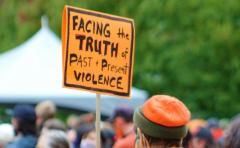
The limits of white innocence and the politics of black grace
2026-11-06"Grace should not be confused with forgetting, any more than reconciliation should be confused with absolution. Nor should grace become a permanent debt owed by the historically dispossessed, or an endless expectation where black South Africans must forgive, accommodate and exercise patience while the promises of liberation are indefinitely deferred."

Seen elsewhere: Emily Hobhouse, a remarkable woman
2026-11-04"Emily Hobhouse (1860–1926). A remarkable woman, and an enduring part of South African history."

The municipal elections: Five things to consider before you make your cross
2026-10-30"For many households, the immediate test of their local government concerns the availability of water when needed. ... You do not need to agree with a party on everything, but you do need a reason to believe that it can do the job."
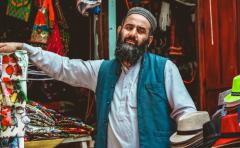
The other in my town
2026-10-23"Do we experience a sense of moral obligation to a place or location other than a nostalgic bond?"

Municipal elections 2026: What is the municipal election campaign telling us about South African politics more generally?
2026-10-07"This is where the current campaign could become more intense."
Dit is die patriargie in ons samelewing wat reeksmoordenaars baar
2026-09-17Die land is geskok oor die liggame van tot op hede nege vroue wat in Ekurhuleni ontdek is nadat hulle vermoedelik die slagoffers van ’n reeksverkragter en -moordenaar was. Heindrich Wyngaard praat hieroor met die organisasie Sonke Gender Justice se Bafana Khumalo.

Take your pick: Heritage Day! King Shaka’s Day or Braai Day?
2026-09-17"Why do we wait for September to celebrate our heritage? Heritage, especially at a personal level, is the collection of traditions, values and culture."

Municipal elections 2026: Do judges too often become the referees of local democracy, governance and elections?
2026-08-28"Why are coalition agreements increasingly being interpreted and resolved by judges, rather than through political exchange and resolutions? Why do procurement decisions often end in court, rather than in securing better services as part of sound local governance?"
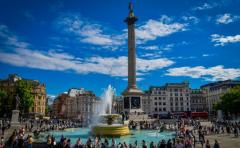
Poetry and decay: South Africa House in London
2026-08-24"Let us hope that South Africa House, like Parliament in Cape Town, is rapidly repaired and reverts once more to being a worthy and respected place, under whose roof many more indabas of benefit to Britain and South Africa can take place on authentic mutual terms."

Seen elsewhere: AI, Artificial Intelligence, is at best purely Simulated Intelligence
2026-08-18"True creativity has never been about providing easy answers and ready-made platitudes, and even less about reducing the complexity of our world and experience to a set of ever-palatable 'truths'."
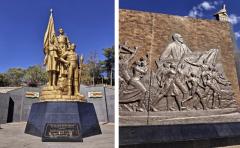
Unsettled in Zimbabwe: How the absence of history and heritage from public spaces points to a deeper unease
2026-08-18"But the most curious thing for us about Harare (especially since so many of our number were scholars of southern African liberation movements) was the lack of visible history in its streets. It’s not a city that wears its heritage on its sleeve the way Johannesburg does: There are no blue plaques and almost no monuments or museums that tell the story of Zimbabwe’s history."
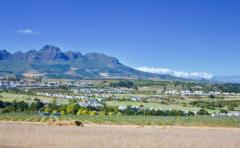
From culpability to implication: Responsibility for repair in Stellenbosch
2026-08-13"People may live in the same town and participate in the same institutions while experiencing Stellenbosch very differently. Historical repair, therefore, concerns the continuing effects of injustice on social relations, opportunities, spaces, institutions and people’s sense of belonging."

The folly of cancelling one another: Why Africa cannot afford a competition in moral purity
2026-08-12"South Africa’s recurring Afrophobic violence, meanwhile, is too often explained solely through the language of prejudice. That explanation is necessary, but insufficient."

Uneasy grammar: Britain and South Africa – a critical reflection
2026-07-21"When powerful states describe a relationship as mutually beneficial, who gets to define the mutuality?"

South Africa’s learners need time: How the planned curriculum hinders critical thinking
2026-07-15"Critical thinking is a muscle, not a genetic trait. Its best gymnasium is time; its worst is speed. But given the busy weeks of a school term, and the persistence of continuous assessment – embedded into the CAPS system – it is difficult to believe these two principles swim in the same pool."

Nuremberg: Justice, memory and the selective morality of history
2026-07-15"Nuremberg succeeds as a courtroom drama and as an exploration of the psychology of evil. It is less successful as an examination of the broader political and nationalist currents that produced Nazi Germany."

Killer heat: The climate paradox
2026-07-12"One might have thought the European success in having scrubbed their atmosphere over the past 50 years would be a cause for celebration. Instead, thousands of people are, or will soon be, dying prematurely as a result, unless cooler weather returns soon."

Illegal immigrants? The post-deadline hangover
2026-07-07"With all this planned weekly rolling mass action, there is one question that is getting louder and louder: Who is funding these 'leaders' and organisations?"

When the stick becomes a slogan: Zulu cultural weapons and the politics of theatre
2026-07-03"The tragedy is that the theatre works. A crowd with placards may be ignored. The image of a crowd with sticks and spears travels. The image circulates. The message hardens. Migrants see it."

Will deporting illegal foreigners benefit the economy? | Wie wen as buitelandse werkers weggaan?
2026-06-26"We have little solid proof that foreign workers are the reason South Africans cannot find jobs, or that removing them would open those jobs to anyone else. What economics can speak to with more assurance is the other side of the ledger: the measurable consequences of acting on the anger." | "Ons het egter min bewyse dat buitelandse werkers wel die rede is waarom Suid-Afrikaners nie werk kry nie, of dat hul verwydering daardie poste vir iemand anders sal oopmaak. Wat ons wel beter kan meet, is wat gebeur wanneer daardie woede in beleid omgesit word."