

...
We still need to go through some inconvenient truths in this country.
...
I hate saying it, but because it is so important, I am going to say it again: We still need to go through some inconvenient truths in this country. Yes, as a people of South Africa, we still need to have very open, frank conversations instead of hiding behind broad terms like “rainbow nation”, “nation building” and “social cohesion”, etc. As part and parcel of that meaningful nationwide conversation, then, we cannot talk only about the names of streets, towns and cities; we also need to relook at those names. This is but one of those necessary things (some might even say evils) that we still need to do as a country.
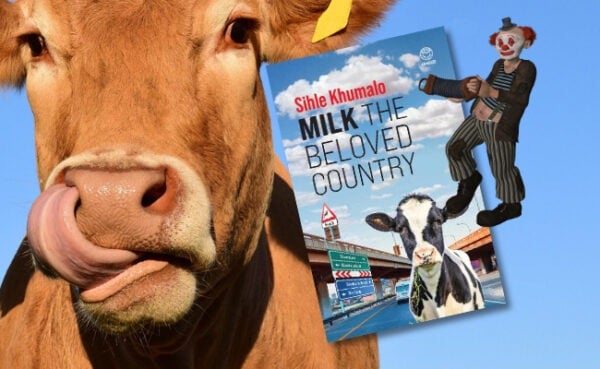
I have, over the years, felt so strongly about the renaming matter that I even wrote a book about it. In my book, Milk the beloved country (Umuzi), which was published in 2023, I deal with – at length and among other things – the powerful men who were deemed so important that towns had to be named after them. There was one man who had two towns named after him. As if that was not enough, he had not one, not two, but three settlements named after – wait for it – his father. And just to put a cherry on the top, he had another town named after his older brother. Does that, in any way, make sense? Who was such a lucky guy, I hear you ask.
Lord Charles Henry Somerset, during his 12-year stint (1814 to 1826) as governor of the Cape Colony, ensured that his family’s legacy was cemented on the southern tip of the African continent. He left behind Somerset East (now called KwaNojoli) in the Eastern Cape and Somerset West in the Western Cape. His father, Henry Somerset, the fifth Duke of Beaufort – notwithstanding having never set foot in South Africa – still has three places named after him: Beaufort West (the first town to be established in the central Karoo), Port Beaufort (a seaside resort on the bank of the Breede River estuary on the Garden Route) as well as Fort Beaufort in the Eastern Cape. Lord Charles Henry Somerset’s older brother, Henry Charles, was styled Marquess (also written as Marquis) of Worcester, and that is how – till this day – we have a town called Worcester, which is, by the way, the fourth largest city in the Western Cape (after Cape Town, George and Paarl).
This is but one example of how exploited this country was when it came to giving names. Some powerful men, as an example, felt that it was not enough that towns were named after them. They also brought their madams (yes, their wives) into the romp. General Sir Harry Smith and his wife (Juana María de los Dolores de León, officially known as Lady Smith) are a prime example. The two towns named after this power couple (Harrismith in the Free State and Ladysmith in KwaZulu-Natal) are approximately 85 kilometres apart. Let us not forget, maybe conveniently, Sir George Grey and Eliza Lucy Grey, officially Lady Grey. This former governor of the Cape Colony had two towns named after him: Greytown in KwaZulu-Natal and Greyton in the Western Cape. And Lady Grey, the town, is in the Eastern Cape.
It gets better, or worse. Even animals got in on the act. Who would have thought that there would even be a town named after a horse? How I wish I were making this up! Do yourself a favour and read about how a horse named Kroon drowned (or was injured) in the local stream. Locals were so touched by this tragic event that they named the town after a (dead) horse. Till this day, one of the Free State’s strategic economic hubs is a city named Kroonstad.
It is quite clear that at one stage in the history of this country, there was, if you will, a naming frenzy. Well, what goes around comes around. The (re)naming frenzy is back in town. In the recent past, the government announced that, among other cities and towns, Barkly East will henceforth be Ekhephini, East London will be called KuGompo City and Graaff-Reinet will be named after Robert Sobukwe, an anti-apartheid activist and one of the founding members of the Pan-African Congress (PAC).
And, as to be expected of a country with such a complex history, the renaming of especially a historic town like Graaff-Reinet is proving to be a rather polarising issue. It is not surprising that, soon after the official announcement in the Government Gazette was made, the real pushback started in earnest. I will be very surprised if this matter does not end up in court. Who knows, maybe it will end up – many years from now – in the Constitutional Court.
...
Our country, South Africa, has no name but a geographical location.
...
There are two broad issues I want to touch on (which are matters that I comprehensively deal with in my book). My point, over all these years, remains unmoved and unchanged. Our country, South Africa, has no name but a geographical location. Therefore, basic common sense and logic dictate (at least to me) that before we start obsessing about changing names of streets, towns and cities, the elephant in the room is the name (or lack thereof) of our country. That is where we should have started. But alas!
As some will remember, modern-day Namibia was once called by its geographical location, South West Africa. It was a no-brainer, after independence, that such a name had to be changed. Just like, at one stage, modern-day Kenya was called British East Africa. Naturally, at some stage, such a geographical location masquerading as the name of the country had to go. In West Africa, there was a country which was (still is) located on the upper part of the Volta River. And yes, it was called Upper Volta. All that changed when military officer-turned-president Thomas Isidore Noël Sankara took over. Today, and rightfully so, we have Burkina Faso.
In South Africa, we should have done exactly the same thing. It goes without saying that the ongoing renaming, pushback and debate lack context. There is no foundation to the change we want so see and feel. Renaming streets, towns and cities is happening in a vacuum. There is a void to all this ongoing noise. We should have changed the name of the country first. Trust me, one day it will happen. Logic will finally prevail, as it always does. More people will finally see the need to change the (geographical) name of the country. And the naysayers, as usual, will scream from the rooftops, but it is only a matter of time before our country has a new name, because it makes absolute sense.
...
There needs to be a timeframe to this renaming debacle.
...
The second thing in this regard, is that there needs to be a timeframe to this renaming debacle. Otherwise, it may – conveniently so – be used by government to distract us from its failures, which range from substandard national health and education systems to incoherent crime-fighting strategies, to mention but three. It is therefore important that we deal with this matter once and for all – put a timeframe to it, have proper and adequate consultations and, wherever deemed necessary and appropriate, change the names of towns and cities.
Failure to have a timeframe for such changes will mean that, 30 years from now, someone might (finally) wake up from slumberland and say, “John Vorster Road in Centurion, just outside Pretoria, must be changed because Vorster was a staunch racist.” The narrative at that moment will be, if the name of the (then) police headquarters – John Vorster Square – could be changed to SAPS Johannesburg Central Station, then why do we have such a major road named after the former prime minister, who was at the helm when students were killed in 1976 and also when Steve Biko was assassinated the following year?
And before someone can say, “Hang on a minute,” 50 years from now another person (who was born in a new South Africa) will say that Upington, the name of the Northern Cape’s second largest city (after Kimberley), must be changed because the town is named after Thomas Upington, who was an attorney general in the Cape Colony during the “Koegas atrocities” or “Koegas affair”, when white farmers – who were calling themselves “military patrollers” – killed almost 50 locals, mostly Korana and San people. Notwithstanding that it was clear that those white farmers had murdered men, women and children in cold blood, that attorney general – yes, Thomas Upington – messed the whole case up so that his people could be acquitted. Bloody racist!”
And then, another debate will ensue. And then another pushback. As expected, the matter will, in time, be heard by a judge. And then the party that loses- the first round will appeal. And the merry-go-round will, for the umpteenth time, go round and round and round.
As things stand, we live in a country where a simple thing like changing a street name (not to mention a town name) divides the population, mainly along racial lines. We need – and I say it for the umpteenth time – to have, first and foremost, open conversations as part of building a nation that all of us can be proud of. Hiding behind catchy terms like “united in our diversity” is not sustainable.
PS As I am finishing this article, another storm is brewing in KwaZulu-Natal. Some people (yes, Zulus) in the province want “Natal” to be dropped from KwaZulu-Natal.
*
Sihle Khumalo is an award-winning and bestselling author from South Africa. His last book was Milk the beloved country (Umuzi).
See also:
Conversations beyond the comfort zone | Etienne van Heerden Veldsoirée 2023
The importance of oral history in southern African historiography
Kommentaar
Khumalo's exposition is riddled with conceptual errors.
He blithely assumes that towns with British names over time retained the original affiliation and sentiments. Of course they did not; new meanings evolved, new contents developed and new understandings were forged.
In addition, he seems to think that changing the country's name will miraculously be a panacea and put an end to debates about changing the names of towns. He is either deliberately provocative or plainly naive.
Sir. The tone of your opinion is clearly anti-white and anti-colonialist. You seem to forget or wilfully ignore that the colonial settlers from Europe developed and built these towns and cities which Africans now claim for themselves. There are thousands of towns and villages throughout South Africa with African names. Yet, the handful of colonialist developed towns must be claimed as well. Scandalous. Don't try to erase or write history. South African society and infrastructure are built upon the pillars of European colonialism, whether you like it or not. It is a fact.
I fully support changing of the name of South Africa. It should be renamed to Mafia Country.
The region's original name is not from Xhosa heritage but of Khoi tribes, the Inqua, Gonaqua, Hoenheniqua who named it... Ingaad! ab'.
This is the true original name - not KuGompo.