

...
The very obvious question is: In a country with so many ethnic groups, why was the assassination of the founder of the Zulu nation (King Shaka kaSenzangakhona) elevated to a national public holiday?
...
A few days from now, we will have another public holiday. This is the day when we, as a people of different races and ethnic groups, will celebrate the fact that we are united in our diversity. Things are however, complicated – in fact, very complicated!
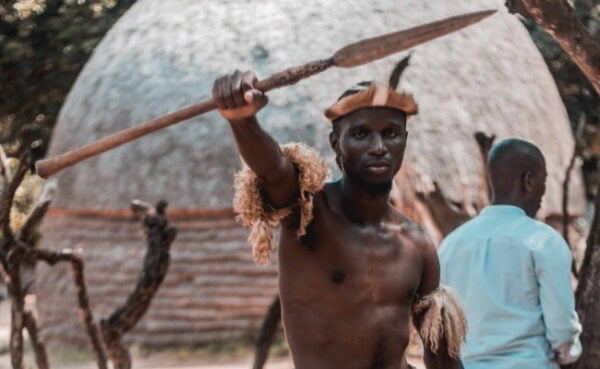
For starters, in the homeland called KwaZulu, where I was born, we always had the 24th of September – which was then called King Shaka’s Day – as a public holiday. On this day, we wore our traditional Zulu gear (called imvunulo), and there would be competitions among schools, villages and youth groups to identify champions in Zulu traditional dance (indlamu). It was one day that I, as a young person, always looked forward to.
The 24th of September is now called Heritage Day. The nationwide recognition of this day as a holiday was but one of the last-minute demands which were tabled by the Inkatha Freedom Party (IFP) as a condition before it would take part in the watershed 1994 elections. (Another demand, by the way, was that all the land under the Zulu chiefs (amakhosi) must be consolidated and registered in a trust with a single trustee, the Zulu king – whereas, in other parts of the country, communal land is, legally speaking, owned by the state and not by the respective traditional leaders. I admit that this is a conversation for another day.)
Back to the 24th of September. The very obvious question is: In a country with so many ethnic groups, why was the assassination of the founder of the Zulu nation (King Shaka kaSenzangakhona) elevated to a national public holiday? I can ask this very question because I am a Zulu man. I can only imagine the backlash someone of another ethnic group were to get if he (or she) were to ask this very basic question publicly. (Admittedly, other South Africans do not even ask themselves why specifically the 24th of September – and not any other day – is the day that was chosen for us to celebrate our heritage.)
It gets worse. King Shaka kaSenzangakhona was assassinated on the 22nd of September 1828, and not the 24th. Here is a brief history lesson: After the king was assassinated by his two half-brothers in the afternoon of the 22nd, one of the deceased king’s aides ran (and walked) throughout the night from KwaDukuza to Port Natal (now Durban), a distance of approximately 70 kilometres. The aide reported the news to the white people, including British adventurer Nathaniel Isaacs, early on the 23rd. The handful of white people left that very morning and arrived in KwaDukuza late that same evening. When Nathaniel Isaacs woke up in KwaDukuza on the 24th, he made a diary entry about what had happened in the two preceding days. This is how the confusion was caused, and it has remained to this day.
On an annual basis, the king of the Zulus, the chiefs, the politicians and thousands of Zulu warriors (amabutho) descend on KwaDukuza, just north of Durban. Every time I see that extravaganza, I cannot help but quietly think to myself, “With respect (ngenkulu inhlonipho nangokukhulu ukuzithoba), all of you are 48 hours late.”
It does not end there. King Shaka’s tombstone – where the commemoration takes place every single year – takes the cake. For starters, King Shaka is written as “Tshaka”. As if that were not enough, on the same tombstone, King Shaka’s father, iNkosi uSenzangakhona, is written as “Senzangakona”. And, right on top, where in English you would write “In memory of …”, is written “isikumbhuzo” instead of (the correct spelling) “isikhumbuzo”. Hasn’t anyone noticed, and why are such basic misnomers not corrected once and for all?
But then again, correcting this would inevitably mean, yippee, a tender has to be advertised – and, eish, that could unleash a plethora of complications. For example, would this tender, for very obvious reasons, be ringfenced for companies owned by Zulus?
This is the fact and reality of the 24th of September: It commemorates the assassination of the founder of one of the many ethnic groups in South Africa. In his 1945 classic satirical novel, Animal farm, George Orwell wrote a timeless sentence: “All animals are equal, but some are more equal than others.” It is only natural, within this context, to state the obvious: All ethnic groups are equal, but some are more equal than others.
...
I am aware, of course, that the day is officially known as Heritage Day, but as William Shakespeare effortlessly put it, “A rose by any other name would smell as sweet.”
...
As a Zulu man, I am glad at a personal level (and maybe even selfishly so) that King Shaka’s date of death is still officially commemorated (albeit on the wrong date) almost 200 years after his demise. I am aware, of course, that the day is officially known as Heritage Day, but as William Shakespeare effortlessly put it, “A rose by any other name would smell as sweet.” Simply put, whatever name you give the day, it will always be King Shaka’s Day.
In recent years, there are other South Africans who, as part of celebrating their (or is it our) heritage, have come up with a “Braai Day”. Things are really hotting up this year, because some of these South Africans are aiming at dislodging the Japanese, who currently hold the Guinness World Record for the most people grilling or barbecuing simultaneously. The Japanese, in Ishigaki City on 18 November 2023, had 2 220 people braaiing at the same time. South Africans, naturally, will be attempting to break this Guinness World Record on Heritage Day. This sizzling affair will be held at Loftus Stadium in Pretoria.
Take your pick, fellow South African. Do you, on the 24th of September, head to KwaZulu-Natal (KZN) and mingle with the Zulus as they commemorate the assassination of their leader, or do you proceed to Loftus and be part of the world-record-breaking team? Or do you just stay at home and have, er, a braai (and while you are at it, mumble South Africa’s “unofficial” national anthem, “Shosholoza”)?
On an annual basis, the government – through the Department of Sport, Arts and Culture (DSAC) – hosts the country’s national Heritage Day celebration. This year’s event, under the theme “Celebrating our living heritage: Strengthening the ties that bind us”, will be at the King Zwelithini Stadium in Durban. As would be expected, this national event will be combined “with uMkhosi weLembe, the annual Zulu cultural commemoration honouring King Shaka kaSenzangakhona”. How I wish I could be a fly on the wall to witness the nifty political and cultural footwork – including tiptoeing around sensitive issues – that has to be done in order to appease everyone.
Heritage Day has also morphed and expanded into Heritage Month – as is the case with Women’s Day, which has evolved into Women’s Month. Throughout the month of September, there is a series of events in various towns, cities and provinces, all in one way or another celebrating that we are, culturally speaking, not only an assorted but also a heterogeneous bunch.
And then, there is the showstopper: the last Friday of September. This is the day that both the private and public sectors have, for years, declared as Wear Your Traditional Outfit Day. It is, indeed, a colourful day befitting of a “rainbow nation”. It reminds all and sundry that we are, indeed, a diverse bunch of people who are trying – some more than others – to get along peacefully and equitably.
...
Why do we wait for September to celebrate our heritage?
...
The very obvious question is: Why do we wait for September to celebrate our heritage? Heritage, especially at a personal level, is the collection of traditions, values and culture. Why do we have to wait for a particular day, or month for that matter, in order to celebrate who we truly and genuinely are?
Put differently, why do we, for example, have to wait for a single day in the year to wear our traditional clothes/attire at our respective workplaces? Why can’t a Zulu woman, whenever she feels like it, wear an isicholo (traditional hat) to the office? Can an Indian lady, for example, attend a job interview for a senior/executive position while she is wearing a saree, or would that be deemed inappropriate and, as such, jeopardise her chances of getting a life-changing position? If you so choose, why can’t every single day, or any particular day – without any pomp, pageantry or hullabaloo – be your heritage day?
*
Sihle Khumalo’s last English book, Milk the beloved country, won the 2024 South African Literary Award. He recently published a collection of short stories in Zulu, titled Siyobonana emathuneni (We will meet at the cemetery).
See also:
Conversations beyond the comfort zone | Etienne van Heerden Veldsoirée 2023