

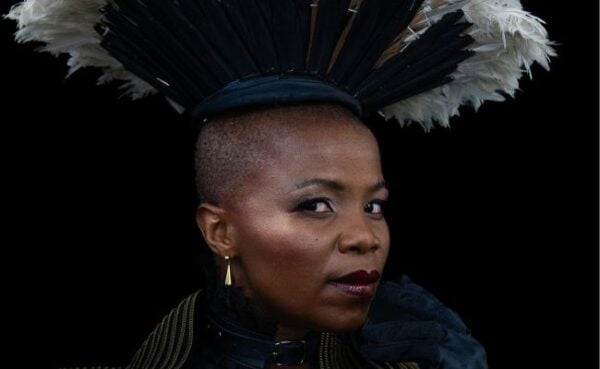
Press picture of Zolani Mahola by ©Matt Levai, published with permission
Naomi Meyer talks to Zolani Mahola about her career, her new album and the free concert the day after voting day.
Molo, Zolani, unjani? I heard you talking on the radio the other day and discussing this new album of yours – and how you have embraced Xhosa and your heritage. Could you tell our readers about your background – Zolani before she was a singer (was there ever such a time)?
I grew up in the Eastern Cape, in a township called KwaZakhele, which literally means “Build It Yourself”. I was born into the last two decades of apartheid, a time of enormous political upheaval, but also a time in which music was everywhere.
We lived in a four-room house that my father had built for our family. These four-room houses were the structures that black people were allowed to build in that area under apartheid's oppressive housing system. But within those four walls, there was a lot of life, music and community.
Much of my musical education happened outside of any formal music institution. It happened in church, at traditional ceremonies, at communal gatherings and in political protests, as South Africa was gathering itself and finding the courage and collective voice to free itself from the shackles of apartheid.
........
When I think about my earliest relationship with music, I think about it as something communal. It wasn't simply entertainment or something you went somewhere to watch. It was woven into the fabric of everyday life. It was how we celebrated, how we mourned, how we prayed, how we resisted and how we imagined a different future.
What have been the highlights of your career so far, or is it sometimes just hard work to be a singer, just like any other day job? What are the perks, and what are the challenging aspects?
There have been so many highlights that it's difficult to choose! One of the most extraordinary moments was finding myself on stage with my vocal and musical hero, Stevie Wonder. I've also had the privilege of opening for the legendary BB King, and sharing stages and writing music with extraordinary artists like the late, great Oliver Mtukudzi. Opening for Gregory Porter and sharing the stage with Yo Yo Ma when both were in South Africa – amazing!
I'm currently working on my ninth studio album. Seven of those albums were with Freshlyground, where I was a lead songwriter, and two have been solo projects. To have had the opportunity to build such a body of work over the years is something I feel deeply grateful for.
There are certainly wonderful perks to this life. Travel is a big one. Getting to see the world, encounter different cultures and people, and share music with audiences across the globe is an extraordinary privilege. And, of course, there's the great fortune of being able to do something I feel I was born to do and actually earn a living from it!
But it's also a job and sometimes a demanding one. Travel is a perk until you're living out of a suitcase! One of the biggest challenges of success is that it often means being away from home and the people you love. There's a real tension between embracing the opportunities that come your way and wanting to be present in your own life. Like with any other profession, there is a lot of hard work behind the magic that people see on stage.
Please would you tell our readers about your new album – what inspired the songs, and what they are about? Also elaborate on the song-writing process.
The new album is called People power, and it's really inspired by my journey of finding my voice again – both my artistic voice and my voice of purpose after leaving Freshlyground, having been part of that incredible musical family for 17 years. Leaving something that was such a significant part of my identity gave me an opportunity to ask myself some important questions: Who am I as an individual artist? What do I want to say? What is my contribution to the world beyond music?
I became increasingly interested in the power of the individual voice, but also in what happens when individual voices come together. There is something extraordinary about people finding the courage to speak, sing, stand up and act together for positive change. That is really the heart of People power.
The making of the album has been a wonderful journey. I've had the privilege of working with Grammy Award-nominated producer Hannah V, and with Aron Ha'Levi, the founder of Freshlyground as executive producer; I've also had some wonderful songwriting sessions with Moonga K, a Botswanan-Zambian artist.
The creative process has taken about a year and a half, and we're now in the final stages of mixing and mastering some of the remaining tracks. The full album is due for release in 2027. It's been a deeply rewarding process of discovery, and I'm excited to share this body of work with the world.
I hear you have a free concert in Cape Town soon. Please provide some background so that our readers can turn up and listen to you!
I'm really excited about this one! I'll be performing a free concert at Greenmarket Square on Thursday, 5 November, which is the day after voting day. The timing feels particularly significant to me. Having grown up in South Africa, I understand that the right to vote is something we cannot take for granted. Generations of black and brown South Africans were disenfranchised and denied the opportunity to have a say in how their country was governed. When I vote, I do so in honour of the people in my family line who never had that opportunity. It's a privilege, but it's also a responsibility.
The concert connects beautifully with the ideas behind my forthcoming album, People power. Much of the music I'll be performing is inspirational and speaks to the importance of recognising our individual voices, understanding the power of our collective voices, and using those voices for the greater good.
But it's also going to be a really fun, joyful evening! It's First Thursday, so Cape Town will already be out enjoying the streets – and Greenmarket Square is such a beautiful setting for people to come together. There's something lovely about taking back the night, occupying our public spaces, celebrating our city and simply enjoying one another's company through music.
I'll be joined by my new band, The Feminine Force, a predominantly female ensemble, which is just “Pow!”. Soana will be the opening act before us, from around 6:00 or 6:30 pm. It's going to be a glorious night. Everyone is welcome. It's free and I would absolutely love to see Cape Town come out and celebrate with us!
Is there anything else you want to share about why music is important in a country like ours, in this day and age? Enkosi, ndiyavuya ukukwazi, dankie!
.......
Enkosi nakuwe! I think music is incredibly important in a country like ours, particularly at this moment in our history. Music is so central to the fabric of African life. It is almost a birthright. It is woven into our heritage, our rituals, our celebrations, our grieving and our ways of connecting with one another.
.........
Enkosi nakuwe! I think music is incredibly important in a country like ours, particularly at this moment in our history. Music is so central to the fabric of African life. It is almost a birthright. It is woven into our heritage, our rituals, our celebrations, our grieving and our ways of connecting with one another.
I believe we have an enormous opportunity to harness our creative industries, not only as vehicles for social change, but also as vehicles for transmuting much of the trauma that remains deeply embedded in our society. For so many South African children, trauma is not something they read about in history books. It is a daily lived experience, particularly for those growing up in impoverished communities and environments marked by violence and substandard access to education and health.
Imagine what might be possible if we really invested in the arts as a way of helping children understand who they are, where they come from, what their place in society is and, most importantly, their own worth and value. I would love to see us build a creative ecosystem in South Africa that nurtures creativity from the earliest years of schooling, develops young talent and creates real pathways for people to make sustainable livelihoods from their creativity.
We have to look only at what countries like South Korea have achieved through industries such as K-pop and K-drama to understand what is possible when a country takes its cultural exports seriously and invests in its creative talent. Imagine if we did something similar with the extraordinary cultural wealth we have here in South Africa and across the African continent. We could build an industry that contributes meaningfully to our GDP, creates employment and puts South African creativity on the world stage, while simultaneously nurturing our children, strengthening our communities and helping to heal some of the wounds of our society.
I think that's an opportunity we should take very seriously. We have this extraordinary creative inheritance. The question is whether we are prepared to invest in it and create the structures that allow it to flourish.
Also read:
Nasionale dialoog and aksieplan nodig om verval van ons demokrasie te stuit!
Here we are: Bretten-Anne Moolman and Bianca Whitehead at the GFI Art Gallery