

...
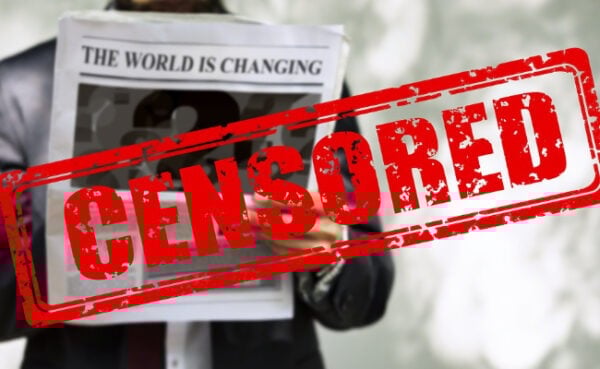
A major problem with fact-checking is that it can become – and often has become – part of censorship or regulating or downgrading the importance of social media posts.
...
Friend and former colleague Herman Wasserman is a leading international authority on misinformation and disinformation and their dangers, and I agree with much of what he writes in “Meta’s moderation cop-out will fuel misinformation” (LitNet, 16 January). It can be very calming to look at the judicious balance of a fact-checking site after the outraged and often outrageous howls on social media sites. Let me, however, outline some of the major problems with putting too much faith in fact-checking and fact-checkers.
First, though fact-checking existed, as Herman and others have pointed out, before the rise of Trump and his torrent of exaggerations and falsehoods, it was Trump’s lies and outrageous claims about the 2020 election that led to the invasion of the Capitol and the related deaths, and then to Meta and Twitter banning Trump from social media platforms and pouring funds into having fact-checkers look at their content in the USA and abroad. So, four years later, why was Trump not defeated by fact-checking? Why did he emerge stronger? Did fact-checkers, rather than defeating him, perhaps help his return? This is something Herman hints at when he talks about the dangers of backfire communications. There is a considerable body of academic research on how and why fact-checking can strengthen rather than weaken fact-checked arguments, and Trump’s victory in 2024 will provide more evidence for this phenomenon.
A major problem with fact-checking is that it can become – and often has become – part of censorship or regulating or downgrading the importance of social media posts. In a related piece, Herman and his colleagues argue that “government oversight and regulation of platforms” may be one important response to disinformation.
...
There lies the rub. A few case studies show why “fact-checking” as part of censoring material may backfire.
...
There lies the rub. A few case studies show why “fact-checking” as part of censoring material may backfire. Look at the lab leak hypothesis. Because Trump referred to the “China virus” and suggested that the virus originated in a lab, the establishment view quickly became that this was a racist slur, and PolitiFact gave it their most untruthful “Pants on fire” rating. The government medical establishment’s setting the narrative and claiming to know the facts was, however, deeply compromised because NIH head Anthony Fauci had allowed grants to Peter Daszak’s EcoHealth Alliance. Fauci’s denial that the NIH had funded gain-of-function research became an increasingly legalistic defence along the lines of, “It depends what you mean by …”.
Who did the WHO and US health authorities send to investigate the cause of the pandemic? Peter Daszak. Who did the Lancet get to write an editorial on the causes? Daszak and four of his colleagues and others. Later, the journal had to admit that Daszak had misled them and the public by not admitting his conflict of interest. A few days ago, the US Department of Health and Human Services barred Daszak from getting funding for five years, because “EcoHealth and Dr Daszak facilitated gain-of-function research in Wuhan, China, without proper oversight, and willingly violated multiple requirements of its multi-million-dollar National Institutes of Health (NIH) grant”.
The American view of things changed early on, particularly with a savagely comic segment by Jon Stewart on the Stephen Colbert show in 2021:
When you become the object of satire, you have lost the moral high ground. In time, PolitiFact, the Washington Post and other “fact-checking” authorities sheepishly had to correct their ratings for the lab leak hypothesis claim, and the FBI and CIA now regard it as the most likely explanation for the origin of the virus.
This was not an isolated incident. The US government was pressuring social media companies to censor or downgrade views on posts like the Great Barrington Declaration, written by leading epidemiologists. Fauci and his claim that “I represent science”, the exaggerated claims for the vaccine, and the scanty reasons for many of the social restrictions at the time vindicated many sceptics, and the fact-checking enterprise backing Covid-era restrictions lost enormous credibility.
One could add many more cases where “fact-checks” by authoritative media were partisan – the Hunter Biden laptop scandal and the Russiagate dossier, in particular. In the Columbia Journalism Review in 2023, Jeff Gerth argued that the Russiagate coverage in the New York Times and the Washington Post and the subsequent award of a Pulitzer Prize for this coverage marked a sharp decline in both papers’ credibility. The problem of having partisan reporting that was discredited was that it ended up validating Trump. People knew that Trump exaggerated and was a huckster, but partisan opponents manufacturing – or covering up – stories ended up vindicating him by suggesting that everybody lies.
This is not simply about Trump, but about a general distrust of what mainstream Western media might tell us and the limitations of the “facts” they cover. Was it true that the Russians sabotaged the North Sea pipeline? Go look at coverage in mainstream US media at the time and see how bizarre the consensus was that Russia had sabotaged a pipeline that in fact benefited them. How justified was Putin’s argument that Ukraine had broken agreements that it would not seek to join NATO? How valid are China’s claims on Taiwan? What will the new government in Syria do? How objective is coverage of Israel and Gaza? I have a surprising number of smart friends who miss RT, the Russian television network, because it provided alternative views to the Western media. They are not conspiracy theorists, but sceptical of the Western orthodoxies of the day and what they regard as facts worth checking.
There is another problem with “fact-checking”. Who does it? In the USA, the Facebook claim was that “the reviewers are meant to be representative of everyday Facebook users, so they don’t have any sort of particular expertise in fact-checking”. One reporter claimed that these reviewers were under pressure to review posts in under a minute, and this is surely far from an ideal way to deal with complex medical or political claims.
...
Even highly qualified commentators on truth claims don’t always agree.
...
Even highly qualified commentators on truth claims don’t always agree. Academics rely on peer review for examining dissertations or letting journal articles get published, but peer review is, alas, increasingly contentious. As the former head of an academic department, I, like Herman, know that certain colleagues would probably be hostile to a certain approach or conclusion and choose examiners accordingly. In the era of political correctness, these problems have been exacerbated.
There are other more general problems with thinking that regulating social media platforms is the answer to current social problems of disinformation and hate speech. Historically, in Africa, radio was the most pernicious driver of ethnic violence, with hundreds of thousands of victims in Rwanda, rather than the far fewer victims of misinformation on a social media platform. I argued years ago, when looking at the Fallist student movements and how they mobilised, that there are other problems with research on the spreading of misinformation and the fomenting of violence online. There was some misinformation on Facebook and Twitter, but students generally did not use them for planning violent protests or justifying them – that took place face to face or on WhatsApp groups.
Logically, what is the justification for fact-checking – and then monitoring and censoring – Facebook or X or Instagram, but not WhatsApp? Is one not likely to drive complaints or tensions underground if they are censored or banned on more public platforms, where one can at least respond to them and counter the arguments there? If one calls for “government oversight and regulation of platforms”, as Herman and his colleagues do, as one important response to disinformation, why are WhatsApp and Telegram and Zoom – and email, for that matter – not regarded as platforms needing fact-checking, oversight and regulation?
...
The situation in South Africa is, fortunately, rather healthier than in many other countries, with South African media enjoying higher levels of credibility than media in cultures where it is more highly rewarded for partisan excess.
...
The situation in South Africa is, fortunately, rather healthier than in many other countries, with South African media enjoying higher levels of credibility than media in cultures where it is more highly rewarded for partisan excess. Enlightened legislation pushing for balanced coverage and the role of talk radio as a mediating influence are two factors that other countries might seek to emulate. The South African example suggests that interesting debate and openly clashing views are a better antidote to misinformation than fact-checkers. In the rest of the world, however, it seems likely that legal action – whether in defamation suits from Trump and others, or in legal restrictions on hate speech, as in the EU’s threats to Musk and X – are more likely to shape developments than any fact-checking can.
See also:
Disinformation in the Global South: ’n onderhoud met Herman Wasserman
Herman Wasserman en die infodemie: Disinformasie in die Globale Suide