

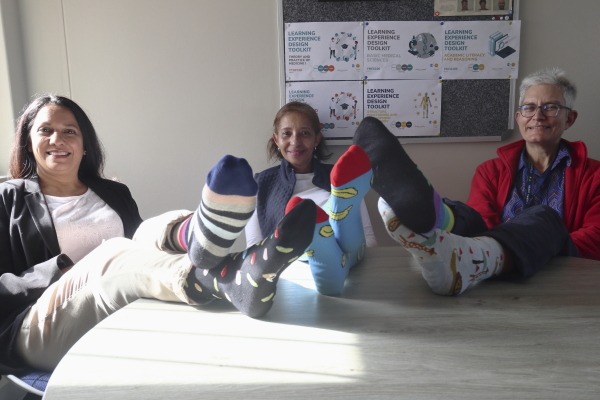
Yoshna Kooverjee, Coordinator: Theory and Practice of Medicine, Marie Williams, Community Platform Coordinator: Medical Program, and Elma de Vries, MBChB Programme Coordinator
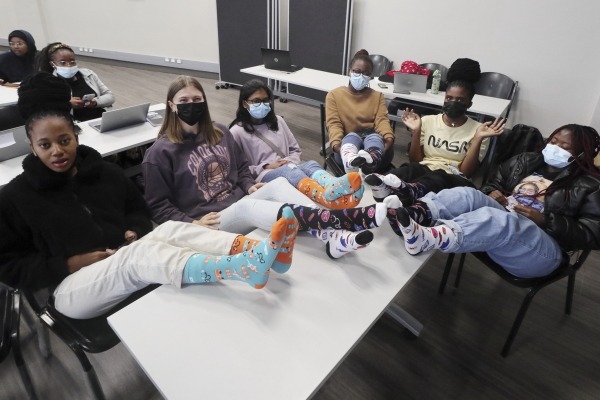
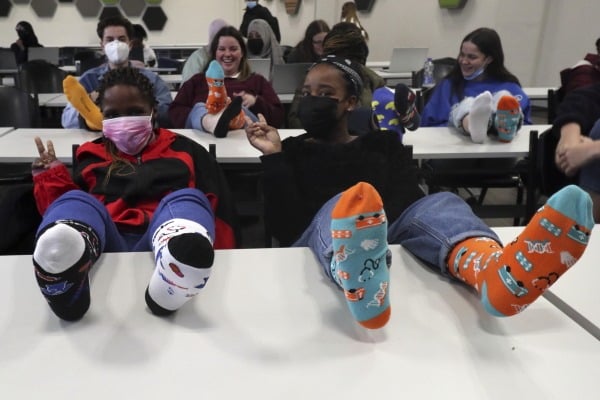
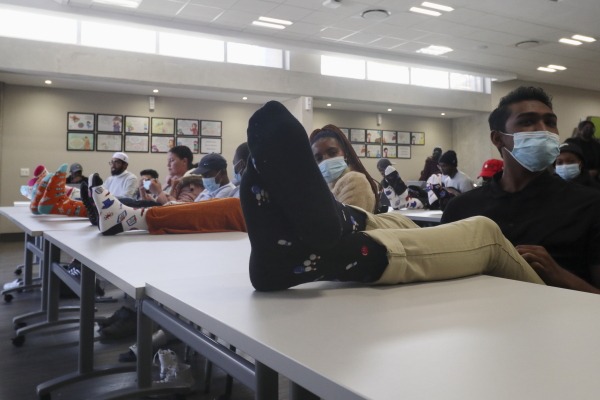
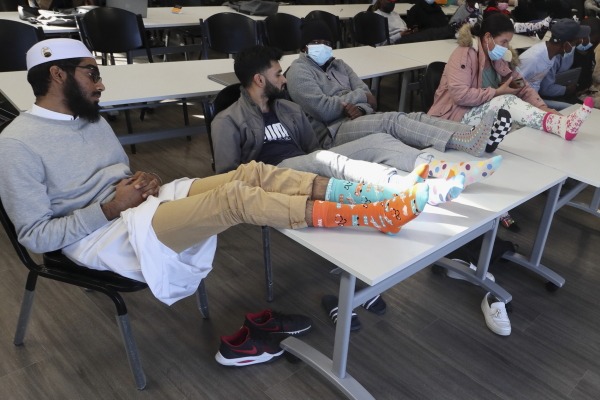
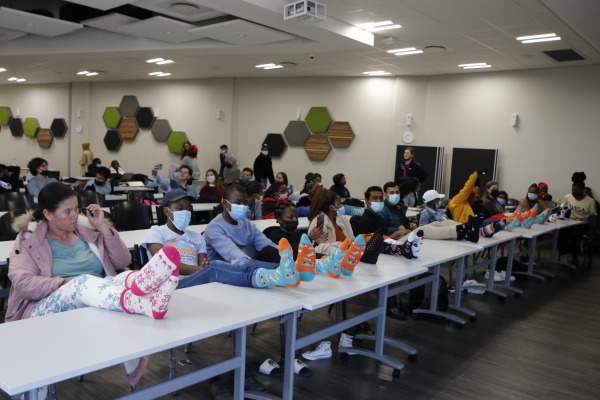
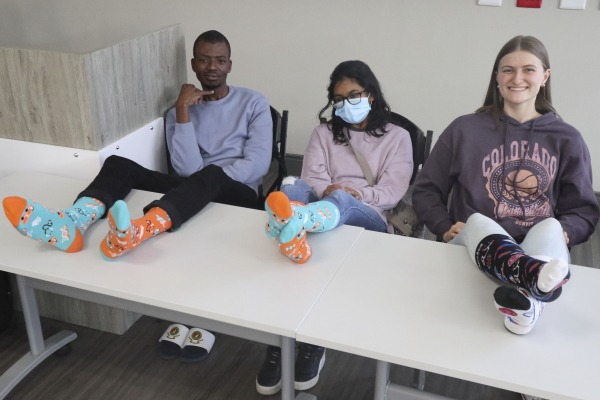
On Friday 3 June 2022 students and personnel at the Missionvale Campus of the Nelson Mandela University, the site of the medical school, were seen wearing rather odd socks. Izak de Vries asked Yoshna Kooverjee to explain.

Click on the photograph to enlarge
Please explain to us what #CrazySocks4Docs is about?
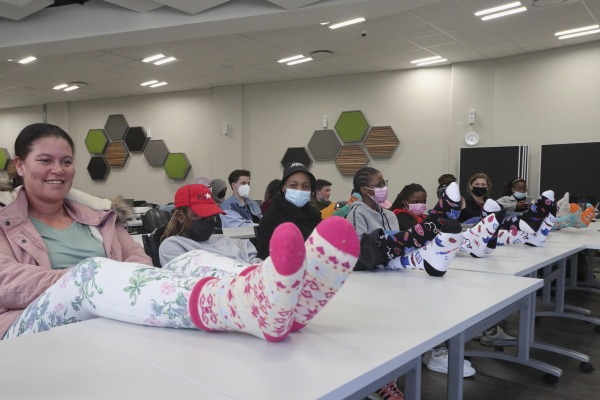
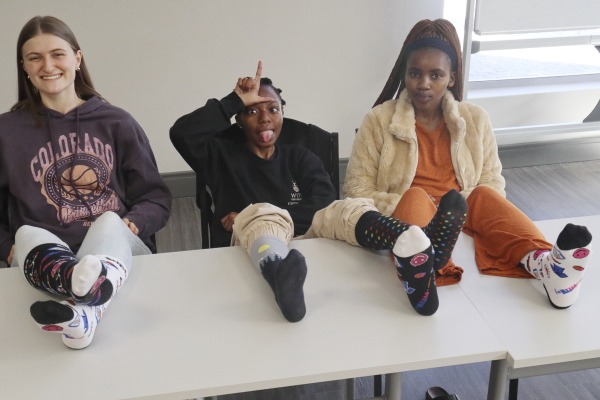
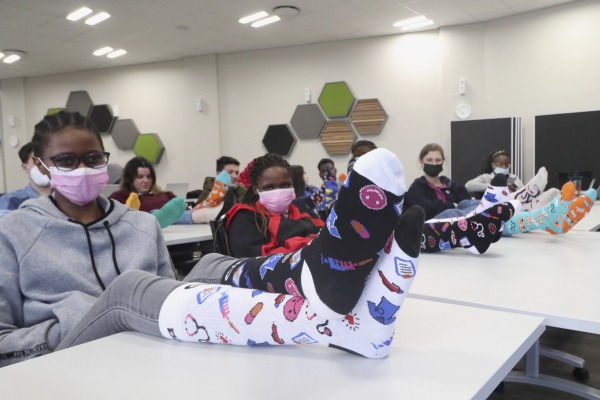
#CrazySocks4Docs is an initiative to raise awareness about the mental health struggles faced by doctors and other healthcare professionals as a result of the immense strain linked to the profession. On the first Friday in June, medical students and healthcare professionals wear bright, mismatched crazy socks to show their support for colleagues struggling with mental health issues. Supporters are encouraged to share pics of their crazy socks on social media in order to stimulate conversation around depression, anxiety and suicidal thoughts experienced by healthcare professionals. The movement originated in Australia in 2017 and here in South Africa it is sponsored by the Ithemba Foundation and Cipla South Africa.

Why is it important to shine a spotlight on the mental health of medical doctors? Are doctors not supposed to be the tough ones helping others?
Unfortunately, the perception that doctors are superhuman and must not show weakness only contributes to the mental strain of an already stressful occupation. Medical students learn early on to put the patient first, to work extremely long hours and to go beyond the call of duty in service to others. The profession is associated with high levels of anxiety and depression, but stigma, together with acceptance that this is part of the medical lifestyle, makes it difficult for doctors and medical students to seek help. Raising awareness and showing solidarity through campaigns like #CrazySocks4Docs make it more acceptable to ask for help when needed. Equally important, it encourages conversations on behaviours and thoughts that promote mental well-being, so that students and doctors can become equipped with the skills needed to cope with the physical and emotional demands of the profession.
Why are you interested in mental the health of doctors, Yoshna? I gather that you hold a postgraduate diploma in Addiction Care?
An interest in mental illness and a desire to help people is what drew me to becoming a doctor. I worked in psychiatric settings for a few years, where I learnt the importance of predisposing, precipitating and protective factors. These can mean the difference between a functioning life and a hospitalisation for mental illness – and it applies to everyone, including doctors. Doctors are also vulnerable to addiction, which is an area of medicine/psychiatry that I am interested in. Now I work with future doctors instead of patients, but my interest in mental wellness and desire to help is still there!
We are at Nelson Mandela University’s medical school, the newest in the country. What is your role here?
I am a senior lecturer and coordinator for a first- and second-year module called Theory and Practice of Medicine. It’s an exciting and diverse module in which students are introduced to professionalism, primary healthcare, bioethics and research in healthcare. Our students complete practical assignments in the community during home visits and clinic visits. In addition, they learn clinical communication skills and multilingualism in the three languages commonly used in the Eastern Cape.

The students are in their first and second years. Why do you introduce them to these issues this early in their training? They are still wannabe docs in their crazy socks.
Studying towards a medical degree is extremely demanding and studies show that medical students around the world have high rates of depression and anxiety, even in the preclinical years of training. Awareness and knowledge are the first steps to prevention, and as the saying goes, prevention is better than cure!
This day is not the only day on which you focus on the mental health of your students. Am I correct that you have mindfulness as part of the first- and second-year curriculum? Do explain this, please.
Yes, as part of our module, we wanted to equip students with practical skills to manage stress, so that as the degree becomes progressively more demanding, students already have some protective skills and are able to develop resilience, as professionals, doctors and medical students have an ethical duty to look after their own health. Learning how to manage stress and to maintain a balanced lifestyle are thus essential skills, and mindfulness training is a good way to teach them both. We are fortunate to be able to work with an experienced local integrative medicine doctor, Dr Margo De Kooker, who teaches our students mindfulness techniques, including meditation, stretching and mindful consumption. It is our hope that this will not only benefit the students in their own lives, but also be something they can share with patients in the future.
Read the message from the executive dean:




- Photography: Izak de Vries