

Earlier this year, LitNet reported on a young woman who had taken the Department of Education to court, as she was unable to matriculate due to harassment. Nare Mphela was murdered. She is one of 350 trans people who have met violent deaths in the past year.
On LitNet Akademies, a theological article appeared, looking into church leadership in a postcolonial world.
Following is part of a sermon from the Good Hope Metropolitan Community Church to commemorate the Trans Day of Remembrance 2020. This is the transcript, made available to LitNet as a response and to stimulate further discussion.

Lighting a candle (Picture provided)
Trans Day of Remembrance (TDOR)
Friday 20 November was Trans Day of Remembrance (TDOR), and the theme for TDOR 2020 was “Fighting for our futures”.
This day is to remember and honour trans and gender-diverse people whose lives have been taken away from us. Day after day, trans people around the world fight for human rights and social justice. Year after year, there is a demand that trans people be protected from violence, and that human rights be respected.
This year, Trans Murder Monitoring (TMM) reported 350 trans and gender-diverse people murdered worldwide between 1 October 2019 and 30 September 2020. Of the 350 murders in the past year, the most were in South America, with 152 in Brazil and 57 in Mexico; 28 were in the USA, and one was documented for South Africa, and that was Nare Mphela from Limpopo. Let me briefly tell you her story.
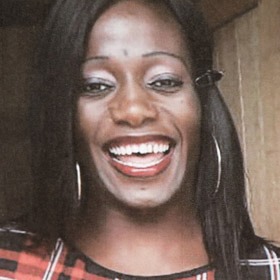
Nare Mphela (Picture provided)
Nare was a trans woman who made history when she took her former high school principal and the Limpopo Department of Education to the Equality Court. She claimed that she had suffered ongoing discrimination from 2013 to 2014 because of her gender identity. The principal of Raselete Secondary School was accused of encouraging learners to harass her physically and humiliate her, including asking them to “check” her genitals in the bathrooms. The abuse was so severe that it led to her failing matric at the end of 2014.
Represented by the South African Human Rights Commission (SAHRC), she won the case in 2017. The principal was also ordered to attend sensitisation training.
In January 2020, her body was discovered with numerous stab wounds in her rented house in the Makopane area. It is understood that the home was also set on fire. To date, no arrests have been made for the murder. At the funeral, it was touching to see the LGBTIQ+ community and local church community come together to mourn her loss.
The violence against trans and gender-diverse people is not only physical violence. There is structural violence as well. Alex Botha has written a powerful piece about this, from which I would like to quote:
We need to acknowledge the structural violence that has killed some of our trans siblings. They, too, should be remembered on this day, even as they remain faceless and uncounted.
It starts at home. Many trans and gender-diverse people face ongoing physical, emotional and sexual violence. Not only as adults.
Let us consider the children. They are often isolated and prevented from seeking help in the name of culture and religion. Since their parents are their guardians, individuals and organisations are loath to step in. It may even be against the law.
These kids often take to the internet in secret. They reach out to strangers and are exposed to and explore avenues that put them at grave risk. They do not have a safe person to turn to who can help them understand the risks and offer early intervention. Or any intervention.
Many trans and gender-diverse people drop out of school because they are not allowed to dress in or use the bathroom appropriate to their gender. They are vilified for wanting to pee in peace.
Lower education levels in a world with soaring unemployment rates mean that many cannot enter or compete in the labour market. Added to this is the fact that they are often discriminated against because they may sound and look different and therefore are deemed not to be presentable enough to deal with the public.
Many are kicked out of home. They often do not qualify for shelters unless they are willing to go into units as the gender they were assigned at birth. There they are seen as easy prey by fellow service users and an easy target to scapegoat.
If they are on the street or in informal housing structures, their diet suffers. They face violence from perpetrators who know there will be very little legal consequence. They are often harassed by authorities who use COVID as a weapon and legitimisation for abuse. Structures are broken down and removed. Often, medication and condoms are confiscated so as to prevent or discourage sex work. Identity documents are lost in the fray.
They lack access to preventative, emergency and chronic medical services due to poverty and also stigma.
If they require in-hospital treatment, they again are generally assigned to the inappropriate wards based on their legally defined gender. Many are understandably resistant to seeking help. The impermanence of living arrangements may make it very difficult to fetch and take chronic medications – especially when it requires a full belly to mitigate side effects. Their bodies become weak. They develop comorbidities. They are disproportionately vulnerable to infection with COVID-19.
Just as it isn’t enough to be non-racist, but we need to be actively anti-racist, so we cannot only be non-transphobic. We need to fight interpersonal and structural transphobia actively.
And then, Alex ends with a challenge to all of us: “So, what are you going to do about it?”
I would like to light a candle for the 350 trans and gender-diverse people murdered in the past year for being who they are, and for all the ones who were not even reported.
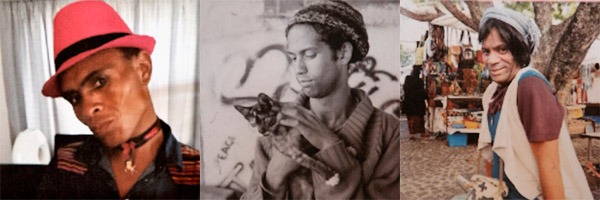
Roxy, Jennifer and Netta (Pictures provided)
This year, we lost three trans sisters: Roxy, Jennifer and Netta, and I would like to light a candle for each one of them as well.
There is so much sadness, but there is some light, as well. In South Africa, there is so much work to be done to improve access to healthcare for trans and gender-diverse people. A group of health professionals have come together towards this common goal, and in October this year, we established the Professional Association for Transgender Health, or PATHSA. It is a multi-professional group, with psychologists, doctors, speech therapists, nurses and counsellors, and it is trans-led, with more than half of the board being trans and gender-diverse professionals. I am very excited that this new group can make a difference and bring a glimmer of light in the darkness.
I would like to close with a prayer for the Transgender Day of Remembrance. It was written by Thandiwe Dale-Ferguson from the Loveland United Church of Christ in Colorado, USA:
God of all ages
God of all peoples
God of all hopes and dreams
Today, we remember those among us who are transgender.
We grieve the murders of those killed for the sake of hate;
We celebrate the lives of each and every transgender individual:
Those who are able to live into their fullest selves
And those who fear the repercussions of authenticity.
Help us and our world to transition
From grief to celebration,
From ignorance to understanding,
From shame to pride,
From complacency to activism
And from hopelessness to hope.
We lift these prayers up to you, O God,
You who are beyond binaries,
You who call us each by name and love us beyond measure.
Amen.
May you all have a blessed week!
See also:
Postcolonial leadership? The challenges facing a new generation of theologians
Postkoloniale leierskap? Die uitdagings vir ’n nuwe geslag teoloë