

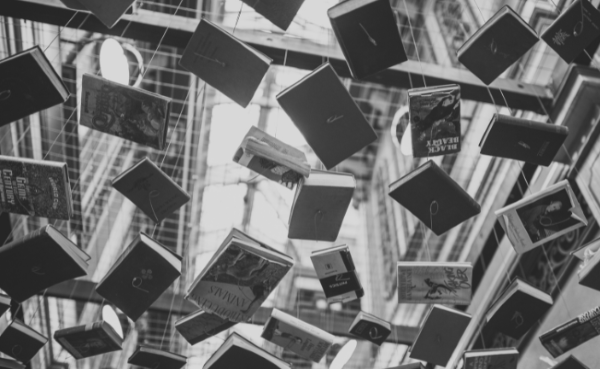
Photo: Negative Space on Pexels
In December 2014, the poetry journal New Coin celebrated its 50th anniversary by featuring a section titled “The state of South African poetry: A symposium”, and I contributed to it with the essay “Locating spoken word in today’s South African poetry scene”, which examined the role of spoken word poets in the rejuvenation of South African poetry in the new millennium1. A decade has passed, and the time is ripe for a “sequel”, ie, for an assessment of the South African spoken word scene in the last ten years. The questions on the plate are: 1) Is spoken word still the most vibrant, exciting and innovative strand of the South African poetry community? 2) Has the spoken word landscape changed? 3) Have new trends emerged in the spoken word movement?
........
Presently, the spoken word scene in South Africa is not as stimulating as it used to be and offers little in terms of literary experimentation and novelty.
........
Presently, the spoken word scene in South Africa is not as stimulating as it used to be and offers little in terms of literary experimentation and novelty. As a matter of fact, the boldness, creativity and diversity typical of the early spoken word movement have dried up, and the scene is now pigeon-holed for its uniformity, conformism and platitude. What happened? How did the once colourful, thought-provoking, syncretic spoken word movement lose its vitality and strength? There are no easy solutions to questions of this magnitude, and this short piece aspires to raise questions rather than provide answers; however, with 20 years’ experience as a participant-observer in the spoken word movement, I propose that the most plausible reason for this unexpected turn is the cannibalisation of the spoken word movement by slam poetry.
In the imagination of today’s South African youth, spoken word poetry is coterminous with slam poetry: since the Johannesburg-based Word N Sound poetry collective launched the first professionally organised slam tournament in 2010 (which I co-judged), slam events have veritably colonised (ie, “(re)tilled the soil” of) the “performance poetry”2 landscape, and the open mic circuit has shrunk to such an extent that it has virtually disappeared from the cultural milieu of urban Mzansi. Unlike the mellow, laid-back open mics, slam sessions are highly regimented, confrontational events with both rigid rules (strict time limits and scoring criteria) and self-imposed rules (memorisation of poems), which participants must learn, interiorise and adhere to, if they want to stand a chance to run for victory. Conditioned by these circumstances, slammers have created a new poetic form (the “slam poem”), which, like all poetic forms, possesses peculiar prosodic features3. As I illustrated in my 2024 article “Recasting slam poetry: Busisiwe Mahlangu’s début poetry collection Surviving loss” (https://le-simplegadi.it/article/download/1674/1547):
Slam poems are convoluted and overcharged pieces: to saturate their performances, slammers embrace a linguistic horror vacui (“horror of empty spaces”; an aversion to emptiness in artistic designs), according to which the writer must touch upon as many topics as possible, and offer as many punchlines, rhymes/half-rhymes/internal rhymes, allusions to popular culture, biblical references, similes and metaphors as possible in the standard three-minute slot at their disposal. These pieces seek profusion, a heterogeneous, ill-assorted, breathless grasping at different thoughts. Operating within this imaginative landscape is a severe limitation for a writer, and this idiosyncrasy is reflected in the form of slam poems, which are typically long, ornate, liturgical compositions shaped after a standard tempo, set of rhetorical devices, grammar, tone, cadence, rhythm, diction and choice of language and images, which the slammer has observed as a winning “formula”.
Slam poems are designed to win the audience’s heart and exude pathos (Greek for “suffering”): a conceptual mode of persuasion and a means of stirring people’s emotions, pathos is a well-known rhetorical strategy, which effectively turns the audience’s opinion towards the speaker; however, it can be a double-edged sword if used injudiciously by inexperienced writers. In fact, when pathos gets out of hand, as in most slam pieces, it overflows into the antipoetic bathos (Greek for “depth”), the act of a writer’s falling into inconsequential and absurd metaphors, descriptions or ideas in an effort to be increasingly emotional or passionate (“A bad poem in springtime, filled to bursting with metaphors,” writes Walter Benjamin to expose this type of euphuism)4.
The obsessive search for endorsement and support from judges and audiences dictates not only the performance style (the aural-visual attack typical of slam acts), but also the aesthetic and subject matter choices: slammers know that reading a haiku, a sonnet, a ghazal or a short nature poem from the page would be a suicidal move in a tournament; consequently, they “play safe”, replicating poems without structural variations of notes. Moreover, in the last ten years, young people’s residual hope in the capacity of post-apartheid governments to create a just society has evaporated, and, thematically speaking, slam poets have become politically disillusioned: their poetry – volatile, ephemeral, navel-gazing, confessional, solipsistic and focused almost exclusively on identity and mental health issues – reflects this state of mind and intercepts the disappointments, frustrations and torments of young audiences.
.........
The loss of spaces designed to cultivate and encourage free expression is arguably the main reason for the decline of the spoken word community as a transformational literary force. But how did slam end up monopolising the spoken word scene?
.........
The duplicative delivery of specular poems is what makes slam events unimaginative and uninspiring for the spectator in search of unconventional poetic and dramatic methods; conversely, open mics are spaces for creative extravaganzas, devoid of the burdens of proleptic approval and competition, which attract and nurture nonconformist voices. Unfortunately, they have become marginal in the South African poetry scene5, and this has inhibited the growth of potentially talented young writers who are uninterested in or are intimidated by the Darwinian idea of fighting for survival in “gladiator-like scenarios” (Medina in Bila 2021:68). The loss of spaces designed to cultivate and encourage free expression is arguably the main reason for the decline of the spoken word community as a transformational literary force. But how did slam end up monopolising the spoken word scene?
The “slammification” of the South African spoken word scene
There are four major spoken word/slam platforms in the country: the Durban-based international festival Poetry Africa, Word N Sound and Current State of Poetry in Johannesburg, and Hear My Voice in Pretoria. Poetry Africa is an annual event and a classic in the nation’s poetry calendar, hosted by the Centre for Creative Arts at the University of KwaZulu-Natal; the others are independent organisations, run by young poets/entrepreneurs and financially reliant on intermittent public funds, private sponsorships, donations and revenue from live events, merchandise, etc. Making profit from live events is essential for their financial well-being, and banking on lucrative slams presents a necessary economic asset6. Open mics are free-entrance sessions hosted in small, informal venues (bars, restaurants, libraries, bookstores, etc) and do not generate substantial income (if any) for the hosts. They are crucial community-building moments and provide a relaxed environment for poetry lovers and practitioners, but businesswise, they are not sustainable in the long run and cannot represent the backbone of the activity of youth poetry organisations. Slam battles, on the other hand, can be sold as highly anticipated, high-octane, thrilling showdowns, and participants can be presented as poetry celebrities and stage superstars; because of this, the hosts can charge entrance fees, attract large, assorted audiences and fill capacious venues (theatres, community centres, auditoria, etc).
........
A switch of focus from text to performance has occurred, which has impacted the “politics” of the poetry scene: slam poetry has become a crowd-pulling “brand” and has facilitated a massive cultural shift within and beyond the poetry community.
........
In 2013, on closing night, Poetry Africa hosted South African poets of the stature of Ari Sitas, Malika Ndlovu, Lesego Rampolokeng, Kobus Moolman, Victor Khulile Nxumalo and Natalia Molebatsi, just to name a few – lyricists with remarkable international profiles and countless poetry collections under their belts – prolific writers and outstanding performers. Ten years later, the situation has drastically changed, and the slam finals are the main event of the most important festival of the country (and possibly of the continent). A switch of focus from text to performance has occurred, which has impacted the “politics” of the poetry scene: slam poetry has become a crowd-pulling “brand” and has facilitated a massive cultural shift within and beyond the poetry community. The performances of young slammers are electrifying, slam nights inflame crowds and make news in ways unconceivable ten years ago, and live poetry has never been this popular, appealing and exciting. Nonetheless, pressing questions need to be raised and addressed if we as poets, literature lovers, researchers, educators, etc are interested in something more than the mere marketability of poetry: has this shift invigorated the poetry showcased on South African stages? Have stage presence and social media influence supplanted writing virtuosity as the main criteria for inclusion/exclusion in poetry events? Has South African literature been enriched by the “slammification” of the spoken word community?
The literary creations of two generations of spoken word poets: A comparison
The pioneers of the spoken word movement7 have produced an impressive body of literature and documented the achievements of an entire generation of poets. They have penned countless poetry collections and are widely anthologised, translated and academically discussed. They are also fecund editors and publishers who have run or are running poetry journals, magazines and websites (Badilisha, Botsotso, Herri, Poetry Potion, BKO, New Coin, New Contrast) and publishing houses (Botsotso, Poetree, Impepho, Timbila, Gossip Village). Last but not least, they have compiled and edited books that are a must-read for anyone interested in the history of post-apartheid literature, such as Natalia Molebati’s We are …: A poetry anthology (2008), Robert Berold’s Poetry 99: Twenty South African poets in performance, 1999 (2013), Mandi Poefficient Vundla and Allan Kolski Horwitz’s Home is where the mic is: 24 poets of the page and stage (2015), Myesha Jenkin’s To breathe into another voice: A South African anthology of jazz poetry (2017) and Makhosazana Xaba’s Our words, our worlds: Writing on black South African women poets, 2000-2018 (2019). These poets took their first steps on the poetry stages of the country (public ceremonies, open mics, etc) and continue to have a great impact on the performance space at home and overseas. In addition, they have spearheaded the redefinition of the post-apartheid literary canon. Can one say the same about the younger wordsmiths and their role as innovators of literature?
.........
The pioneers of the spoken word movement have produced an impressive body of literature and documented the achievements of an entire generation of poets. They have penned countless poetry collections and are widely anthologised, translated and academically discussed.
.........
Only six spoken word poets of the “slam generation” have produced noteworthy written outputs (unsurprisingly, they are all women): Nkateko Masinga (four poetry collections; she is also a publisher and editor), Koleka Putuma (three collections, including the bestselling Collective amnesia), Busisiwe Mahlangu, Siphokazi Jonas, Katleho Shoro and Zizipho Bam (one collection each). Xabiso Vili and Modise Sekgothe also deserve to be mentioned among the torchbearers of today’s South African spoken word movement: the former is the 2022 world slam champion, and as such has gained the status of a global icon in the performance scene; the latter is the author of an important spoken word album (Dipoko Tsa Dipoko, 2017) and is currently one of the most sought-after and revered “performance poets” in the country.
A dozen poetry collections, a bunch of chapbooks8 and one memorable album is what has been produced in one decade by the “new school” of spoken word poets, all of which (except from the most prolific of the lot, Masinga) come out of the slam scene. In addition, the slam poets Lebohang Masango, Katleho Kano Shoro, Mjele Msimang, Zewande Bk Bhengu, Anga Mamfanya and Masai Sepuru appear in the anthology Years of fire and ash: South African poems of decolonisation (2021), edited by Wamuwi Mbao; and slammers Mutle Mothibe and Belita Andre are contributors of the volume The constant reader: Poetry reviews by poets in South Africa, edited by Katleho Kano Shoro, Vus’umuzi Phakathi and Raphael d’Abdon (2021). This is a thin literary legacy in a country where, thanks to slam poetry, the spoken word movement has boomed and now counts hundreds of practitioners and followers. What are the reasons for this discrepancy?
“Technauriture” and the “de-literarisation” of poetry
It is empirically evident that the “slam generation” has gradually but systematically disengaged from the written page: being featured in paper publications does not boost slammers’ “brand”/public image or increase their chances of winning tournaments; therefore, it is not part of the slam culture. Slammers have understood that, to succeed not only in competitions, but in the performance space in general, all they need to put together is a solid social media network, plus a repertoire of five to ten poems wrapped in a seducing stage routine. In a context where everything revolves around the bare emotional experience of the performance, a compact, well-packaged set is sufficient to secure visibility and work opportunities. Consequently, besides the few exceptions mentioned above, slammers do not publish their works in printed media. When they have, it has been in chapbooks and collections filled with two types of poems: 1) trademark slam pieces, ie, poems that are effective in a live competitive environment, and which, if not artfully “recast” (Scheub, 1971; Scheub 2021; d’Abdon 2024), look and sound poor on the page; and 2) unpublished poems that, having skipped the “quality control test” guaranteed by the assessment of journal and magazine editors, are generally of scarce literary relevance.
........
The new generation of South African wordsmiths is largely emancipated from scriptocentric/Eurocentric conceptions of literature: they embrace poetry mostly as an oral, performance-centred art. Plus, being born in the digital world, they archive their works almost exclusively on digital platforms, treating printed media as a remote option or even a relic of the past.
........
To be fair, all poets are children of their age, and the last generation of spoken word artists was no exception. The importance of the printed text as historical record cannot be underestimated, and this article insists on this aspect, vital for the well-being of any literary community. But the study of oral traditions teaches us that a papyrocentric approach to poetry is inadequate in decolonial, multimodal contexts; plus, from digital humanities, we have learned that the advent of computing machines has permanently altered the very concept of “literature” (etymology: “learning from books”). The 21st century knowledge systems are inextricably imbricated with the digital space, and poetry, as both a performance and a written art, is thriving in this hybrid space where orality and virtual reality meet and overlap (the theoretical principle of “technauriture”, coined by Kaschula and Mostert)9. The new generation of South African wordsmiths is largely emancipated from scriptocentric/Eurocentric conceptions of literature: they embrace poetry mostly as an oral, performance-centred art. Plus, being born in the digital world, they archive their works almost exclusively on digital platforms (websites, social media, online archives, video and audio recordings, etc), treating printed media as a remote option or even a relic of the past.
This article takes cognisance of these transformations, and observes that magazines, journals, anthologies and collections are not the preferred arrival point of the creative process of young spoken word poets. Based on this evidence, it interrogates the influence that slam (as both a culture and a poetic form) and the digitalisation of poetry are having on today’s South African literary landscape; it concludes that the slam-driven “de-literarisation” of poetry is an ongoing (irreversible?) literary/sociocultural/anthropological phenomenon, with ramifications within and beyond the spoken word movement, which deserves the attention of readers, researchers, critics, event organisers and poets. To be competently investigated and better comprehended, these complex topics require up-to-date, interdisciplinary research methodologies which must draw from literary theory, performance studies, digital humanities, anthropology, sociology, etc. This explorative piece is hopefully a tiny step in the right direction.
Bibliography
Bila, Vonani. 2021. Poetic innovation and its bottlenecks in post-apartheid South African poetry: Imbiza: Journal for African Writing. 1(3): 60-70.
d’Abdon, Raphael. 2022. Slam to Heal. A Poetic Inquiry Reflection. Le Simplegadi. 22: 105-121.
d’Abdon, Raphael. 2024. Recasting Slam Poetry: Busisiwe Mahlangu’s Début Poetry Collection Surviving Loss." Le Simplegadi. 24: 103-115.
Scheub, Harold. 1971. Translations of African oral narrative-performances to the written word. Yearbook of Comparative and General Literature, 201:28-36.
Scheub, Harold. 2021. Translations of African oral narrative-performances to the written word. Nduka Otiono & Chiji Akoma eds, Oral literary performance in Africa: Beyond text. London-New York: Routledge: 99-109.
End notes
1 See https://journals.co.za/doi/epdf/10.10520/EJC171514.
2 For an analysis of the problematic terms “performance poetry” and “performance poet”, see my 2018 article “You say ‘performance poet’, I hear ‘Dance, nigger, dance’: Problematizing the notion of performance poetry in South Africa” (https://www.tandfonline.com/doi/full/10.1080/00138398.2018.1540154).
3 For an analysis of a prototypical “slam poem”, see my 2022 article “Slam to heal: A poetic inquiry reflection” ( https://le-simplegadi.it/article/download/1526/1410).
4 Benjamin, Walter. 1978. Surrealism: The last snapshot of the European intelligentsia. Translated by Edmond Jephcott. New Left Review 1(108):47–56.
5 Some poetry organisations have not been “slammified” and organise only open mic sessions (Speak Child in Pretoria and Urban Zulu in Johannesburg, for example).
6 Slam events are not only potential sources of income; more importantly, they are venues that are “specifically designed to be a non-pathologized, social environment”, ie, liberated zones, holding spaces and therapeutic communities created by and for the traumatised urban youth of South Africa, grappling with the tribulations of their everyday life and with the effects of local and global injustice (d’Abdon 2022:113).
7 The list includes, among others: Diana Ferrus, Lesego Rampolokeng, Malika Ndlovu, Myesha Jenkins, Phillippa Yaa de Villiers, Makhosazana Xaba, Gabeba Baderoon, Allan Koslki Horwitz, Vonani Bila, Kgafela Magogodi, Mphutlane wa Bofelo, Aryan Kaganof, Gary Cummiskey, Lebogang Mashile, Ike Mulia, Isabella Motadinyane, Napo Masheane, Natalia Molebatsi, Toni Stuart, Pieter Odendaal, Quaz Roodt, Afurakan, Maakomele Manaka, Ntsiki Mazwai, Vangile Gantsho, Sarah Godsell, Flow Wellington, Sindi Busuku and Kyle Allan.
8 Slam champion Pakama Mlokoti is working on her debut collection; a collection of poetry and prose by slammer Dshamilja Roshani is currently under production, and the debut collection of slam poet Thando Fuze will be published by Dryad Press in 2026. For a complete list of collections and chapbooks published by South African slam poets, see my previously mentioned 2024 article “Recasting slam poetry: Busisiwe Mahlangu’s début poetry collection Surviving loss”.
9 See Kaschula, Russell H, and André Mostert. 2009. Analyzing, digitizing and technologizing the oral word: The case of Bongani Sitole. Journal of African Cultural Studies 21(2):159-17. Also see Kaschula, Russell, and André Mostert. 2011. From oral literature to technauriture: What’s in a name?. Cambridge: World Oral Literature Project: 16 pages.
Also read:
Toyota Stellenbosch Woordfees 2024: ’n onderhoud met Jaco van der Merwe