

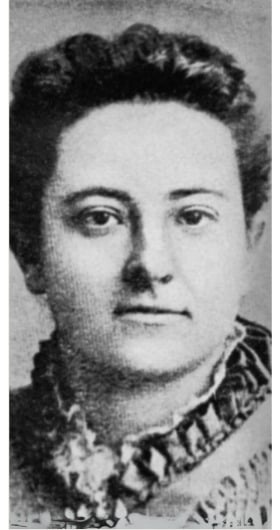
Olive Schreiner (Photograph provided)
Olive Schreiner’s novel The story of an African farm (1883) was written under the pseudonym Ralph Iron, since women were not supposed to write books. Soon, Olive’s real name got associated with The story of an African farm, and it did not take too long before reprints credited Schreiner, not the fictitious Iron, as the author.
Schreiner’s fame continued to grow as more copies of the book were sold. Even the American novelist and travel writer Mark Twain visited Cradock and chose to stay in the local hotel to see where the remarkable Schreiner came from. You will not find the name Mark Twain in the hotel records, but ask the friendly personnel: Samuel Langhorne Clemens did sign the guest register. Unlike Schreiner, Clemens never became known under his real name, and few people know that Mark Twain was a pseudonym.
As her fame grew, so too did Schreiner’s quest for righteousness. In many ways, she was way ahead of her time. Schreiner was a devout feminist who actively campaigned for women of all races and men of all races to be equal and to be able to vote. She infuriated Cecil John Rhodes when she accused him of corruption, and earned herself the ire of the British government for being staunchly opposed to the Boer Wars. Her continued public challenges to traditional gender roles and the religious views of her time also placed her at odds with her peers.
Schreiner died in 1920, but the interest in her work and life continues. Annually, academic papers are published on her. Movies are still being made, and books are still being written.
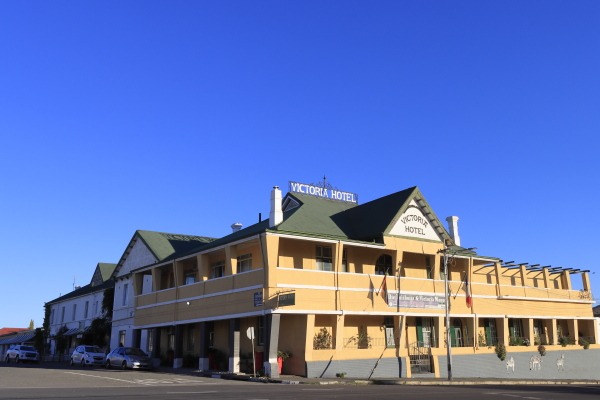
The hotel in which both Schreiner and Mark Twain spent time
Schreiner used to live in Cradock, the town that has since been renamed Nxuba. Where better to hold an annual literary festival than in the gorgeously, dare one say courageously, restored story street in that remarkable little Karoo town and in the very hotel in which both Schreiner and Mark Twain spent time?
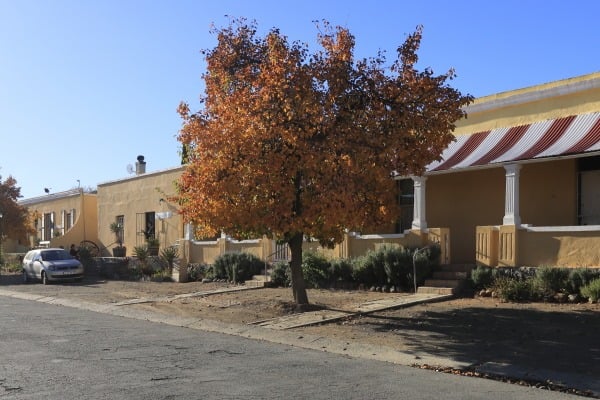
A part of Market Street
The incredible Market Street next to the hotel is the legacy of Sandra Antrobus, who purchased and restored these lovely homes, saving them from ruin. Sandra Antrobus died earlier this year, but her remarkable legacy remains.

Lisa Ker
Her daughter, Lisa Antrobus Ker, now runs the establishment.

The AVBOB Poetry Project
The AVBOB Poetry Project has sponsored the festival for many years. Their money enables the organisers to reach teachers who in turn impart their new-found skills and knowledge to over 25 000 learners in the district.

Melina Smit
The 2025 Schreiner Karoo Writers Festival started on 19 June with poetry, stories and songs led by Melina Smit, who used to teach in the district. She was supported by Mthombo Mali, Liza Badenhorst and Elsje Taljaard, while Bridget Harrison accompanied them.
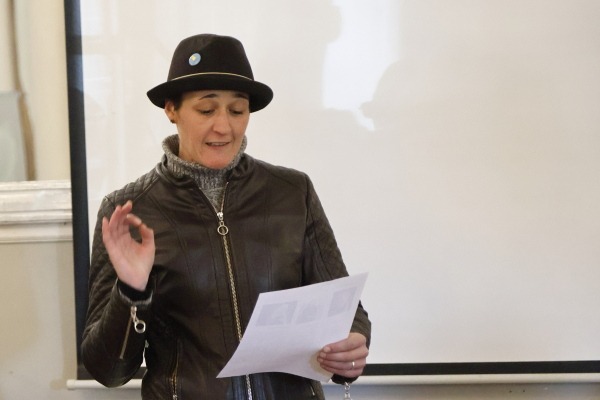
Liza Badenhorst
Early on Friday, 20 June, Melina Smit and Liza Badenhorst explained the use of creativity in stimulating thought and reason in the classroom. Their lessons were interactive, loads of fun was had, and some rather creative ideas sprung from the workshop.

Provided by Luyolo Stengile
The teachers and others were challenged to create rhymes that could be performed to a beat, some of which were pretty good.
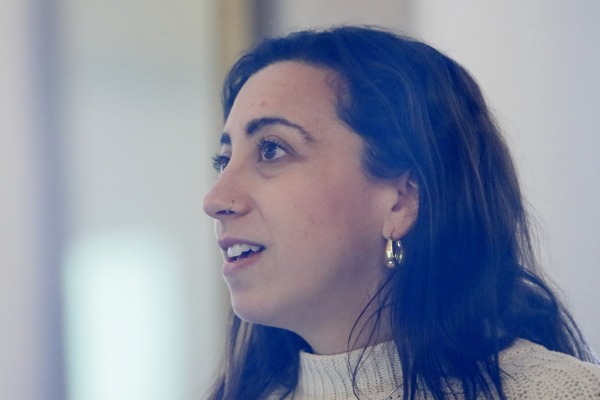
Madeleine Bazil
Madeleine Bazil – a photographer, artist and filmmaker – then led a session on using nature and nature poetry as the inspiration for creative thought.
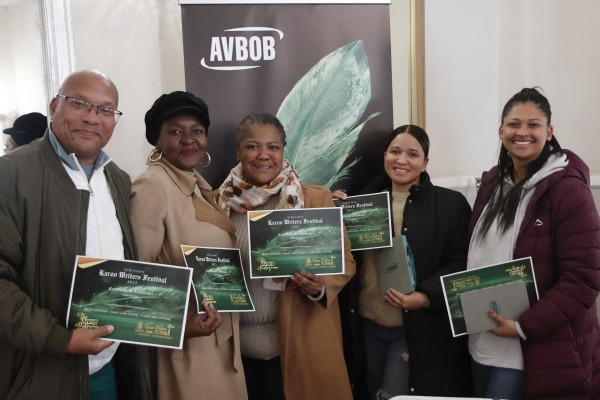
Hard work rewarded
The teachers received certificates for attending these workshops.
In May 1925, 100 years ago, Afrikaans became an official language in the Union of South Africa. Up to that point, Dutch and English were the two official languages. Afrikaans is much older than 100 years, though. Cradock was one of the towns in which Afrikaans was published more than half a century before it became an official language. In the 1860s, Louis Henri Meurant, a journalist and newspaper editor, agitated for the Eastern Cape to gain independence from the Cape Colony, which was then ruled by the British. Meurant, a polyglot, understood the power of language and encouraged “Afrikaans-speaking” people to write and publish their thoughts in the same language that they spoke at the time. That language may not have been the same as the Afrikaans spoken today, but it certainly was no longer Dutch. Meurant never succeeded in gaining independence for the Eastern Cape, but his text Zamenspraak tusschen Klaas Waarzegger en Jan Twijfelaar over het onderwerp van Afscheiding tusschen de Oostelijke en Westelijke Provincie, which was published by The Cradock News, an English-language paper, is often touted as one of the most important publications in early Afrikaans.
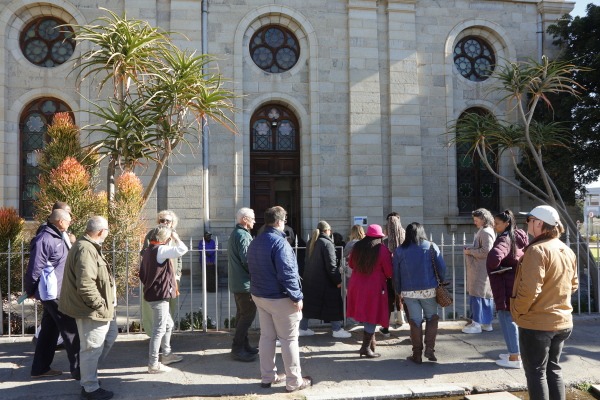
On our way to church
I briefly explained how the Khoi traders began speaking a new language in the early 1500s, as European ships started sailing around the Cape. The Khoi had traded with Arabian sailors for centuries before that, so they understood the importance of learning to communicate with sailors. Once Van Riebeeck arrived, the Khoi were able to negotiate between the settlers and the locals for water and meat. In this way, the Khoi version of their trade language, later known as Veeboerafrikaans, began to spread. The Dutch imported slaves, who had to learn a new language. Their version, known as Kaaps, is still heard in the Western Cape.
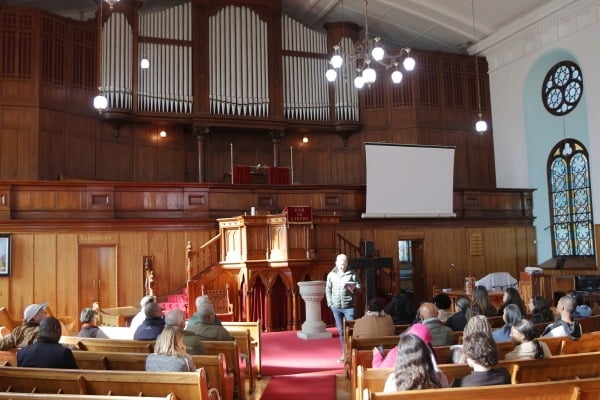
In church
Once more, Dutch-speaking settlers arrived, and they too had to learn a new language, as most of the lower-class workers and soldiers were not able to speak the somewhat more formal Dutch used by Van Riebeeck and his senior staff. Many of these white settlers left the employ of the Dutch East Indian Company as soon as possible, and settled east of the Cape settlement. Their version of Afrikaans thus became known as “Oosgrensafrikaans”, the very language Louis Henri Meurant was promoting.

Corné Slabbert
Meurant was such an influential figure in Cradock that he was asked to unveil the cornerstone of the Dutch Reformed Church. We walked to the Dutch Reformed Church, where Corné Slabbert, the local dominee, told us more about Meurant and the church building.
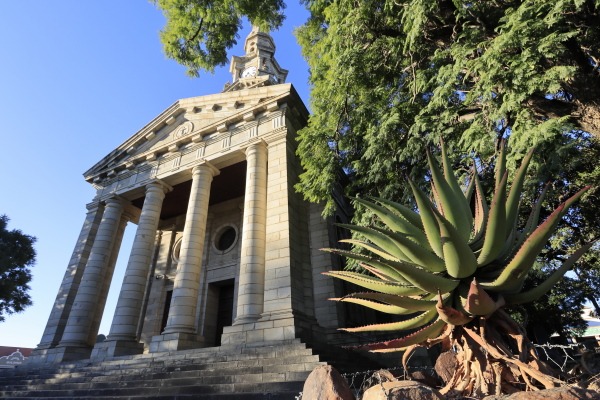
A magnificent sandstone building in the Karoo
Those in the know may see that this magnificent sandstone building in the Karoo is a copy of St Martin in the Fields on Trafalgar Square, in London. There is a reason for it. When the church was planned, the dominee’s wife was homesick, so he ordered the architect to copy St Martin in the Fields. Since the church is the result of a love story, and since the church proposes a life filled with love, Slabbert put together a booklet cheekily called Die Karoo Taj Mahal. Copies are on sale at the church.

At the Great Fish River Museum
We then visited the Great Fish River Museum, which used to be the manse where the dominees lived. The museum houses interesting artefacts and displays from an era long gone. There also is an annex dedicated to Fort Calata, Matthew Goniwe, Sicelo Mhlauli and Sparrow Mkhonto, who were killed by security police for their involvement in the struggle. They have since become known as the Cradock Four.
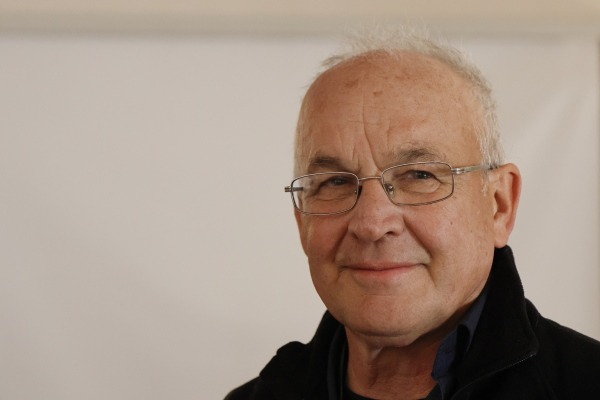
Kevin Davie
After the walkabout, Kevin Davie – a journalist, newspaper editor and academic – presented a talk on rock art. He has a keen interest in rock art itself, but more so in the research done on such artwork. Thousands of drawings have been made by researchers who wanted to capture and preserve these paintings long before colour photography became commonplace. Davie juxtaposed and compared many of these works with paintings and drawings from well-known modern artists, like Picasso, who openly admired rock paintings. Davie himself is an accomplished printmaker. His own works represent a clear homage to the early researchers of rock art and to the rock artists themselves.

Provided by Luyolo Stengile
Handprints are common in Southern African rock art. Davie suggests that it is a way to say: “I am here.” After his talk participants were encouraged to think what message they might want to leave behind.
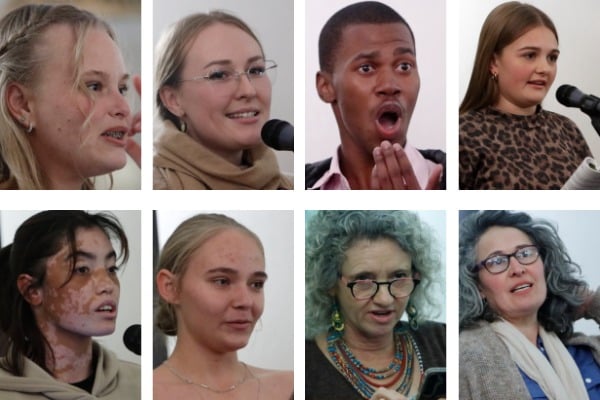
The Schreiner Karoo Writers Festival and the AVBOB Poetry Project encourage local artists to participate, so a few brave faces got up to the podium to read their own work during an open mic session.
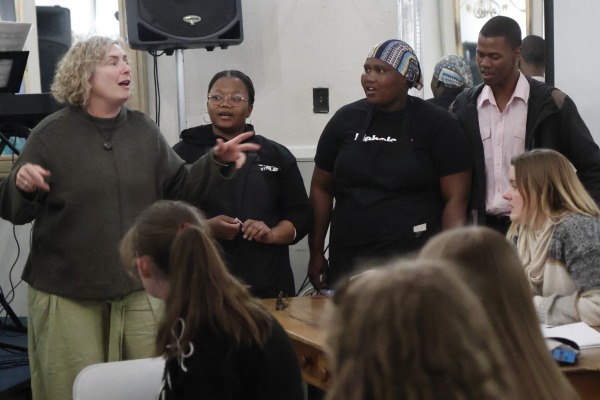
They were cooking!
Members of the kitchen staff joined in the fun.
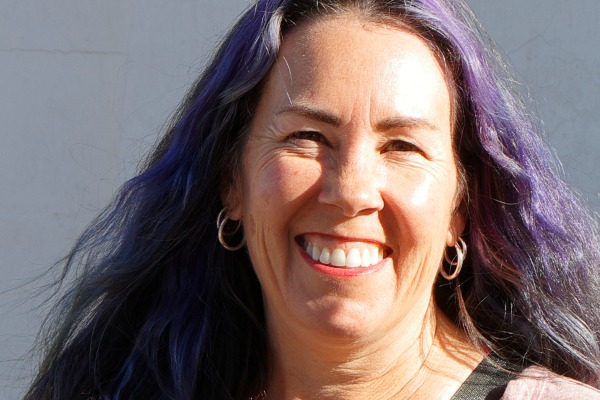
Jessica Powers
I interviewed JL Powers, an award-winning young adult author from Texas in the USA. She also owns Catalyst Press, a publishing company that specialises in books from Africa or about Africa.
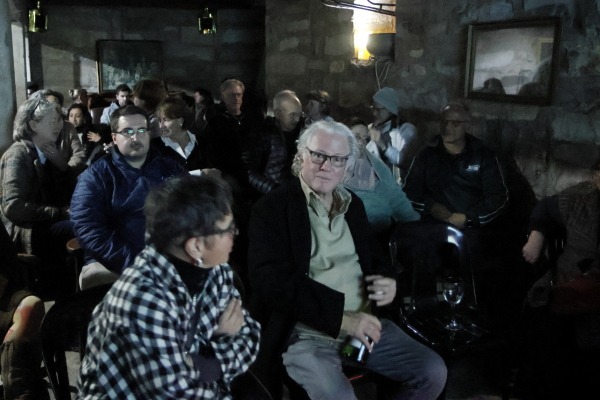
Down below
After supper, we convened in the dungeons below the hotel to watch a movie on Olive Schreiner made by Lisba Vosloo.
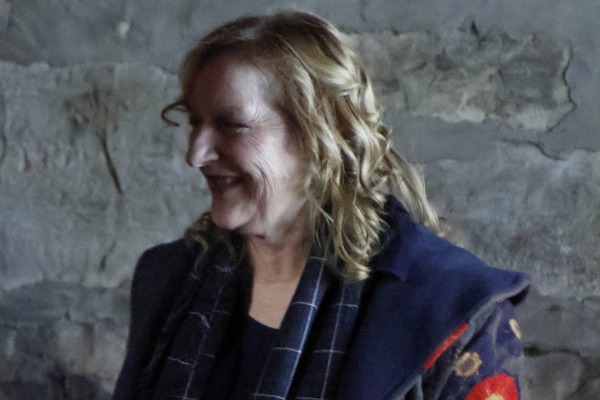
Lisba Vosloo
Vosloo introduced the movie before all the lights were dimmed.
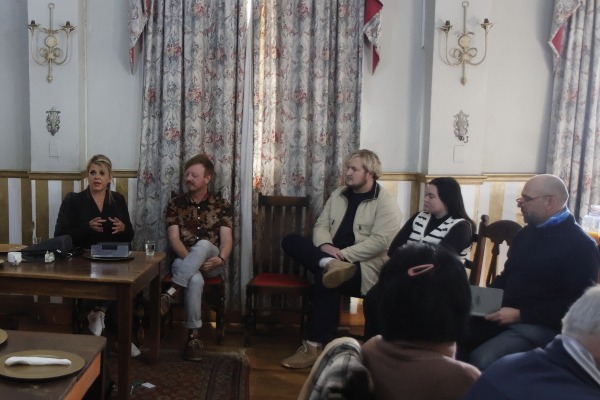
Telling our stories (Photograph by Andile Bhali)
On Saturday morning, I interviewed Tammy Southby, Melvin Iverson, Jaco de Waal and Myrlene Alberts during a business breakfast. I asked them whether it is true, or perhaps not, that marketing is about storytelling?
Tammy Southby is the creator of Sunshine Simplicities, a travel blog looking for stories of ordinary people in interesting places. While she does do product placements, it is important for her always to remember the focus of her project. She tells stories of people off the beaten track, very much the way Mark Twain once did.
Melvin Iverson runs Yo! Media with his partner, Cameron Millar. “Be authentic” is his most pertinent advice. Your business will tell you what it wants.
Jaco de Waal and Myrlene Alberts run Gem Solutions ZA, a marketing company that helps businesses grow their online presence. They are young and agree that it is important for companies to be genuine in their approach to reaching younger people. Often, a video of the goings-on behind the scenes, sharing real stories of real people in a company, will do more than a flashy ad campaign.
All of us who were part of the panel have marketing backgrounds, so we do know how important it is to move units, but Melvin Iverson summarised our discussion with his motto: “More telling, less selling.”
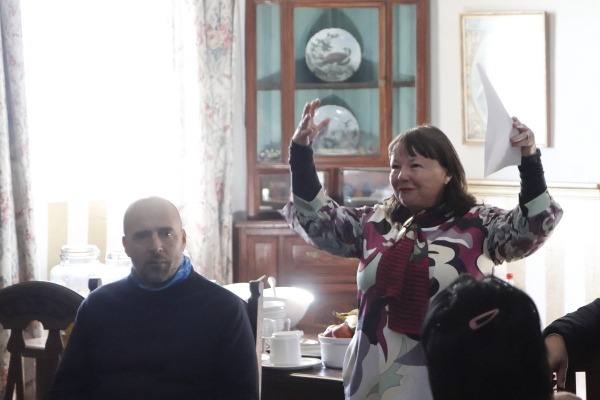
Lisa Ker (Photograph by Andile Bhali)
After breakfast, Lisa Ker explained to us why the municipality chose to support a bid to turn Nxuba/Cradock into a UNESCO City of Literature. Should you want to know more, the team has prepared a thorough overview on the matter in the programme notes. I quote just two paragraphs, and you may want to watch this interview:
Cradock’s application to become a UNESCO City of Literature is more than just a recognition of its literary heritage – it is a visionary step toward sustainable cultural and economic development. By aligning itself with the UNESCO Creative Cities Network, Cradock positions itself among an international cohort of cities committed to placing creativity and literature at the heart of their development strategies.
At the core of this initiative is the town’s rich historical and literary legacy, shaped by influential figures like Olive Schreiner and Etienne van Heerden, and celebrated through annual events such as the Schreiner Karoo Writers Festival. This foundation provides a powerful narrative for positioning Cradock as a literary destination with authentic roots and ongoing relevance.
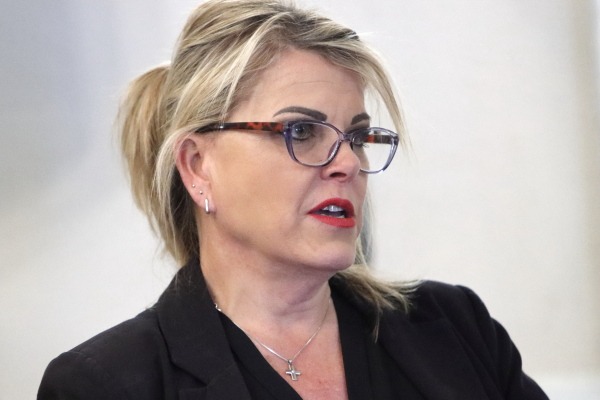
Tammy Southby
Next up, Tammy Southby read some of her favourite stories from Sunshine Simplicities, while filling us in on some background to each story.
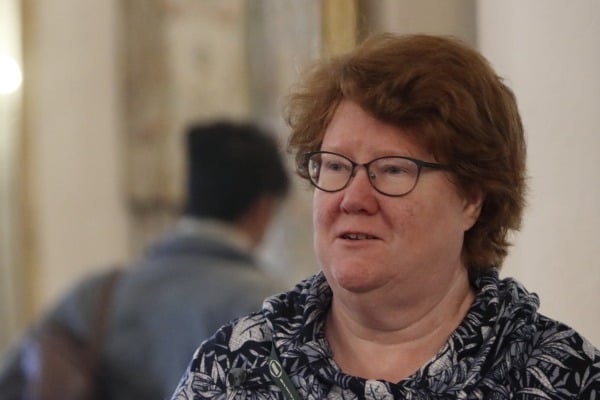
Chrystal Warren
Chrystal Warren updated us on the restoration of Schreiner House, which is owned and managed by the Amazwi South African Museum of Literature. We also heard more about their projects in Makhanda.

The many facets of Olive Schreiner (Photograph by Andile Bhali)
I then got to speak to Lisba Vosloo, Madeleine Bazil and Kevin Davie on the many facets of Olive Schreiner.
Davie took a special interest in her writings on nature conservation. Long before it was mooted by politicians, Schreiner had already written about the importance of preserving large pieces of land for plants and animals to grow and breed under natural conditions.
Vosloo had, for a while, been interested in Schreiner, but it took her a long time to find the time to be able to put together her movie, screened the previous night. It it is a remarkable overview of Schreiner’s life.
Together with Holding Thumbs Productions, Madelein Brazil is also making a movie on Schreiner, but she is taking a very different approach. Those who are interested may visit her website to sign up for regular updates.
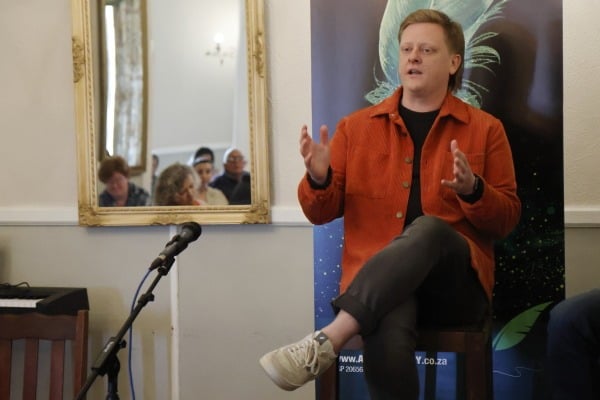
Ruhan Fourie (Photograph by Andile Bhali)
I then interviewed Ruhan Fourie, LitNet’s writer in residence at the Tuishuise. Fourie has just won the Desmond Tutu-Gerrit Brand Prize for his book Christian nationalism and anticommunism in twentieth century South Africa.
He is also busy writing a biography on Beyers Naudé, who grew up in the neighbouring town, Graaff-Reinet. Beyers Naudé, a dominee in the Dutch Reformed Church, dared to challenge apartheid and was placed under house arrest as a result.
Of interest is that the Dutch Reformed Church in Graaff-Reinet split because Jozua Naudé, the father of Beyers Naudé, dared to speak Afrikaans from the pulpit of the church, which is a copy of Salisbury Cathedral. The daughters of Andrew Murray took exception. A new Dutch Reformed Church was built a few hundred metres down the road. It was known simply as “die Nuwe Kerk”. It took decades for the two congregations, who later both preached in Afrikaans, to bury the hatchet and combine again in the Gothic, cathedral-like “old” church.
Thereafter, local writers were asked to share their stories.
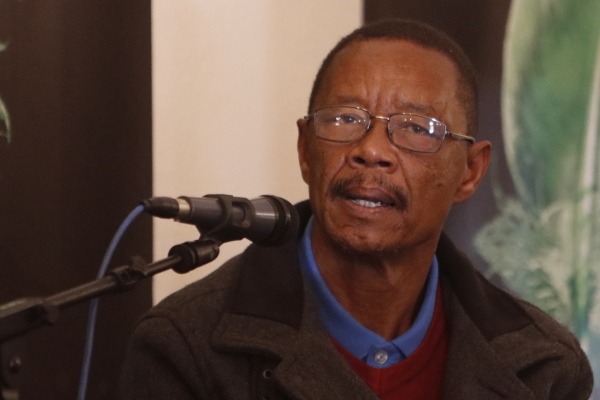
Jimmie Simons
Jimmie Simons showed off his latest book, a clever detective story about a reluctant person forced to take on the role of a sleuth.
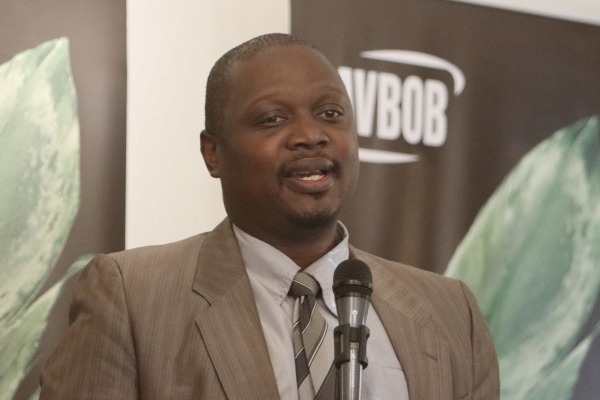
Luyolo Stengile
Luyolo Stengile, a clerk in the local magistrate’s court, is an active nonfiction author.
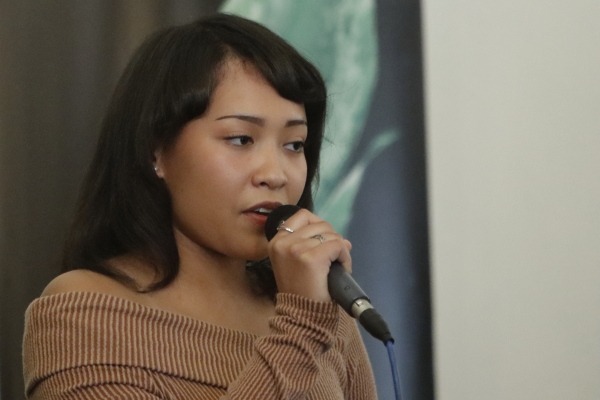
Junayda Abrahams
Junayda Abrahams sang for us.
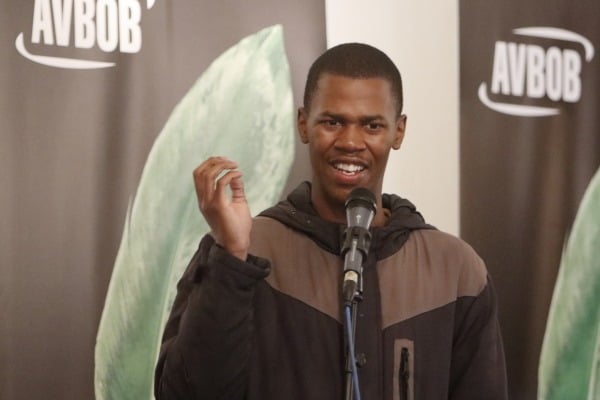
Andile Bahli
And so did Andile Bahli.
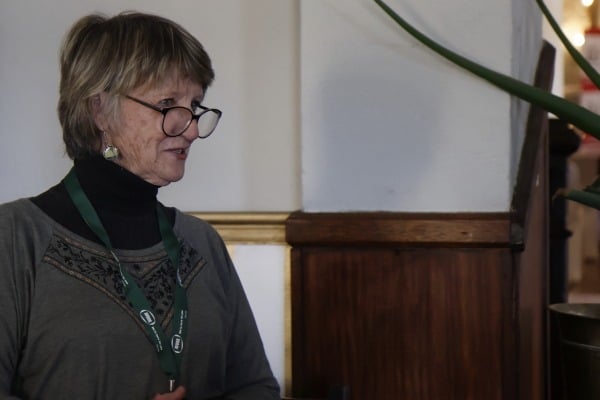
Denise Jack
After lunch, Denise Jack, one of the Schreiner Festival’s most ardent supporters, spoke to us about her journey with the festival.
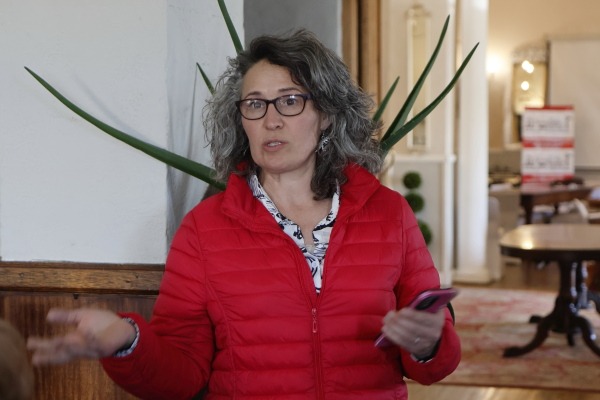
Elsabe Groenewald
Elsabe Groenewald, a journalist and regular at the festival, shared stories about her work in the surrounding towns.
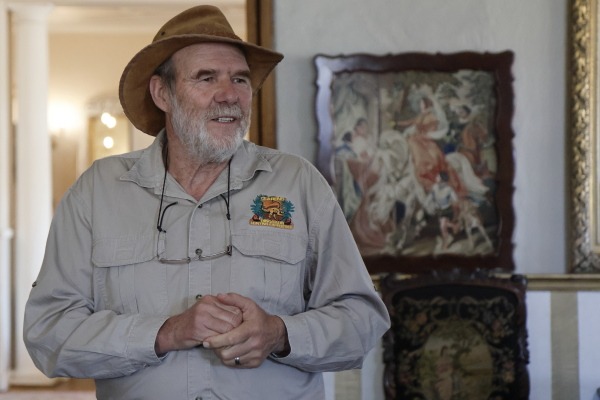
Gideon Groenewald
Gideon Groenewald, geologist and palaeontologist, regaled us with tales from his research in the Karoo and about finding fossils on his many walks.
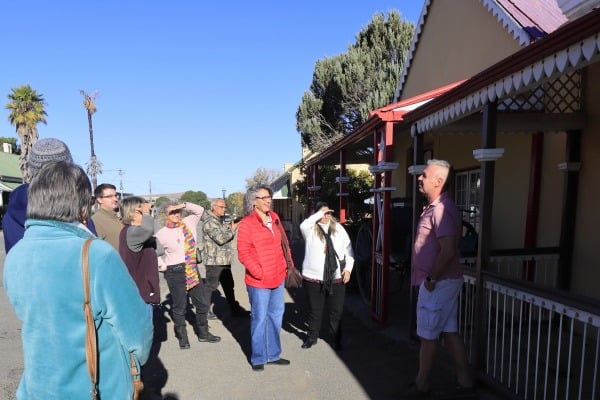
Pieter van der Westhuizen, seen on the right
Later, Pieter van der Westhuizen took us on a guided walk through the town.

Nomonde Calata on the left with Melissa Riordan (Photograph by Andile Bhali)
In the Anglican church, we met Nomonde Calata, the widow of Ford Calata, one of the Cradock Four.
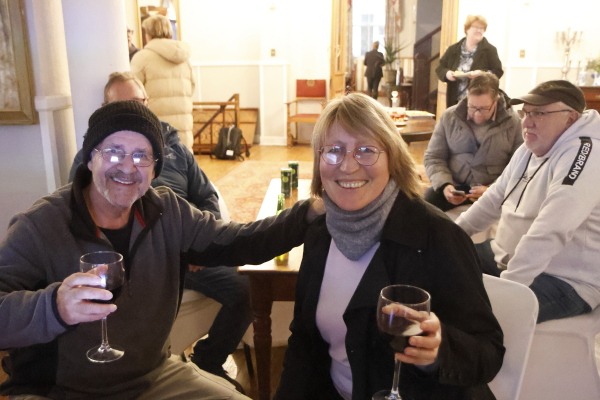
Chris Marais and Juliene du Toit
Chris Marais and Juliene du Toit were up next. If you have not come across their work yet, it may be time to visit Karoo Space. The couple criss-crosses the Karoo, looking for stories, finding them, photographing them and writing them down. Their books on the Karoo are a joy. On Saturday night, they gave us a talk and a slideshow on the many small businesses that prop up the economies of small towns in the Karoo.

The koeksister economy
I took one photograph of one of theirs: the koeksister economy is well known in the Karoo. (Buy their books for more photographs and stories!)

Tony Jackman
After a sumptuous Karoo dinner, the food writer and playwright Tony Jackman told us about some of his favourite Olive Schreiner stories. It was a fitting tribute to a great person, one who still touches the lives of many, and a great way to end the festival.
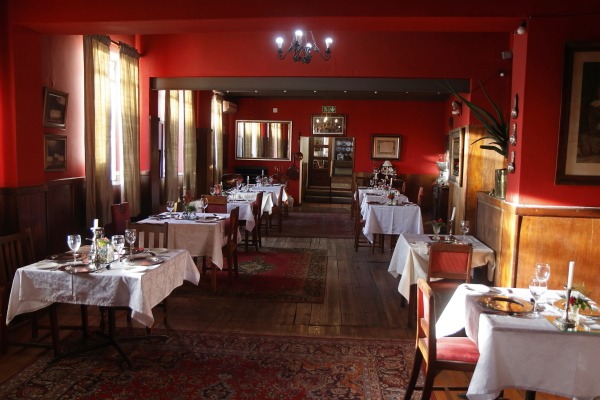
Welcoming! (Photograph by Andile Bhali)
If you have not yet been to a Schreiner Karoo Writers Festival, do send a message to reservations@tuishuise.co.za, and they will keep you informed about the next one. You are also most welcome to join in at the Etienne van Heerden Veldsoirée taking place from 25 to 27 July 2025.
- Photography by Izak de Vries, unless otherwise mentioned
See also:
Milk tart, murder and literary excellence at Schreiner Karoo Writers’ Festival
Kommentaar
How special to have had the premier screening of “In Search of Olive Schreiner”, the first-ever documentary feature film on the life and times of Olive Schreiner, at the Victoria Manor in Cradock / Nxuba! The hotel was where our revered young author and governess, waited for and met her prospective employers, farmers from the district.
Ek stap al ’n lang pad op soek na Olive Schreiner-voetspore. Sy het haar eerste tv-debut op die Afrikaanse kanaal kykNET, gemaak, as deel van die reeks: "Formidabele Vroue”.
Hier is ’n skakel na die Litnet-argief: https://www.litnet.co.za/antie-al-die-ismes-lisba-vosloo-oor-olive-schreiner-op-kyknet/
So sorry to have missed the Schreiner Karoo Writers Festival, would have liked to attend in-depth discussions of Olive Schreiner's work. I hope there will be another opportunity to see Lisba Vosloo's documentary feature "In Search of Olive Schreiner".