

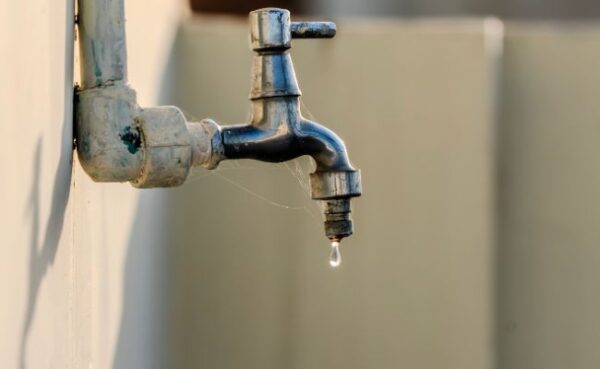
Picture: ©Rajesh Balouria on Pixabay, published on 27 August 2025, under Pixabay's free licencing agreement
On 4 November, South Africans get an opportunity to elect representatives who are supposed to make local government work. But these elections are about more than merely which party wins – they offer an opportunity to identify what needs fixing in our towns and cities, what can realistically be done, and who is best placed to do it.
Municipal governance touches our lives in very immediate ways. We notice when the water stops, when rubbish piles up, when sewage spills into rivers, when roads deteriorate and when electricity faults take days to fix. Now, we’ll have an opportunity to express our concerns when public spaces are neglected, crime makes neighbourhoods feel unsafe and businesses struggle to operate.
........
There is plenty to be angry about at municipal level in South Africa. But anger by itself is not very helpful to tell us how to vote – nor is a party’s ability to blame its opponents, produce an attractive manifesto or put a familiar face on a poster. More is needed.
A useful starting point is to ask five questions: What services do I need most? What is preventing them from working? What could a municipality realistically do about it? Which party or candidate offers a credible way forward? And how will we know whether they have delivered? Here, then, are five themes worth considering before you draw your cross.
- Can I rely on the basic services I pay for?
This question raises the heat in a flash. For many households, the immediate test of their local government concerns the availability of water when needed. Much is at stake here: Is it safe to drink? Are sewerage systems working? Is refuse collected regularly? Are roads and stormwater drains maintained? When something breaks, how long does it take to be repaired? And, sadly, in many South African municipalities: Does anyone answer the phone when we call?
South Africa has made considerable progress in extending basic services since 1994. Millions of households have gained access to services that they were previously denied. Also, the earlier Local Government White Paper set a relevant – albeit, perhaps, at too high a level – framework, and it is good to see a new revised 2026 White Paper recognising that municipal reform must go beyond more infrastructure and financing by also addressing how municipalities are governed, financed and managed. This revisits the assumptions underlying the 1998 White Paper’s call for creating viable institutions for economic growth, to strengthen municipal revenue bases and their administrative capacity; but it proposes more forcefully more differentiated responsibilities, stronger financial discipline and better professionalism.
But for voters, the test is not whether the government has identified the problems again, but whether the reforms translate into reliable services and accountable local leadership. Access on paper is not the same as a reliable service. A household connected to a water network still needs water to flow consistently; sewer connection is of little value if sewage keeps spilling into streets or other shared infrastructure, especially but not only in urban areas.
We should therefore be wary of promises of new infrastructure. New pipes, reservoirs and treatment works matter, but so do people and systems needed to operate and maintain them. Leaks must be repaired, equipment maintained, faults detected, and technical staff retained and constantly improved.
Municipalities need accurate, reliable billing and effective revenue collection, ensuring that poor households can access the basic services to which they are entitled. But when addressing a water problem, the test lies in maintenance, management and the containing of water losses and overflows. If they promise better sanitation, they must ensure due treatment of plants to mitigate pollution risks.
- Will the lights stay on, and can the city or town keep functioning?
Electricity supply has become a more complicated local issue. The national electricity crisis has eased, but tenuously so. Households and businesses can still face local outages, ageing distribution networks and the ramifications of theft, illegal connections and poor maintenance. A national improvement of the electricity supply does not automatically mean that every municipal network is reliable.
Municipalities need to maintain their distribution systems, respond promptly to faults, reduce losses and collect revenue fairly. They also must plan for a changing energy environment in which rooftop solar, batteries and other sources of electricity are becoming more of a necessity.
Political parties differ on how far municipalities should go in buying electricity from independent producers, allowing private participation and enabling consumers to feed surplus power into the grid. Some place more emphasis than others on public ownership and control. These are legitimate policy differences, but the practical questions remain: Will the proposed arrangement improve reliability? Who will pay for it? Will the municipality retain control and oversight? What will maintaining the network cost?
Similar tests apply to roads, public transport, stormwater drainage and other essential infrastructure. A pothole is not just an inconvenience if it damages vehicles or makes a road unsafe. Blocked drains can turn heavy rain into a disaster. Poor infrastructure raises costs for businesses, discourages investment and makes everyday life harder, especially when people have few alternatives.
Voters should explore what political parties will prioritise and how quickly residents should expect to see results, and should be cautious about promises of quick fixes. A credible programme should distinguish urgent repairs from long-term investment and explain how the priorities are chosen.
- Does and will my municipality spend money competently and honestly?
To sustain reliable service delivery, municipalities need sound finances, capable managers and effective procurement. They need to collect revenue, appoint qualified staff and spend within realistic budgets, sustaining assets and not delaying repairs. Without this, a relatively small problem could become a costly crisis.
A clean audit is evidence of sound financial reporting and compliance, but it does not necessarily mean good services. A municipality’s difficulties must be addressed with regard to managing its revenue base vigilantly, maintaining infrastructure and responding to poverty. These demands address unexplained expenditure and the failure to act on negative audit findings. Public scrutiny of this is critical, especially regarding costings, new investments and maintenance. Information about spending and performance must be understandable and public.
The selection of both public and private contractors requires close attention, as external expertise can supplement municipalities’ in-house skills. But a tender is just the beginning: Somebody must monitor whether the work is done and whether it meets the required standards.
- Is my community becoming safer, more liveable and more sustainable?
Municipalities do not control everything that determines the quality of urban life. They cannot solve national unemployment or provide every social service. But they often have important responsibilities related to service delivery, such as land use planning, roads and public transport, refuse removal, parks, street lighting, stormwater systems and the maintenance of public spaces. They can also make it easier or harder for businesses to establish themselves, or for housing development to occur near schools and workplaces.
Sustainability is a critical goal in this – to manage water demands and reduce losses, and to prepare for and respond to flooding, droughts and pollution due to wastewater discharges, waste collection and waste disposal. This requires sound, proper planning of new infrastructure development. This applies generally, but is particularly important for poorer neighbourhoods, informal settlements and the urban periphery. Residents there often bear the greatest cost when services fail, transport is inadequate or public spaces are neglected. Engagement with such communities is important and must not be procedural only.
In summary
At least five considerations are worth attending to: Do essential services work, is infrastructure being maintained, is public money managed competently and honestly, is your community becoming safer and more sustainable, and do the candidates seeking your vote offer proven credible leadership and accountability? You do not need to agree with a party on everything, but you do need a reason to believe that it can do the job.
- Chris Heymans is an independent governance advisor who served on South Africa’s 1998 Local Government White Paper drafting team, and subsequently in South Africa and several countries globally with the World Bank and other agencies to support municipal governance reform.
Also read: