

Bibi Slippers asked Hugh Lewin a few questions about writing his Alan Paton Award-nominated book Stones against the Mirror.

In Margaret Atwood’s book on writing, Negotiating with the Dead, she compiles a list of hundreds of reasons why writers write. Some of the reasons on the list are:
- To record the world as it is.
- To set down the past before it is all forgotten / To excavate the past because it has been forgotten.
- To satisfy my desire for revenge.
- Because I knew I had to keep writing or else I would die.
- To produce order out of chaos.
- To hold a mirror up to the reader.
- To show the bastards.
- To make money so my children could have shoes.
- To attract the love of a beautiful woman / To attract the love of any woman at all.
- To serve History.
If you were to name your main reasons for writing this specific book, what would they be?
My first book, Bandiet, was published in 1975. That was about prison, a recording of the physical realities of my seven years in jail. Of course it was a personal book, but I wrote it very quickly. The act of writing was another kind of release.
But writing Stones Against the Mirror was completely different. I found that I was tracking a special journey, a journey of reconciliation, between me and the friend who, many years ago, betrayed me and others in the protest sabotage group that we belonged to. Thus, I needed to look at betrayal – both sides of betrayal – because what I also discovered was that betrayal is many-sided and creates its own different kind of prison - of the mind.
I discovered that I had become enmeshed in the guilt of my friend, Adrian – and that I remained imprisoned in a different sense. In the book I described the last stages of the journey to meet this friend: “Bitterness has clung to me like armour. I do not know how I will feel without it, but I can no longer be the guardian of my friend’s guilt.”
So it wasn’t easy this time. Too much ambiguity. Too complex. I became fascinated – obsessed, I guess – enthralled by the idea of trying to understand the betrayers, and the betrayed. And then you discover: betrayal can happen only between people who are very close to each other.
So this journey is not about my “forgiving” Adrian. I can’t assume I have the right to forgive anyone. My search has been to discover why I’ve needed, these 40 years, to hold on to my bitterness. It’s not been uncomplicated.
Could you describe how you came to write this story? Did the story find you or did you seek it out?
In my book I write, “Sometimes the meetings we seek to avoid come seeking us.” The experience of writing Stones Against the Mirror was like this for me. When I started out I thought I would write a straightforward memoir. But three versions later – and about five years after I first picked up my pen - I realised that I had been taken over by the journey. There were times I nearly stopped. It was too intense. I found I was writing about myself in a way that I had never done before. Previously I had been able to hide behind my persona as a former political prisoner. But in Stones there was nowhere to hide. I had to come to terms with my own complicity and engage with what I call in the book “my cloak of immunity” as a so-called “political activist”.
It’s very hard for me now to express the process in words. So let me quote what I wrote in the book: “I am the storyteller, trying to describe my own mythologies. In so doing I trespass on the stories of others.”
Also, I wrote much of Stones in a small town on the border between Thailand and Burma, where my partner was teaching journalists. I think it was very important for me to get some distance from South Africa. I needed some distance.
What is the most important thing you learned or discovered while writing your nominated book?
This was a very difficult book to write, because it deals primarily with intensely personal matters. I found very quickly that it is far easier to write about other people, out there, than it is to write about myself, in here.
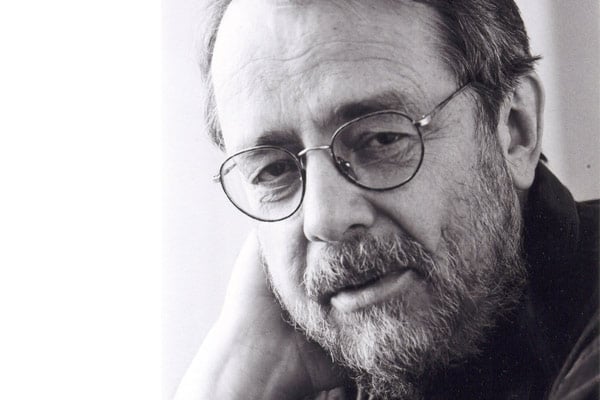
Do you have a "first reader"? And related to this question, who is your ideal reader?
Yes, I do: my life partner, Fiona Lloyd. She reads everything first and is the toughest critic on earth. That’s the best sort of reader to have: someone who’s fully knowledgeable and completely honest – and it helps if they’re friendly.
Have you decided on the next issue or story you will tackle?
Yes – a return to children’s books. I starting writing the Jafta series about 30 years ago, when my daughters were very young and I was living in exile. Now I have two beautiful grandsons who were born right here in South Africa. I think it’s about time that I wrote something for them too. For me, writing children’s books is the closest that I can get to writing poetry. It’s incredibly intense. Children are blessed with rigorous honesty and perception. As a writer, you have to honour that.
What has been your favourite South African read of 2011/2012?
Denis Hirson’s exquisite novel set in 1960s Jo’burg: The Dancing & the Death on Lemon Street. It reads like an incantation.
Which one of the nominated books would you place your betting money on to walk away with this year’sprize?
I wouldn’t like to be a judge this year! The other five writers, with whom I am honoured to be shortlisted, have tackled such a range of diverse experiences and subject matter. Together, their books vibrantly reflect the complex kaleidoscope that is South Africa in 2012.