

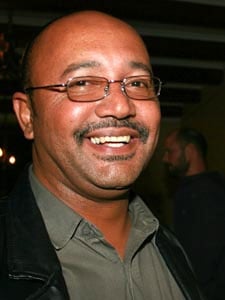
Under apartheid I was labelled a “Coloured”, had to attend a school for “Coloureds” and lived and worked in a neighbourhood set up for “Coloureds”. My fairer-skinned friends referred to themselves as Afrikaners or English respectively, while those who grew up in townships referred to themselves as black. My own family, however, preferred to refer to black people as Africans and unknowingly limited my understanding of who is African to people who are black.
Today we know better, because not only is such a limited understanding and narrow definition of who is African and who is not, indicative of a lack of insight, it is also dangerous.
Insight into the evolution of mankind teaches us that modern man originated in Africa and that there is only one race, which is the human race. Believe it or not, we’re in fact all part of one big family that have migrated from Africa to different parts of the world over thousands of years.
Migration also teaches us that a range of factors, such as growth in population, the search for food, climatic changes, natural disasters and tribal conflict led to migration. We also know now that the process of inuring to a new climate and the fight for survival impelled or constrained advancements in the various fields of technological development.
Insight into technological development exposes the ambitious nature of mankind, its appetite for being bigger and better, and the use and abuse of its technological advancements to explore the world while at the same time subjugating technologically less advanced communities in order to exploit the abundance of resources in their midst.
Moreover, a limited understanding and narrow definition of who is African is dangerous in that it perpetuates trivial assumptions that skin colour, physical appearance or cultural drivers such as language or beliefs determine whether one is African or not.
Such assumptions continually fuel the myth that the world consists of different races originating from different parts of the world and notions of racial superiority and inferiority. This not only creates fertile breeding ground for reactionary and ethnically based power politics, but it shifts the focus from what is in the best interest of Africa and all of its people and who serves those interests best.
The latter will, however, remain a dream deferred as long as the narrow definition of who is African continues to permeate our thinking and we fail to bring about a paradigm shift in terms of our perception of who is African.
Shouldn’t all people who have made the continent of Africa their home and who are committed to the development of this continent and its entire population qualify as Africans? That begs the question!
Well, I am an African and owe it not to my blackness, brownness or whiteness, but to my Khoisan, Malabar slave, Xhosa, Dutch, French, German and Scottish forefathers who embraced this continent with their hearts and souls, who made it their home and who developed this country. I will therefore not allow anyone to use ethnicity, skin colour, language or religion or any other cultural differences to socially engineer again who and what I am, where I should live and work, and marginalise me on the basis of an apartheid classification. I am an African!!
Kommentaar
En ek is beslis 'n Afrikaner, en niemand gaan my die teendeel sê nie.
Jaco Fourie