

........
I returned to OR Tambo International Airport with a new appreciation for the noise and the visible messiness of South Africa’s post-apartheid story. Long may it continue.
.........
The flight to Harare was so crammed with historians it might well have been chartered. Most of us had never been to Zimbabwe before, but it wasn’t lost on us that we were arriving at a particularly fraught time. It was June 23rd. As an American, I felt that the optics seemed similar to what it’s been like as an American visiting South Africa over the past couple of years. What questions would be asked, given that the infamous June 30th “deadline” for illegal foreign nationals was just a week away? What would await us in this country that looms so large in the South African mind?
Because it does, doesn’t it? Even outside South Africa, Zimbabwe is a byword for something, even if the something in question is changeable and ill-defined. How many times have I heard someone talk about South Africa “becoming another Zimbabwe” in the 11 years I’ve been travelling and doing research in this country? People in the Zimbabwean diaspora can be found all over the world, but the reality of the place has always puzzled me. On the one hand, you have horrific accounts of violence and corruption – the Gold Mafia and alleged electoral fraud keeping President Emmerson Mnangagwa in power – and on the other, you have the celebrations of Zimbabwean life and culture you encounter on podcasts like Hello hi with Gemma. I was excited to visit Zimbabwe, under the auspices of this historians’ conference, to see whether I could make some kind of sense of the contradictions.
The food was delicious and the people were friendly to a fault. Before departing, many of my fellow delegates had bought e-sims that didn’t actually work, and I spent a rather strange morning waiting for an undergraduate to arrive in the courtyard of a student res in a remote corner of the UZ campus so that I could print my conference paper. (Google had suggested that his side hustle was actually a proper business, with posted hours, a logo and a corporate WhatsApp.) I needed to go to the bathroom urgently, and to add insult to injury, my flash drive didn’t even work in his laptop! But all’s well that ends well, and my presentation was a success.
But the most curious thing for us about Harare (especially since so many of our number were scholars of southern African liberation movements) was the lack of visible history in its streets. It’s not a city that wears its heritage on its sleeve the way Johannesburg does: There are no blue plaques and almost no monuments or museums that tell the story of Zimbabwe’s history. There is a statue of Mbuya Nehanda (a spirit medium who led resistance against the British in the late 19th century) atop a big pedestrian bridge in the centre of the CBD, but it was closed to pedestrians due to vandalism. There is also a grandiose-sounding Museum of African Liberation, but it’s still under construction.
In South Africa, even if many heritage sites are not well maintained, there’s no denying that they are thick on the ground. Here, there is a concerted effort to make history visible within communities. Think of all the heritage sites in Soweto, many of them beautifully cared for – from the Mandela House to the Hector Peterson Memorial to the June 16th Memorial Grove. By contrast, the former townships of Harare have no tourist attractions.
........
In South Africa, even if many heritage sites are not well maintained, there’s no denying that they are thick on the ground. Here, there is a concerted effort to make history visible within communities. Think of all the heritage sites in Soweto, many of them beautifully cared for – from the Mandela House to the Hector Peterson Memorial to the June 16th Memorial Grove. By contrast, the former townships of Harare have no tourist attractions.
.........
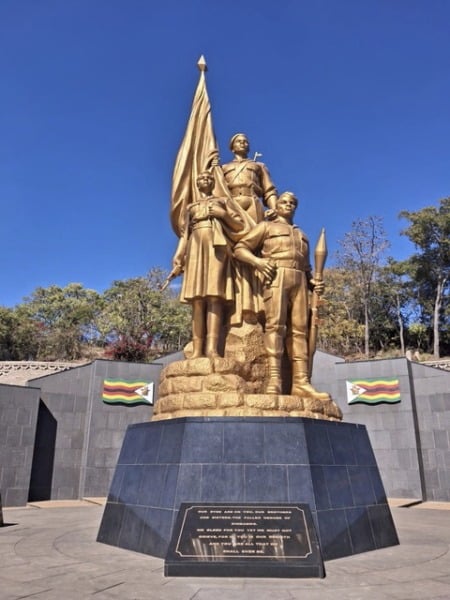
Most unsettling was my visit to the National Heroes’ Acre, perched on one of Harare’s highest points. There, Zimbabwe’s national heroes are buried, from Joshua Nkomo to Robert Mugabe’s beloved first wife, Sally. Sure, the site is a bit North Korean in its general aesthetic, but it didn’t seem right that on a beautiful Saturday morning I should be the only person there. My Bolt driver was visibly uncomfortable on the drive over – he kept asking if I had an appointment – and it was also difficult to get a ride back. My guide said this was because people are afraid of the soldiers with machine guns who guard the site. Fair enough, but as someone born and bred in Washington, DC, chock-a-block with monuments, it was profoundly disappointing to find a place like this virtually deserted.
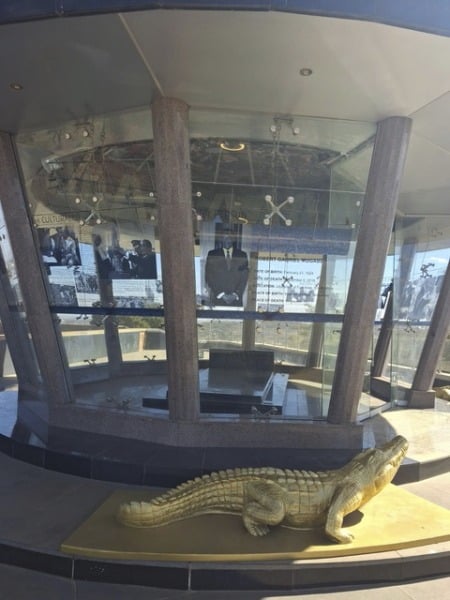
The National Heroes’ Acre is especially strange because, despite a mausoleum at the top of the complex complete with signage detailing all of his achievements, former president Robert Mugabe himself is nowhere to be found. After he was overthrown in 2018, his family snubbed the government’s attempts to inter him there, and he was buried at his rural home in Kutama instead. That little point of drama alone makes the site worth visiting.
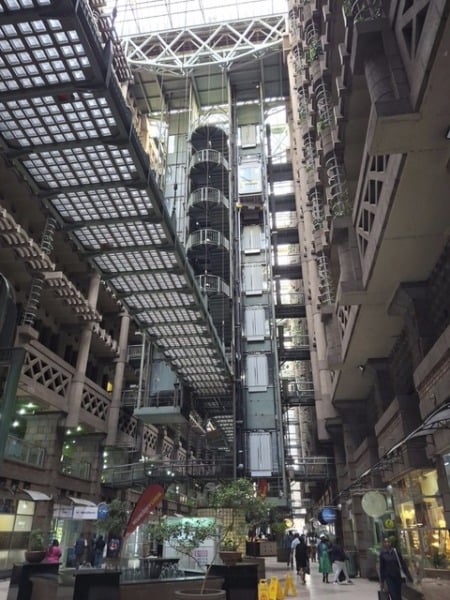
If Zimbabwe can be said to have collapsed, it is a collapse much more mundane and insidious than many of us imagine. The Rhodesian legacy, architecturally and culturally, is smaller and shabbier than racist internet fantasies would have you believe. Far more interesting for us historians were the buildings recalling the zenith of Harare’s 1980s and 1990s – buildings like the truly awe-inspiring Eastgate Centre, which feels like a gift from an entirely different timeline.
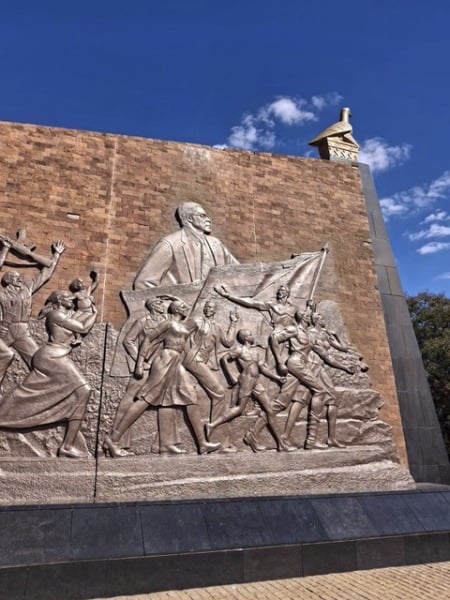
The sense that something really has been lost – that something is profoundly wrong – comes when you become aware of silences like the solitude of the National Heroes’ Acre and the eerie quiet in the streets of the CBD regarding Zimbabwe’s fight for freedom and experience as a young nation. It is this silence, as much as anything else, that accounts for the hundreds of thousands of Zimbabweans living in South Africa. It is a disturbing and demoralising silence, one that must never be permitted to take root here, whether as a result of government manipulation or populist pressure. I returned to OR Tambo International Airport with a new appreciation for the noise and the visible messiness of South Africa’s post-apartheid story. Long may it continue.
I have no conflict of interest to declare. This article has never been published before. AI/LLM programs were not used to write this article.
Also read:
Revisiting Bloke Modisane, from Sophiatown to Gaza: #III – On escape
Kommentaar
Very interesting visit and description. Having just returned from a visit to Namibia, I was struck by the strangeness of the monuments as well, built and designed by the North Koreans. The enormous museum was largely deserted and both it and the new headquarters of Swapo in Windhoek have an enormous statue of Sam Nujoma done in the Mao style, holding up what's looks like the little red book. However unlike the deserted business areas in Harare, downtown Windhoek was rammed and throbbing.