

 ♦ The African Library: Entry no 137
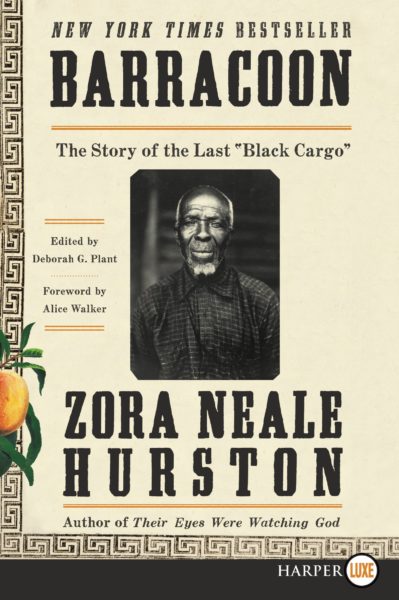
♦ Oluale Kossola / Cudjo Lewis with Zora Neale Hurston: Barracoon: The story of the last “black cargo”
In this entry, the established pattern of profiling contemporary or classic African works of fiction is broken in order to interest readers in the very unusual text named above. Kossola (more often referred to as Cudjo in the USA) was the last surviving captured African on the last ever “slaver”, as American slave ships (ships sent out to buy men and women doomed to slavery at known “slave ports” from the powerful African rulers, whose soldiers had taken them captive) were called. It was the last such voyage on record, because slavery, first banned by the British in 1807, with the American government soon following suit in 1808, had been outlawed. Though conducted as dangerously illegal ventures, the practice – usually referred to as the transatlantic slave trade – continued for some years. By 1860, when the slave ship Clotilda, which transported Kossola to Atlanta in the US, undertook its criminal journey, the penalty (on paper) for American men engaging in slavery was execution. Nevertheless, in the South, with the market for slaves remaining lucrative, newspapers like the Mobile Register would report to American readers on the situation in West African areas concerning prospects for acquiring slaves (9). Quoting from a book by a white Southern author, Hurston shows how Americans were informed about “a brisk trade in slaves as from fifty to sixty dollars apiece at Whydah [ie Ouidah, a coastal city in Benin]. Immense numbers of Negroes were collected along the coast for export” (8, emphases added). The breezy use of these terms (here italicised) to refer to people who had been grabbed from their communities by their more powerful neighbours in order to be exchanged for money or goods, strikes most modern readers with a shudder. Barracoon, the main title of the text here discussed, refers to the stockades on African shores where the captured people were kept “on show” – awaiting American or European slave dealers’ appraisal. Of course, there were (and still are) other forms of slavery in Africa and elsewhere, so that, more recently, the Swahili word Maafa has come into use to indicate the disastrous effects of different forms of African enslavement – as well as the magnitude of its reach.
Three brothers – Jim, Tim and Burns Meaher – and their associate, Captain William/Bill Foster, who was in charge of the actual voyage of 70 days, agreed to the risky venture. One hundred and thirty Africans were bought – as many women as men – although only 116 were brought on board, because the Clotilda fled hastily from the danger of interception or attack. The majority of them were not sold onwards once they had reached the suburb of Plateau in the town of Mobile in Alabama, where the Meahers had farms, because the Meahers required the unpaid labour of the Africans for their farming and riverine transport ventures. When the Civil War (Hurston refers to it as “the war of Secession”, 15) erupted in 1861, central American legal authority lapsed in the South. Even so, the Meahers and Foster were tried in the federal courts in 1860–1861 when their crime was discovered. They were heavily fined, but they never paid it (168, editor’s note 29). None of this made the slightest difference to the fate of Kossola and his fellow captives, torn forever from all they had known. The narrative of this man – as transcribed, intellectually contextualised and aesthetically structured by Hurston – is, despite all, not one long tale of woe, but indicative of times and moments of great satisfaction, deep love of family and pride in achievements (personal and communal), as well as a recording of adversities overcome. Nevertheless, a deep base note of sorrow colours this moving account throughout, for Kossola never overcame the pain of loss of all he had had in Africa. Over and over, the elderly man identifies himself as an African, and over and over, he speaks of loneliness – despite the strong, new community that he and others founded in America, and despite having his own family and caring friends there. Of course, his later life in America was itself affected by many dreadful losses.
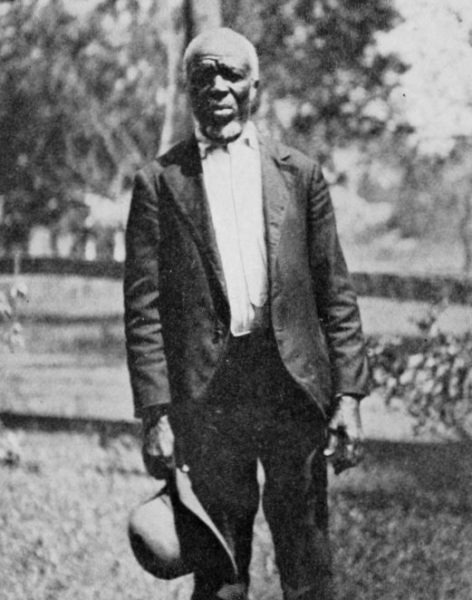
Oluale Kossola / Cudjo Lewis
Kossola later took his father’s name, Oluale, as his first name, having previously had no need for a second name. In the predictable way, life in a predominantly white social context made the adoption of anglicised forms of a first and second name a practical necessity, hence the alternative designation Cudjo Lewis. He was born circa 1841 in mid-western Togo – the long, slender West African country located between Ghana and Benin. Benin was formerly known as Dahomey, and it was from here that the soldiers who razed Kossola’s home town came, virtually exterminating his people and capturing him and other “likely” young men and women in a slave raid thinly disguised as a just war of retaliation against an arrogant insult from the local king (to the Dahomeyan ruler). Most of the West African coast bordering the Bight of Benin was, of course, known as the “Slave Coast” at the time, though the Dahomeyans seem to have pursued the trade with especial zeal and efficiency – or with treacherous cruelty, depending on one’s perspective. Kossola, taken captive at 19 as he was being initiated in preparation for marriage, never learned to read or write, hence the co-creation of Barracoon by Hurston and Kossola – respectively the scribe and the narrating memoirist. Perhaps because he was illiterate, Kossola retained a remarkably accurate memory of his life in Africa and the processes and experience of enslavement (as well as of his post-emancipation life) into his late 80s, when Hurston first interviewed him. Many American memoirs of formerly enslaved men and women became very famous; readers with some interest in the topic will know of Olaudah Equiano’s memoir (first published in London in 1789), Narrative of the life of Frederick Douglass of 1845, the 1831 Mary Prince memoir, Sojourner Truth’s memoir of 1851, Harriet Ann Jacobs’s of 1861 and William Wells Brown’s (1847). The particular importance of the long posthumous Barracoon text (completed in 1931, but published only in 2018, with an editorial introduction and afterword) lies both in the amount of detail that Kossola managed to recall about his African experiences, and in Hurston’s ability (as an anthropological researcher) to refrain from presenting his experiences in the typical distancing scientific manner. Instead, the text conveys the “sound” of a convincingly living voice, tinged by individual emotional perspectives, but basically reliable. Hurston and other interviewers did do their “homework” by correlating the accounts of events and circumstances described by Kossola with other records, which largely bore out what he remembered. He was a member of the Isha Yoruba subgroup, even though his people lived in “Togoland”, rather than in Western Nigeria like most Yoruba.
At the time Hurston penned Barracoon, she was an ambitious young academic working with and for Franz Boas, the famous American anthropologist, who was her mentor and who insisted that the practice of “ranking” cultures as superior or inferior in relation to one another was inappropriate, since each culture should be studied on its own terms and within its own right. Nevertheless, Boas insisted on meticulous research practices, and there has been speculation that Hurston was beginning to chafe at such compulsorily restrictive scientific ways of dealing with testimonial evidence. In Deborah Plant’s afterword to the Kossola-Hurston co-created narrative, she quotes Hurston’s lament (“in a letter to her friend Thomas Jones, the president of Fisk University”), written after encounters other than those on which Barracoon is based: “Returned to New York and began to re-write and arrange the material for Scientific publications, and while doing so, began to see the pity of all the flaming glory being buried in scientific Journals” (the letter was dated 12 October 1934; 121). Hurston had had to struggle to acquire tertiary education, obtaining her BA only at age 37. She was born in 1891 and died in 1960, by then well known (if not as famous an author – both anthropologist and novelist – as she has become since her “rediscovery” by Alice Walker et al). She is best known at present for her splendid novel, Their eyes were watching God (1937). Hurston lived in Harlem and is considered to have been an important member of the Harlem Renaissance of black American writing, though her political views were more conservative than – and somewhat at odds with – those of some other luminaries of this group. She was friends with Countee Cullen and with Langston Hughes in particular, though she later fell out with the latter. Hurston first met Kossola in July of 1927, when he was already known for having been interviewed as a Clotilda survivor, and she wrote an article in which she appears to have used unacknowledged sources – the cardinal academic sin – although this was detected posthumously. Perhaps it was her desire to develop her own distinctive method of folkloristic or ethnographic research in which she could demonstrate her profound sense of the value both of Kossola’s history and of his unique, vivid way of telling his story in Yoruba-inflected English, which led to her presenting Barracoon as she did. Other African-American Harlem writers detested renditions of “negro” speech in writing that could be mocked as clumsy and uneducated, but Hurston was able to appreciate its richness and resonance. The interviews on which Barracoon is based were conducted over two to three months, when Hurston lodged nearby and was able to visit Kossola as often as he felt like seeing her and speaking of his past – for he was by no means intimidated by her high academic qualifications, though she makes clear that she did win his trust and that they became friends.
Readers might find access to Hurston’s rendition of Kossola’s life story easier if they begin with the afterword (117–37) by the contemporary text’s editor, Planter, and the relevant endnotes, and acquaint themselves with Hurston’s own introduction (5–16). In her brief preface, Hurston does mention that there was a patron (Charlotte Mason, a wealthy white woman who worried that white researchers were appropriating “negro” folklore) who funded her trip to conduct research by talking to Kossola “to get this story”. She adds that “the thought back of the act was to set down essential truth rather than fact of detail, which is so often misleading”, and that this was why she eschewed what she calls “the intrusion of interpretation”, which might have distorted or drowned out Kossola’s own “story” (3). Hurston also dedicated Barracoon to Mason, who developed an interest in Kossola and occasionally sent him money later on when he was struggling financially. Concerning her initial interview with Kossola, Hurston says in her own autobiography that speaking to him “gave [her] something to feel about” (cited 124). She notes in this later (1942) publication that what Kossola told her over the months of her encounters with him concerning how he had come to be enslaved, shook up her understanding of (all?) Africans as “[her] people”:
The white people had held my people in slavery in America. They had bought us, it is true and exploited us. But the inescapable fact that stuck in my craw, was: my people had sold me and the white people had bought me [not that Hurston had personal memories of enslavement; she is evidently extrapolating]. That did away with the folklore I had been brought up on – that the white people had gone to Africa, waved a red handkerchief at the Africans and lured them aboard ship and sailed away. (Cited 125)
This was, it seems, an important reason why Hurston felt so strongly that Kossola’s narrative should become known in the USA. Like much postcolonial fiction, it makes the point that Africans are as capable as others of oppressing “their own people”, and continuing sentimentalisation evoking all blacks as only and always innocent victims is an unhelpful distortion of reality – without (at the same time) being in denial about the vicious brutality of racial oppression generally, and the horrors of the transatlantic slave trade and American slavery and its antecedents and “successors”.
The five and a half years of Kossola’s slave labour in Alabama is not presented as the main focus of his narrative; rather, Barracoon is the life story of a man with vivid memories of his life in a Yoruba settlement in West Africa, and with a life beyond emancipation in a settlement mainly of Africans who made the best of their limited available resources. Hurston recognised the importance of the rare opportunity the manuscript offered readers (if published as she had recorded Kossola’s telling) to pay respectful attention to the words and story of an African person who was not intending to serve anyone’s cause (eg that of emancipation, as many of the more famous “slave narratives” do, or of overtly displaying a high level of [Western] education to demonstrate blacks’ intellectual capacities, if afforded the opportunity to acquire such). It is from this point of view, perhaps deliberately, that Hurston records details of Kossola’s interaction with her, and of his demonstrable refusal to allow her to make the publication opportunity for his story that she offered him, a reason for sacrificing time that he needed to carry on with his own domestic and community tasks and duties. Especially significant is the further fact (noted in Planter’s introduction) that Hurston, too, refused to allow her desire to further her own academic career by getting the co-created manuscript published, to be fulfilled at the cost of “correcting” Kossola’s English. Nor did she “abandon” Kossola after returning to New York; she made sure that he was getting the support he needed. When she started looking for a publisher for the script, she rejected the “proposal” of the leading firm, Viking, that she should present his story “in language other than dialect” (cited xxii). She told Mason that she had rejected the publishers’ suggestion before (and without) consulting her, but wrote that she had done so on the assumption that Mason felt as she did that such a major and detrimental change of the text would be unacceptable.
Hurston’s introduction foregrounds the point that enormous amounts of information were available concerning “all the machinations necessary to stock a barracoon with African youth on the first leg of their journey from humanity to cattle” (5–6), but that all these thousands of words were written and disseminated from the perspective of the “seller”, while there was “no word” from the “sold” or the “cargo”, because “the thoughts of the ‘black ivory,’ the ‘coin of Africa,’ had no market value”. She added: “Africa’s ambassadors to the New World have come and worked and died, and left their spoor, but no recorded thought” (6). At the time she wrote her comment, of course, very little (rather than nothing) had been written from that perspective, but it is the fullness and range of Kossola’s own account of life before and during capture, and then as a slave, and later as one of the founders of an African settlement, that make it remain impressively candid and fresh, and also free of self-pity.
Kossola and Hurston’s relationship is launched from the moment that she, at the start of what is her second research visit to him, “hail[s] him by his African name … and he looked up into my face as I stood in the door in surprise”, so pleasurably startled at this unusual moment that he (eating his breakfast at that moment) halted his hand between pan and face. Hurston adds: “Then tears of joy welled up. ‘Oh Lor’, I know it you call my name. Nobody don’t callee me my name from cross the water but you … jus’ like I in de Affica soil!’” (17). He tells her that he loves having “comp’ny come see me”, as he has been terribly lonely since his wife died (in 1908, ie almost 20 years earlier). Cudjo weeps openly in thinking of her, then apologises to reassure Hurston, for he knows that in America men do not usually show “softer” emotions so openly. The frame of the narrative is set right at the beginning, when Hurston explains that she came because she wanted to hear his answers to a number of questions: “who you are and how you came to be a slave; and to what part of Africa do you belong, and how you fared as a slave, and how you have managed as a free man?” (19). It is to be noted that Kossola’s first point is that he is not of royal descent (as many of those enslaved or formerly enslaved tended to claim); his people, he says, “had no ivory by the door” and “I not gonna tellee you my folks dey rich and come from high blood” (20). He also distinguishes between his own family’s ordinary if well-off status, and that of his paternal grandfather, who was a court officer to their king. When Hurston interrupts, saying she wants to hear about Kossola and not about his antecedents, he rebukes her by using a proverbial expression: “Where is de house where de mouse is de leader?” He explains that in Africa one tells of oneself only after telling about one’s father – an account itself preceded by that of one’s father’s father. It is his practice throughout his narrative to give it (and himself) an African contextualisation – as if it is the one way in which he can maintain linkage to the family and society and soil that gave birth to and formed him.
Kossola’s invocations of the role and status of women in his society are interesting: even though women may be considered “devalued” by the fact that any man may marry as many wives as he can support (and men unable to do so cannot marry), it is the wife who decides and informs a husband that, as she is getting “tired”, she will “bring [him] another wife” whom she chooses. And this, says Kossola, would be a younger woman who has caught her eye. She then goes to chat to her, asking whether the young woman knows her husband, and when she affirms this, she tells her that he is “good” and “kind”; then the young woman, indicating that she is open to the suggestion, invites the wife to meet and negotiate with her parents. If they are happy, they give their daughter into the care of the wife, who takes her home to be taught her wifely duties before the marriage actually happens – which is, in any case, preceded by the husband’s payment of a bride price to the parents. The kind of woman chosen (and the likely size of her bride price) depends on how long (or whether) her parents were able to keep her in the “fat-house” (22) – considered an (expensive) enhancement of a young woman’s attractiveness! The impression Kossola creates of his (Yoruba) society – perhaps enhanced by his nostalgic longings – is of a basically humane and fair working order, whatever contemporary compunctions on the reader’s part there may be – and Hurston herself was anything but a meek woman.
The society had its own “slaves” as household servants, and they, too, had the practice of selling unsatisfactory slaves or slave children to “de Portugee”, but, says Kossola, though he might threaten a naughty youngster, his grandfather told him he had never sold anyone to the Portuguese slave traders. As brusque as he can be when he dismisses Hurston after a session with him, he is indulgent towards his twin granddaughters. Later, we learn that five of his children died, and one son “disappeared”; since he is widowed, he has only had his sole daughter-in-law living on his property with her children (as in Togo she would) in the house built for her late husband and her when they married.
The next part of Kossola’s narrative – as he tells it, or in the order that Hurston presents it – concerns the practice of justice and penalties for crime in his motherland. The first example concerns a leopard, which, if killed by a subject during a hunt, must be brought intact to the king. The dead beast is examined by the ruler and chiefs, and if they spot the absence (indicating removal by the hunter) of any of the leopard’s whiskers, the guilty man is suspected of murderous plans. (The belief is that they can be used to kill, and must therefore always remain intact when the dead animal is taken to the court.) He is put on trial and cross-examined in the full royal court. The example that Kossola provides is of a man who admitted that he had removed one hair in order to avenge what he saw as bewitchment by a man who had caused his child to die and caused sickness among his cows. The king, as judge, reminded him that he was not allowed to take the law into his own hands instead of reporting his suspicions and having the matter officially investigated. He is sentenced to death for his plan to murder, and is executed by public beheading. Lesser crimes, such as stock theft or adultery, Kossola reports, are heard by lower ranked rulers like individual chiefs. He describes how another man, caught red-handed with someone he had murdered, was gruesomely punished by being tied tightly to his dead victim, face to face and limb to limb, until (the next day, or after as many as three days) the killer choked to death, still tied to the decomposing body. Innocent men who die are buried under the earth floor of their own homes in order to remain with their families. But first, there is a mourning ceremony, led by the widow’s lamentations and involving the paying of final respects by those bringing the departed gifts, which are placed in the coffin. One of the songs of grief sung by widows, as cited by Kossola, goes: “Whoever shake de leaf of dat tree/ (a sweet shrub)/ We are still smelling it./ Whoever kill our husband,/ We shall never forget” (35). For two years, the widows wash their faces only with tears. He does not indicate whether the widows are allowed to remarry or to return to their parental families. Kossola tells Hurston to help herself to some peaches from his tree as she leaves, but not to return until six days later, as he needs to work around his home.
To sweeten her return, Hurston takes along a “Virginia ham” as a gift to Kossola on her next visit. For him and herself, she also brings “a huge watermelon, right off the ice”, which they immediately cut into two halves, lengthwise, “and we just ate from heart to rind as far as we were able”, she reports. Full to bursting, they then decide to walk it off, and Kossola shows her his professional domain, “the Old Landmark Baptist Church, at his very gate, where he is the sexton” (37). (We hear later that it was the community who gave him this job after he was injured in an accident and could not continue with his previous employment.) As they return on this very hot day, Kossola decides that they might as well continue the conversation about his society of origin, since it is too hot to work. Such endearing “domestic” details (like those cited above) enliven the narrative and bring home to the reader the empowering, respectful and attentively listening context that Hurston created for Kossola to tell his story and to make him a living presence – crusty at times, but essentially well mannered. Hurston employs phonetic spelling to capture Kossola’s pronunciation of names, for example, spelling his father’s name “O-lo-loo-ay” and his mother’s, “Ny-fond-lo-loo”. He tells her that his mother was his father’s second wife (of three), and that he was her second child after an older son; she had four younger children, and his father had 12 more children by the other wives. According to Kossola, few wives were barren. First claiming that this never occurred, he then says that he does not know why this was the case for some women, since the elders were usually able to “cure” such a wife by giving her herbs to drink. His childhood is evoked as normal and happy, filled with outdoor games and storytelling (in the final sections of the book, some examples of stories Kossola recalls are printed). When he turned 14, he was very excited to be summoned to court with other boys of his age, assuming that he was going to be inducted into the army. He was rather too hasty, however, because the initial training was how to hunt in the bush and how to track, for “in de Afficka soil dey teachee de boys long time befo’ dey go in de army” (39). The policy of their king, Akia’on, was not aggressive, but he took care to have a strong defensive army. Kossola grew big and strong around this time, he says, and started showing his interest in getting married to a young woman he fancied. However, although his family sent her family some overtures and he began his initiation for this next stage of his life – his more mature status (at 19) marked by his being permitted to wear its sign, a peacock feather – marriage and council membership were still a long way off.
Then, the first signs of the great disruption of his and his people’s existence appeared. Three men from Dahomey showed up in the marketplace and asked to see their king. The provocative demand they brought from their own ruler was that he was supremely powerful and dangerous, but that, wishing to be “kind”, he would settle for half of the local people’s produce being sent to him. As Kossola tells it, his king was having none of this and declared his own might, insisting that “de crops aint mine. Dey belong to de people. … Let de king of Dahomey [who] got plenty land … stop makin’ slave hunt on udder people and make his own crops.” Kossola adds: “De king of Dahomey, you know, he got very rich ketchin slaves. He keep his army all the time making raids to grabee people to sell so de people of Dahomey doan have no time to raise gardens an’ make food for deyselves” (44). The contrast between the fully militarised society and the cultivating society is clear, and, as Hurston’s note 2 (161) shows, Kossola’s description is in line with that of outside scholarly observers. But, even though the Dahomeyan king resented Akia’on’s refusal, he might have left them alone, Kossola testifies, were it not for a vengeful local man who betrayed them. He believed himself unfairly dealt with and denied of certain honours he deserved. He went to the rival king and informed him of what Kossola refers to as “de secret of de gates” – the main safety arrangement meant to safeguard their city. The Dahomeyan army crept upon them at night and destroyed the eight gates, and the fearsome female warriors went into the settlement, beheading or fatally mutilating everyone they could find who was deemed unsuitable for enslavement, while the male warriors stood guard at the gates and killed or captured all who attempted to flee into the forest. Even Akia’on was captured, and, when he objected to the Dahomeyan king’s boastful announcement that he was taking him into slavery, he was summarily beheaded, so that he at least died on his own soil. Kossola laments: “I see de people gittee killed so fast! De old ones dey try run ‘way from de house but dey dead by de door, and de women soldiers got dey head. Oh, Lor’!” he exclaims as he weepingly crosses his arms and stares with “wide-open” eyes, as if still seeing those terrible sights (45). The captives were bound and marched in line to the barracoons, where they would initially be kept, faced with the gruesome sight of the decapitated heads of their people strung around the waists of the conquerors. And, after three days, when the smell of decomposing flesh became unbearable, the heads were smoked within the captives’ view, although (says Kossola) it was thankfully impossible to identify known individuals within the smoke.
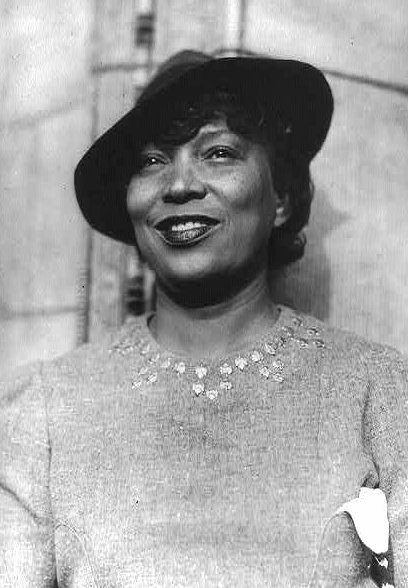
Zora Neale Hurston
The next visit is quickly curtailed by a “not too cordial” Kossola, but when Hurston arrives after a few days for another conversation, he “was very cordial” and “he glimmered and glinted with light” – as she charmingly describes him (52). Kossola refers to the Dahomeyan king’s city, where they were initially kept, as Lomey, but for a reason I am unable to fathom, this is not identified as Lomé, the contemporary Togolese city. (Hurston and Palmer believe there was some confusion as to routes and landmarks in the traumatising memory – understandable in both the young captive and the octogenarian Kossola.) Some days later, the captives were marched to the slave port of Ouidah, mentioned previously as known in Alabama in this regard. There were a number of stockades, and, still relatively uncowed at this point, the young men (says Kossola) leapt up and clutched the top of the stockade poles, attempting communication with those in the other pens. After three weeks, “a white man come” and, as all the captives were made to stand in a ring, “de white man … lookee and lookee. He lookee hard at de skin and de feet and de legs and in de mouth,” choosing a woman for every selected man, making 130 people in all (53). Those whom the white man (Kossola later learned that this was Captain Foster) had chosen were ferried by Kroo-piloted boats to the Clotilda. To Kossola (and, no doubt, his fellow captives), who had never seen the sea, the ocean was a terrifying presence; Kossola describes it vividly, saying, “[I]t growl lak de thousand beastes in de bush,” and he was horrified at the unpredictable rises and plunges of the ship on the open sea. Kossola testifies (unlike accounts of slave ship captains’ conduct with which readers may be familiar), “Cap’n Bill Foster a good man. He don’t ’buse [ie abuse] us and treat us mean” on board. The white sailors had to land the illegal “cargo” very quietly and secretly once they reached the Alabama shores. Once this had been safely achieved, the captives were divided up, mostly among the Meaher brothers and Foster, while a small group were “sold onwards” to buyers. Kossola was taken by Captain Jim Meaher. In heavy grief, the now divided captives (from now on, slaves) took leave of one another. A surely emotionally exhausted Kossola ends the session, promising to send his grandson to call Hurston back.
Unlike his cruel brothers, Kossola testifies that his “owner”, Jim Meaher, was “a good man”, for instance, noticing when Kossola needed new shoes. And the slaves were first trained in the work they had to perform. Once, when an overseer beat a woman, the African men wrestled his whip from him and beat him with it. But the deep grief of being wrested from their country and their people was never assuaged. Their alien position was made the more grievous because “de udder colored folkses” told them they could not understand their speech; “some [of these presumably other slaves, possibly born in America and fairly fluent in English as their only tongue] make de fun at us” – mockery that bit deep, because it came instead of solidarity or empathy from others of African origin. For all his relatively humane treatment of his slaves, Captain Jim Meaher “work us hard” (60). Most of Kossola’s working days during the five and a half years before liberation were spent not in field work, but in loading and unloading freight and the wood that powered the few ships of the Meahers’ riverine transport business – constantly hurried on by harsh overseers to work harder and faster.
The group of Meaher slaves was aware of the Civil War and had been told that the intention of the North’s participation was to free them, but it went on beyond them. Jim Meaher at least allowed them to slaughter some of his hogs to stave off starvation when food scarcity began hitting hard. One poignant detail reported from this period is that their group of recently arrived Africans would dance on Sundays, happy to have a day off work, until advised that Sunday dancing was frowned on as unchristian, even by their African-American neighbours, so the dancing ceased. When the news of their liberation eventually reached them, this was almost by happenstance when Northern (he calls them “Yankee”) troops, who were picking mulberries on the river bank, saw the Africans working on the boat. It is told in part of a paragraph:
It April 12, 1865. De Yankee soldiers dey come down to de boat. … Den dey see us on de boat and dey say: “Y’all can’t stay dere no mo’. You free, you doan b’long to nobody no mo’.” Oh, Lor’! I so glad. We astee [asked] de soldiers where we goin’? Dey say dey doan know. Dey told us to go where we feel lak goin’, we ain’ no mo’ slave. … We ain’ got no trunk so we make de bundles. We ain’ got no house so somebody come tellee us come sleepee in de section house. We done dat till we could gittee ourselves some place to go. (62–3)
Acquiring a place to settle was the next struggle for the freed Africans. Kossola reports: “We meet together and we talk.” The initial dream was to return to their African homelands: “We say we come from cross de water so we go back where we come from. … We think Cap’n Meaher and Cap’n Foster dey ought take us back home” (65–6), but then it was decided that, since they could now earn their own money by working, they would buy their return passage. The realisation soon dawned that saving the amount required was unachievable on their meagre incomes.
The former slaves formed a community adapted from their African experience. In America, there are no kings, so a leader was chosen: Gumpa, the one Dahomeyan among them and a former aristocrat. Kossola explains that they held no grudge against him for being of their enslavers’ ethnicity; he was a victim like themselves. The next decision was to delegate Kossola, considered the most eloquent among them, to speak to the white men who bought them and ask for land on which to settle. It seems that getting access to these men was difficult. Kossola, working at a sawmill, had to take the opportunity when the nastier Meaher brother, “Cap’n Tim”, happened to sit down near where he was working. Kossola went to stand before the white man, letting his expression make the first point. When Meaher asked him what made him so sad, he told him it was grief for his home. “But you got a good home, Cudjo,” was the reply, which gave him the opportunity to contextualise his plea:
“[A]ll de Mobile, dat railroad, and all de banks, Cudjo doan wan’ it ’cause it ain’ home. Cap’n Tim, you brought us from our country where we had lan’. You made us slave. Now dey make us free but we ain’ got no country and we ain’ got no lan’! Why doan you give us piece dis lan’ so we kin buildee ourself a home?” (67)
Kossola’s polite and reasonable request on behalf of his community earned a harsh, insulting rebuff: “Fool do you think I goin’ give you property on top of property? … You doan belong to me now, why must I give you my lan’?” (67). As we know, Africans’ struggles for compensation for deprivation and harm from historical debts are still continuing, often as unsuccessfully as the above illustrates. The community eventually managed to save enough to buy land from the Meahers, who refused to lower their price by even a few cents, as Kossola bitterly reports. They named their village “Affican Town”.
Kossola found a woman he wished to wed; her name was Abila (Seely in America), and she, too, was African, though he does not say whether from his own region. The marriage was settled by agreement and was, of course, initially undocumented. Only later, when urged, did they take the “official” route. For, as Kossola explains, “We doan know nothin’ ’bout dey have license over here. … So den we gittee married by de license, but I doan love my wife no mo’ wid de license than I love her befo’ de license. She a good woman and I love her all de time” (72). The undeniable dignity and deep-rooted morality in these words are very moving. Still, the Africans – then, as now – struggled hard for recognition of their innate human worth. And what rankles most (it seems) is that their African-American neighbours were most noticeable among those rejecting and bad-mouthing them. It is the old, ugly story: “All de time de chillun [ie children; he had six] growin’ de American folks dey picks at dem and tell de Afficky people dey kill folks and eatee de meat [ie are cannibals]. Dey callee my chillun ig’nant savage and make out dey kin to monkey” (73). When the children got into fights, Kossola says, none of the parents of the children his sons fought with acknowledged any provocation begetting retaliation. And, he says, “We Afficans try raise our chillun right. When dey say we ig’nant we go together and build de school house. Den de county send us a teacher.” Such initiative and enterprise, Kossola indicates, set them off from their neighbours. “Oh, Lor’! I love my chillun so much!” (74), he spontaneously exclaims as he starts telling the sorrowful narrative of the deaths of nearly all his children and the disappearance of one son before he lost his wife, too. The first to die was his only daughter and youngest child, called Seely like her mother, who fell ill and died at 15, despite a doctor’s advice, medication and fervent prayers (the family had become Christians). She was buried in the graveyard of the church (also built at the community’s own initiative) where in old age he would be appointed the sexton. Yet, as she was buried and the hymn rang out, Kossola says, he sang his own African lament for this grievous loss in his heart. “I sing inside me,” he says (74), and he performs the words for Hurston in his own language as they irresistibly resurface.
Nine years later, a son died, shot in the throat by a “deputy” in what Kossola describes as an illegal ambush after he got caught up in a fight that turned ugly. In 1902, about 15 years later, Kossola was seriously injured when a train hit him at an unguarded crossing as he was driving his buggy home. A white woman took immediate pity on him and saw to it that he was treated. She also tried to help him get compensation from the railway company; however, although the lawyer obtained $650 compensation, he would never disburse the agreed-upon half of this.
After this, Hurston lightens the narrative atmosphere by starting chapter IX as follows: “Cudjo’s friends down the bay caught us a marvellous mess of blue crabs.” The visit to them was, clearly, pleasantly talkative and fun. On the return journey to Kossola’s home, Hurston adds a melon to the crabs and is invited to eat them with him the next day. “So the next day about noon,” writes Hurston, “I was sitting on his steps, between the rain-barrels eating crabs. When the crabs were gone we talked” (83). Succeeding this companionable scene is Kossola’s sad account of yet another son’s death, that of his boy David. Horribly, the young man was decapitated by a train, with Kossola initially refusing all reports that the corpse was his son’s. David’s brother Poe-lee, the fourth son, wanted to sue the rail company, but Kossola foresaw that this would be wasted effort. Still, Poe-lee was deeply embittered and soon hereafter disappeared, with no one able to say where he went or whether anything had happened to him. The latter is more likely, as Poe-lee now believed justice unobtainable for Africans in America.
For Kossola and his wife, he says, life went on. Notably, he felt Seely’s grief even as he himself mourned. “I try be very nice to Seely. … I always try please her,” for he saw her sadness at having only two children left at home. Their married son had his home and family within their yard. Later in the same year, their son Jimmy died, “holdin’ my hand”, says Kossola, adding, “Look lak we ain’ cried enough” (88). The chapter concludes on a more cheerful note. Hurston has previously asked Kossola’s permission to take his photograph. He sets a date convenient to himself and dresses up in his best suit for the occasion, also asking that he be given his own copy. He takes off his shoes for the picture, explaining: “I want to look lak I in Affica, ’cause dat where I want to be” (89).
In chapter XII, Cudjo relates his next, most grievous loss, occurring after he saw his wife visiting their children’s graves:
“De nexy week my wife lef’ me. Cudjo doan know. She ain’ been sick, but she die. She doan want to leave me. She cry ’cause she doan wan’ me be lonesome. But she leave me and go where her chillun. Oh Lor’! Lor’! De wife she de eyes to de man’s soul. How kin I see now, when I ain’ gottee de eyes no mo’?” (91–2)
And then, the next month, the son who lived in his yard, Aleck, died, too. Kossola asked his daughter-in-law to remain in the house with her children, as she would inherit his land. When members of Kossola’s community came to commiserate with him, he turned the account of the loss of his wife into the “parable” they asked him for. So central was her death to his state of mind that he made it into yet another parable when the friends visited on another later occasion. He says: “I ’preciate my countrymen [a notable term, suggesting again that America remains foreign soil, the land of exile] dey come see me when dey know I lonely” (92). The second parable is especially memorable:
“I doan know – me and my wife, we both been ridin. I think we got to Mount Vernon. De conductor go to her and say, ‘Ole Lady, where you goin’ get off?’ She say, ‘Plateau.’ I look at her. I say, ‘How you goin’ get off at Plateau? I thought you goin’ to Mount Vernon with me.’ She shake her head. She say, ‘I doan know. I jes’ know I git off at Plateau. I doan wanna leave you, but I got to git off at Plateau.’ De conductor blow once. He blow twice, and my wife she say, ‘Goodbye, Cudjo. I hate to leave you.’ But she git off at Plateau. De conductor come to me and astee [asked], ‘Ole man, where you goin’ get off?’ I say, ‘Mount Vernon.’ I travellin’ yet. When I git to Mount Vernon, I no talk to you no mo’.” (93)
Although there is more material from Kossola in Hurston’s rendition and in his own words, such as descriptions of children’s games played in his homeland, and examples of tales his mother (and others?) told him of humans and animals interacting either at enmity or cooperatively, Hurston excludes this from the narrative proper. This is fitting, for the information (though of interest) is ethnographically slanted and does not (as Kossola’s own story does) move one or function at the same level. So, what concludes the main text is – written from Hurston’s perspective – the following lingering on a farewell to Kossola from herself, which is a farewell also for the reader. She writes:
I had spent two months with Kossula [Hurston’s spelling of his name varies slightly], who is called Cudjo, trying to find the answers to my questions. Some days we ate great quantities of clingstone peaches [from the tree in his garden] and talked. Sometimes we ate watermelon and talked. Once it was a huge mess of steamed crabs. Sometimes we just ate. Sometimes we just talked. At other times neither was possible, he just chased me away. He wanted to work in his garden or fix his fences. He couldn’t be bothered. The present was too urgent to let the past intrude. But on the whole, he was glad to see me, and we became warm friends.
At the end the bond had become strong enough for him to wish to follow me to New York. It was a very sad morning in October when I said the final goodbye, and looked back the last time at the lonely figure that stood on the edge of the cliff that fronts the highway. He had come out to the front of his place that overhangs the Cochrane Highway that leads to the bridge of that name. He wanted to see the last of me. He had saved two peaches, the last he had found on his tree for me. (93–4)
The above is not quite the final line of the main narrative, but perfectly concludes it, with the images of “the edge of the cliff” and of a “bridge” linking with Kossola’s own image (in the second parable he told his friends, cited earlier) of his final journey that would end in silence. Yet, the gift to his departing visitor of the last peaches from his garden indicates that the exchanges between the two friends would bear fruit and be further disseminated. As reader, one can turn back to re-encounter his eloquent voice, so vividly captured on the page by Hurston, in order to hear the deep humanity of the man Kossola echoing onwards.