

The seasoned folk band Simon and the Bande À Part has just released a new album, Blinking & Breathing. Simon van Gend, lead singer and songwriter, answers some questions.
Good day, Simon. How are things?
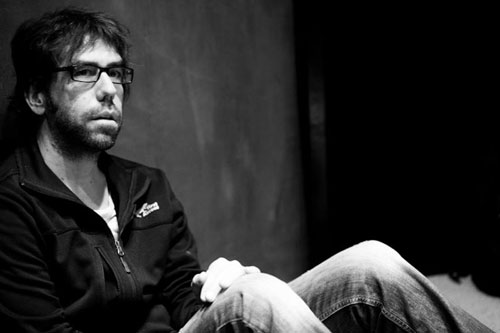
Today, not too bad thanks.
Your band recently released its fourth album, Blinking & Breathing. In what ways do you feel this release differs from your previous efforts?
With each album we're getting closer to our ideal sound, starting with my first album which I basically recorded by plugging a microphone into my computer and singing my songs. For this album we were very lucky to be able to work with an Australian producer called Ian Pritchett, whose work with Angus and Julia Stone we heard and really liked – what we heard was a very alive and present sound, without being over-processed. Listen to “Chocolates and Cigarettes” and you'll maybe hear what I mean. So we heard that album, decided that would be our ideal producer, e-mailed him, and he was keen. We flew him over (thanks to backing by Jump Media) and worked with him in a really good studio owned by the SAE Institute in Cape Town. I think the production is the main thing that makes this album stand out compared with our previous three albums. As far as the songwriting, performance, etc goes, it's hard for me to comment, except to say that we grow and mature and learn with time, and I'm sure that shows in the songs.
On your website the band’s sound is described as “a unique blend of folksie foot-tapping red wine fireside poetry”. That’s quite cool – where did the description come from? What are the elements of this style that intrigue you and beckon you to keep on producing within it?
That came from a fan, via e-mail, and we thought it really captured our essence, so we've been using it here and there in our marketing material. I wouldn't say we consciously aim for that particular style; it's more really just a product of what we love in music, and the instruments we like to play, and the kinds of songs I end up writing. For me, making songs is about taking something dark and nebulous and bringing it into the light by feeling it and naming it and describing it, and I suppose the relief at letting that feeling out turns into a kind of joy that allows me to be playful and creative, so the poetry that comes out is alive and bouncy, no longer stuck in the dark place. And hopefully it can have a similar effect on people who have blocked emotions that they need help in liberating.
The array of instruments used on Blinking & Breathing – French horns, mandolins, harmonica, etc – certainly add a unique and gripping dimension to the songs. What was your reasoning in employing the different instruments for different songs? Do you have a general philosophy when you arrange new tracks?
It's always a tricky thing – you want to keep things interesting, but you don't want to overpower the songs, so we were very careful in choosing instruments and musicians that could bring something subtle and tasteful, to give things a subtle lift here and there. Ultimately, whatever you add must serve the song. This is what I love about my band – they're really great musicians, but feel no urge to dominate in any way, so the songs really shine through. And I guess that's what we're looking for in any guest musicians too.
Despite the use of multiple instruments I get the feeling that the band has an approach of keeping it simple and unpretentious – is this the case? What are your thoughts on songwriting in general in this regard?
I think the previous answer goes a long way towards answering the first part of your question. As far as songwriting in general goes, to me one of the most amazing things in life is how someone with just a guitar and a voice can make something incredibly beautiful. The power of a song, without much embellishment. So that's the starting point for me – alone in my home, I can pick up my guitar and potentially access that elusive beauty that I've heard coming from, say, Neil Young, Paul Simon or Bob Dylan. That's a game I play with myself, seeing if I can do that. Also, as I've said above, songwriting is a kind of therapy for me. When I was a teenager, and I was feeling lonely or alienated, the thing that always made me feel safe and like I belonged somewhere was music. Songs can do that for people. So I guess that's the primary reason I make songs: to offer myself that same comfort, by giving voice to the parts of myself that can't find connection in the world. And the secondary reason would be that I want to be able to offer that comfort to others who might feel the way I do.
Lyrically, you don’t seem to mind getting quite personal in your writing – sometimes the themes are quite intense, in contrast with the often upbeat nature. How have you developed as a lyricist over the years? Do you have any “rules” you think lyricists should follow?
I guess I do have certain rules. The first is to be real and authentic, not to manipulate people into thinking you're something you're not, or that you feel something you don't. The second is to be original, to find a new way of expressing something. Another thing I've learned is that songs don't have to make sense – they don't have to set out a philosophy or tell a coherent story, because their power is in how they make people feel. So for me a good lyric evokes real feelings; and often getting away from rational, logical thinking is the best way to do that. The challenge for me when writing lyrics is to get into a kind of dreamy state, so the song ends up being more like a dream – nonsense on the surface, but full of rich and meaningful imagery. But there really are no rules, just methods, and I guess any artist has to feel his or her way through things and find whatever process allows them to create something powerful and meaningful.
The South African music industry can be a tough one to break into, especially for bands going for something unique. What are your thoughts on the current state of the South African scene, broadly speaking and concerning the folk scene?
Going by the number of local acts I see and hear singing in American accents and trying to sound like whatever's big overseas, I'd say the local scene doesn't really foster much originality. It seems to me the more you differ from what's on the charts or has been on the charts in the past ten years, the less likely you are to be played on the big radio stations. It's so different on the Afrikaans scene, where someone like Koos Kombuis is loved because of his strong South African flavour. I guess it's partly due to the radio stations’ not educating their audiences about what richness there is locally, and partly due to there not being a sense of pride in our identity. I guess I'm speaking mostly about white English speakers, as that’s generally who play folk. It's different in the other language groups, because they usually have strong cultural identities and radio stations that get behind them, but from what I can see, most of what I hear of folk sung in English locally is done in an American accent, often using clichéd American imagery, and hiding behind some Americanised persona. It seems there's an identity crisis of which the local music scene is both a cause and a symptom. White English speakers either have to assume a black identity, eg bands like Hot Water or Freshlyground, or be some kind of parody, eg Die Antwoord, or else they end up pretending to be Americans, like Just Jinjer, Prime Circle, etc. And these are the type of local bands we see headlining festivals. In Australia they have a government-subsidised station called Triple J, which plays mostly local bands, and this exposure allows bands to make music that doesn't have to be tailored for the mainstream, resulting in an amazing diversity of great bands singing in lovely Australian accents.
Simon and the Bande À Part has been around for a while – any particular gigging or touring highlights you’d like to share? Anything not-so-highlightey?
I love playing in KZN – we always get so well received there – not sure why, but some of our best gigs have been at places like The Red Door in Maritzburg and the Southern Cross Music Festival, Splashy Fen and White Mountain. On our recent tour we had a great gig in Stanford (near Hermanus, Western Cape), where at the end of the show we came to an agreement with the audience that we would play another song if someone bought a CD – and that went on for about 10 songs. I realised on this last tour that there are all these little towns in South Africa where they love having you stop over and do a show, so I plan to focus more on these in future.
What does the near and far future hold for Simon and the Bande À Part?
We have a new manager and are really focusing now on building our brand, both locally and internationally. Next year I'm planning a house-concert tour of the US. I'm sure there are plenty of potential fans out there who have never heard us, and my goal is to reach as many of them around the world as I can.
What is the meaning of life?
Kurt Vonnegut says he asked his son what the purpose of life was, and he replied, "We are here to help each other get through this thing, whatever it is." That's it for me – life is hard and the most meaningful thing you can do is help make it more bearable for everyone, including yourself.
Teken in op LitNet se gratis weeklikse nuusbrief. | Sign up for LitNet's free weekly newsletter.
Kommentaar
Hey Sidey. Amazing. I love it. Keep It real brother