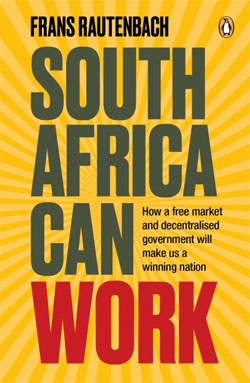
In South Africa can work ondersoek Frans Rautenbach vernuwende denke rondom politieke kwessies en gee 'n alternatiewe blik op hoë werkloosheid, rassekwessies en swak onderwys. Anton P Kruger het foto's by die Kaapstad-bekendstelling geneem.
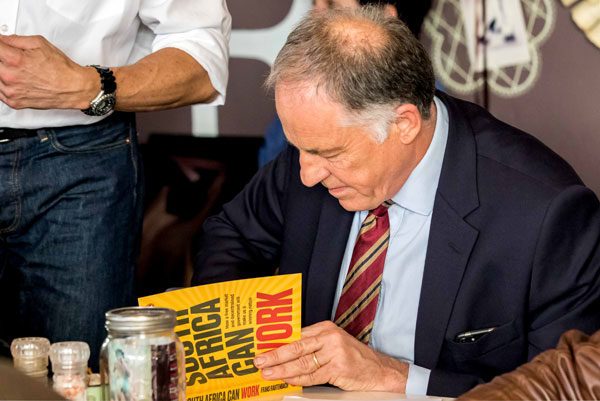
Frans Rautenbach besig om boeke te teken.
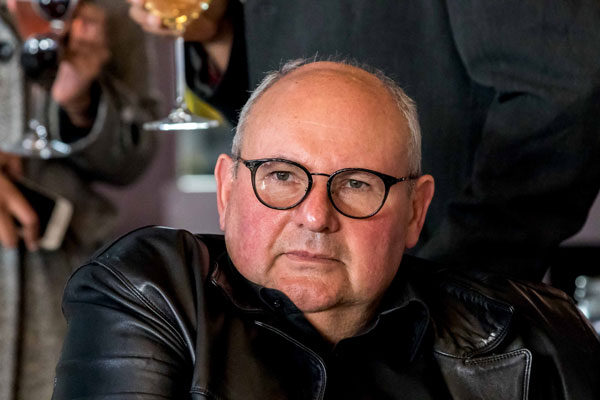
Michael Bagraim, DA-parlementslid en skaduminister van arbeid
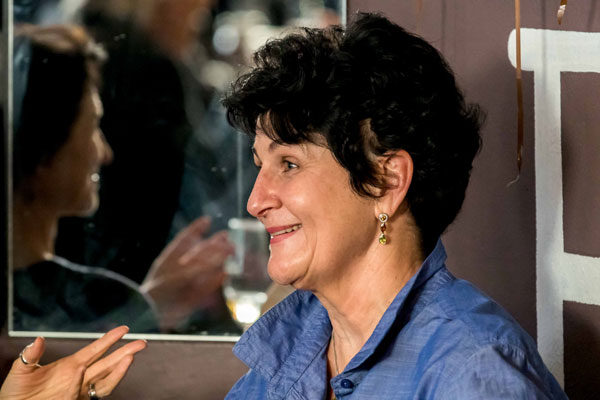
Karin Brynard, pryswenner-misdaadskrywer
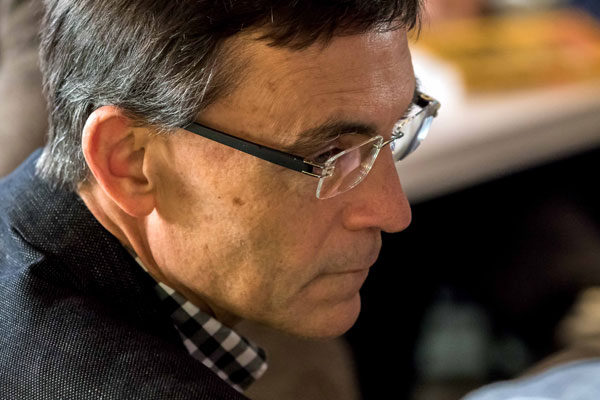
Marius de Waal van die Regsfakulteit, Universiteit Stellenbosch
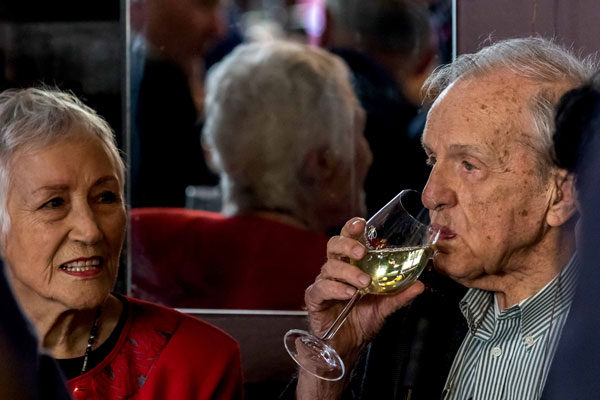
Danie en Anneke van Niekerk
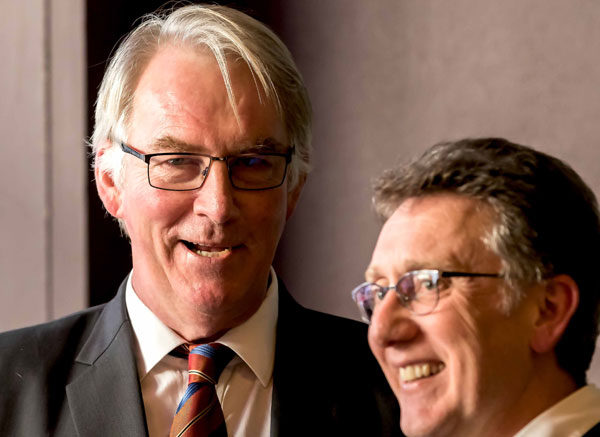
Adv Robert Stelzner SC en Glen Cassels, prokureur
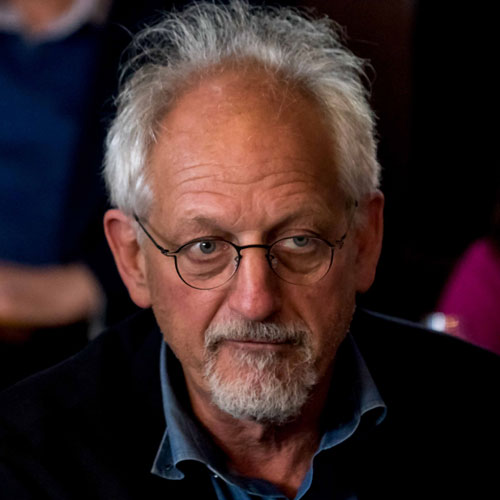
Philip Key van die filmmaatskappy Moonlighting
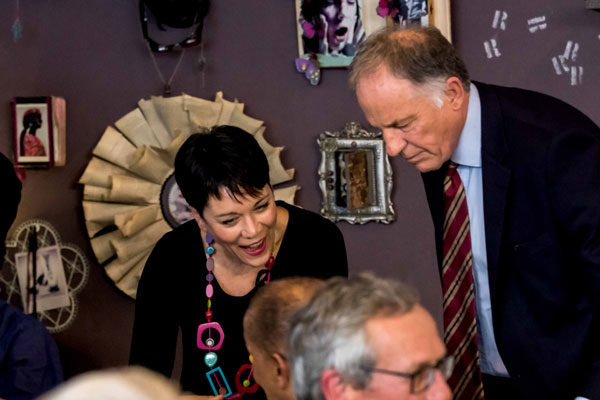
Frans en Elmari Rautenbach
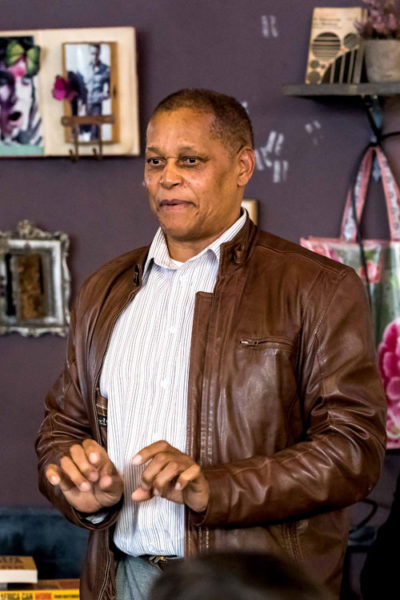
Temba Nolutshungu, direkteur van die Vryemarkstigting van Suider-Afrika, wat die skrywer aan die woord gestel het.
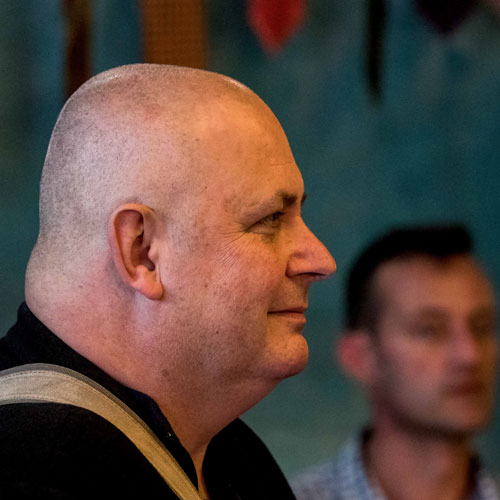
Herman Lategan, bekende joernalis en skrywer

Stefan Rautenbach, seun van die skrywer wat in die openingsparagraaf van die boek sy verskyning maak:
“I used to believe your arguments. I no longer do. Trickle-down economics doesn’t work.”
My son’s statement hit me like a fist in the gut.
It was early 2016. I was having a Mexican dinner in Cape Town with my sons Stefan and Daniel, both students at the University of Cape Town (UCT). We were discussing the #FeesMustFall movement that was wracking South African campuses. I made the point that, in my view, the demands of the protesters were wrongly directed against white people, and that the logical target of their ire should be the African National Congress (ANC) government. The discussion veered towards economics, and the government’s mismanagement of the economy. I reiterated my view that a free market was the answer to our economic problems.
That’s when Stefan said it.
While I was still staggering from the blow, trying to suck air back into my lungs, both my sons calmly declared their intention to vote for the Economic Freedom Fighters (EFF) in the upcoming municipal election. Yes, the political party of Julius Malema that has as its main policy plank the nationalisation of the economy.
Second blow to the gut.
My sons then accused me of believing in economic ideas – free-market policy – that were outdated and had been discredited. When I protested that I had been researching the topic for years, they replied, “You only read the stuff that confirms your prejudices.”
For 24 hours I reeled – not because my sons had a different opinion, but because I had failed over the years to win them over to my viewpoint on how South Africa should work, using arguments that I had thought were powerful and convincing, reaching self-evident conclusions.
It was also clear that our views on race and education – indeed, about how to make South Africa work – differed dramatically.
What if I had been wrong all along? What if I had completely missed the boat, and a whole world of policy change was passing me by like a ship in the night, the world inhabited by young people like my children?
I realised that any discussion with them about making South Africa work, if it were to continue, would have to be prefaced by a carefully researched re-examination of my premises.

Adv Schalk Burger SC
Groepfoto's van die bekendstelling:
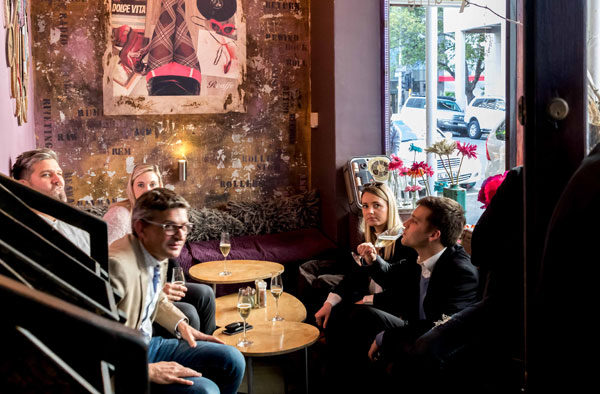

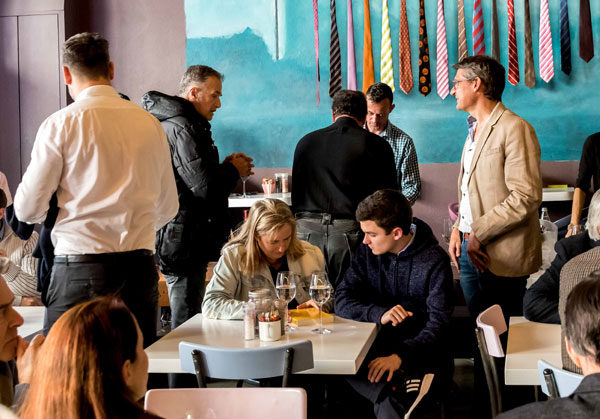
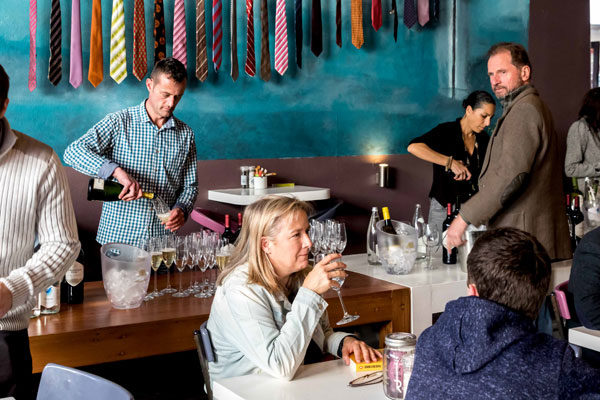
Foto's verskaf. Fotograaf: Anton P Kruger