

Like a good beverage, a good book holds promise from the first sip. This extract is used with the permission of NB Publishers.
About the author
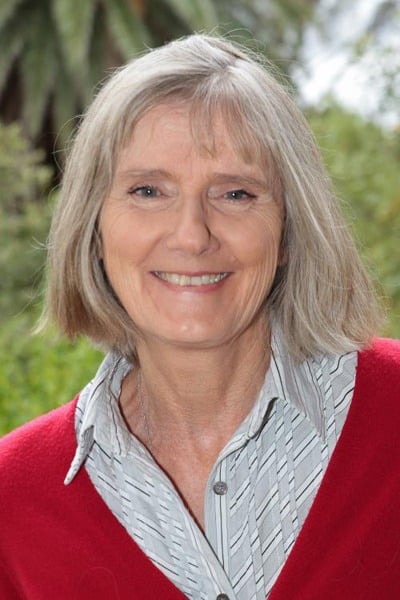
Mignonne Breier (photo: NB Publishers)
Mignonne Breier is a former journalist, lecturer and researcher. At the University of Cape Town, the University of the Western Cape and the Human Sciences Research Council she specialised in research on adult and higher education including adult literacy, student drop out and poverty, recognition of prior learning and professional education. She published extensively on these topics before joining the Research Office at UCT to run researcher-development programmes. She is the author of the 2013 Letters to My Son and has also had poetry and short stories published.
About the book
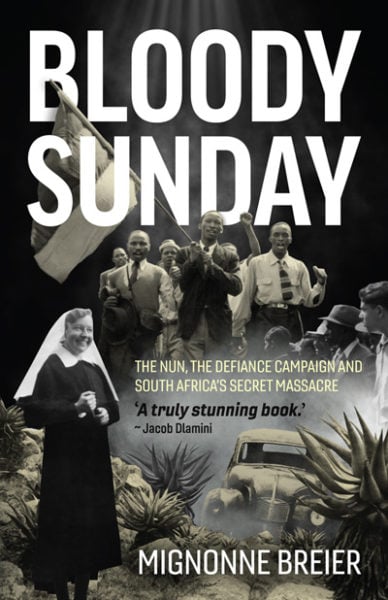
Bloody Sunday
Mignonne Breier
NB Publishers
ISBN: 9780624091141
Sunday, 9 November 1952. It should be remembered as a day of infamy but few know of a brutal massacre when police opened fire at an ANC Youth League event in Duncan Village in East London. In the cover-up that followed, the facts were almost lost to history. The focus was on the killing of Irish nun, Sister Aidan Quinlan, a doctor who ran a clinic in Duncan Village. Bloody Sunday follows the trail of the remarkable Sister Aidan to piece together one of the most tragic days of the apartheid era.
First sip
It took a Duncan Village comrade, with a long history of political activism, to drive the first initiative to commemorate Sister Aidan’s death. Mxolisi Koko Qebeyi had participated in the school boycotts in 1976 and had been a United Democratic Front activist in the 1980s. He had spent many months in detention without trial and bore scars on his body from police bullets. But instead of leaving the country to join Umkhonto we Sizwe, as many of his contemporaries did, he channelled his activism into community projects for the youth. Qebeyi grew up with knowledge of Sister Aidan’s death. As the fiftieth anniversary of her death approached, he had a vision for a project that would both atone for her death and have benefits for the people of Duncan Village, particularly the youth.
He produced and distributed a pamphlet in which he suggested that if Sister Aidan had not been killed in the way she was, Duncan Village would not be in its present sorry state. He attributed the hardships in his life to the ‘incident’ of 1952. The barbaric manner in which she was killed had angered God and the ancestors, and the township had been cursed. The ‘black cloud’ generated by the burning car and her charred flesh still hung over Duncan Village ‘like a pall of shame and despair’.
Qebeyi managed to gain support from the Department of Arts and Culture and local political and religious leaders for the commissioning of a memorial to be erected in the grounds of the mission and for a commemorative event designed to satisfy both the Catholic Church and those people in Duncan Village who attributed their plight to the anger of the ancestors.
The event was a complex mix of Catholic ritual, political speeches and traditional Xhosa customs. It included a two-hour service in St Peter Claver church, led by Bishop Michael Coleman, Catholic bishop of Port Elizabeth; the unveiling of the memorial, which consisted of a marble cylindrical column, on top of which rested two brown hands releasing a white dove; speeches by politicians, including former Eastern Cape premier Raymond Mhlaba, who led the first defiers in Port Elizabeth on 26 June 1952, and Nosimo Balindlela, the province’s minister for sports, arts and culture; and the ritual slaughtering of eight cattle and forty sheep (brought into the township with municipal permission) to appease the ancestors. When Qebeyi spoke, a light drizzle fell. This was taken as a positive sign that the Christian and African gods had lifted the curse that had been lingering over Duncan Village from the moment Sister Aidan died, when the dark clouds first gathered, as Qebeyi put it.
While Qebeyi and his supporters seemed happy with the way the event turned out, others felt sidelined. The Dominican sisters were invited to attend the ceremony and contributed funds towards it but were not included in the proceedings.
Sister Lucilla Donga, who travelled from the Transvaal for the occasion, was particularly upset that she was not asked to speak, even though she had lived and worked with Sister Aidan.
Sister Aloysia Zellmann, leader of the King Dominican congregation at the time, who had come from Johannesburg for the occasion, said the fiftieth anniversary was ‘very political’ and the weather was ‘dreadful’. The rain that Qebeyi welcomed as a sign of approval from the gods was interpreted by her as the return of the ‘dark cloud’.
But the event had important consequences for the congregation. Sister Aloysia was nearing the end of her leadership period and felt a calling to work in the Eastern Cape. While in East London, she was approached by a young man from Duncan Village who had an alternative vision for the redemption of the township.
Sitting in the congregation during the fiftieth anniversary service was Zuko Blauw, then twenty-six, a Duncan Village resident and devout Catholic from a family with close associations with the Dominican congregation.
His parents were once teachers at St Thomas School for the Deaf at Woodlands, and he had attended a Catholic boarding school near Sterkspruit for a year, an experience which left him with lasting respect for Dominican values. He had already heard about Sister Aidan.
He was moved by the events of the fiftieth anniversary but not satisfied that they were sufficient to honour her legacy. He wanted to ‘turn the story around and have something more beautiful come out of it’. He wanted people to talk about the values of the Dominicans.
Blauw completed his schooling at Qaqamba High School in Duncan Village and then proceeded to the University of Cape Town, where he obtained a Bachelor of Social Science degree majoring in history. For some time after completing his degree, he was without work, and had time to read and reflect.
It was during this period that an incident happened that had a profound effect on his future career. He had been to the library to get some books and was on his way home when he noticed two young girls in school uniform behind him, walking to school for an afternoon examination.
Not caring that he might overhear what they were saying, they were discussing, loudly, ‘men, sex and booze’.
Instead of preparing for the exams the previous night they were actually drinking the entire night and they actually slept with those men they were drinking with and they couldn’t be bothered because they were not writing in the morning, they were having an afternoon exam paper, so they knew they could drink, because they will sleep and wake up at 11 or 12 because the paper is at 2. I was shocked …
Blauw said he started to observe the behaviour of young people and realised he was different. He had grown up with a sense of values instilled in him since a very young age by Dominican sisters.
So I knew that I wanted to tell the story of them [the Dominican sisters] and their values, but I needed something that was going to capture the imagination of the people. I wanted a story, I wanted something that everyone can relate to … Then all of a sudden one day I finally found my starting point and I went through the story of Sister Aidan over and over again … so that’s when I started to say okay fine let us honour our Sister Aidan, her values and the values of the Dominicans …
Blauw believes the Sister Aidan story has had a unifying effect on the community.
For one, the church never distanced itself from that community since that incident and the church never blamed anyone, and the church still doesn’t blame anyone. Two, the sisters you know, they never disrespected their vows by saying no we are no longer going to work there, they decided to continue, knowing very well what had just happened because their mission work was in that community. The sisters still continue to be part of that community … The story brings good memories about Sister Aidan, because if you go to Duncan Village and ask the old ladies about Sister Aidan, everyone smiles you know, they just smile because they remember the beautiful person she was …
He emphasises he is not trying to recruit people into the Catholic Church: my goal is not to turn the youth of Duncan Village into Catholic youth … no, the intention is for them to understand that in life there are things that are more important than what they think they know, like respect, honesty, hard work, sacrifice, speaking the truth and love. I mean those are the values that were instilled in me. So it’s something I want to plough back so that they can understand that you know in life you won’t always get what you want, sometimes you need to sacrifice, and sacrifice doesn’t come cheap, it comes with hard work but you must be consistent.
So Zuko Blauw and Sister Aloysia Zellmann and others began to plan another memorial that would remember Sister Aidan in a different way and honour the values she stood for.