

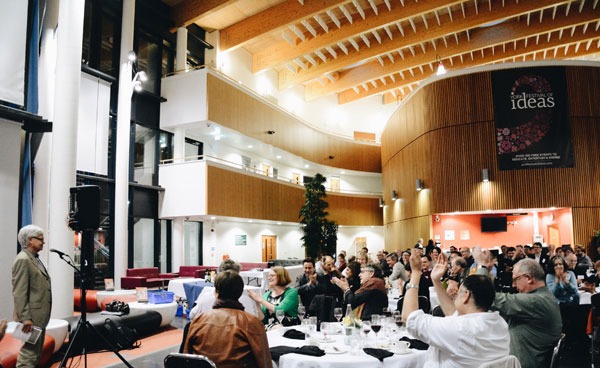
The Languages of Literature: Attridge at 70, a three-day conference hosted by the Department of English and Related Literature at the University of York (UK) this past weekend, celebrated the contribution of Derek Attridge to literary criticism, shortly after his 70th birthday.
Speakers gave lectures and papers on topics related to Attridge and his work. Participants included both renowned and upcoming scholars from and/or working on South Africa: David Attwell, Elleke Boehmer, Carrol Clarkson, Sam Durrant, Michelle Kelly, Liani Lochner, Erica Lombard, Peter D McDonald, Zoe Norridge, Graham Pechey, Sarah Pett, Michael Springer and Andrew van der Vlies. With support from the prestigious “Writers at York” series, novelists Zoë Wicomb, Emma Donoghue, and Tom McCarthy, in addition to poets Paul Muldoon, Don Paterson and John Wilkinson attended the celebration, reading from their work.
One of the foremost critics and theorists of literature working today, Attridge was born in South Africa, where he first attended university, and some of his recent work is concerned with South African literature, including The Cambridge History of South African Literature (co-edited with David Attwell), and a study of the novels of JM Coetzee (a study which also reflects his interest in questions of ethics and responsibility as they apply to literature). In 2015 Derek will publish The Work of Literature (OUP) and The Craft of Poetry (Routledge, with Henry Staten).
In the concluding plenary session, South African scholar Carrol Clarkson presented the following paper, “Afterwords”, in the form of an e-mail addressed to Derek.
– IvH
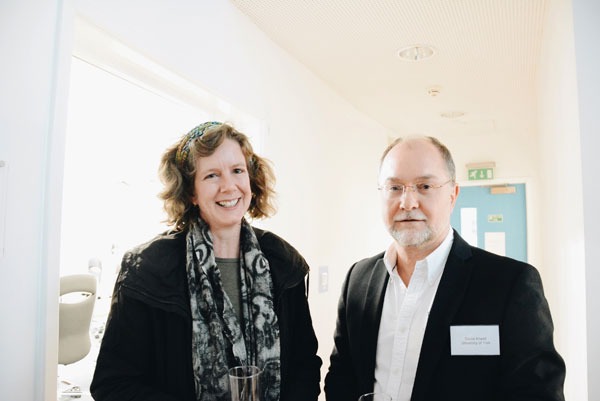
“Afterwords”, Carrol Clarkson
Conference: The Languages of Literature: Attridge at 70
University of York, 22–24 May 2015
Dear Derek
I decided to write my presentation for the Attridge Conference as an e-mail to you. This is one reason why I said (when we bumped into each other just before the conference started) that my paper was weird. In the last day or so, though, I learnt that the new book you’ve written together with Henry Staten started out as a series of e-mail exchanges! This made me depressed and elated all at once: depressed because my idea was not as “original” as I’d thought; elated because I’m reminded that what I’m doing participates in / shares (in French I’d use the verb partager) the playing out of ideas in extraordinary company. This is quite a long e-mail, so “here is one that I prepared earlier” – although not much earlier! Already you’ll notice that some of what I have to say is dated/outdated! But that’s part of the point. So, here goes …
From: Carrol Clarkson xxxxx@xxxxx
Date: Sun, May 24, 2015 at 8:01 AM
Subject: Afterwords
To: Derek Attridge xxxxx@xxxxx
Dear Derek
Allow me to present my conference paper to you in the form of an e-mail – for reasons which may become clearer as I write this. Clearer to you, that is, but also to me. The title is “Afterwords”. It’s a risk, of course – writing this presentation in the form of an e-mail – but I wanted to try. Perhaps the first reason is this: in recent months we’ve all been talking so much about the third person and talking in the third person and talking about alterity and the Other. (A little aside: Do you remember the protagonist of Beckett’s Unnamable who says:“I shall not say I, ever again, it’s too farcical. I shall put in its place, whenever I hear it, the third person, if I think of it.”)
But now I think it’s time to be attentive to the second person again: so here, in this e-mail, you become my interlocutor, my reader, my You. And so the ground – the “context and destination” of this address – as Derrida might put it – has shifted (mindful as I am, at the same time, of Derrida’s notion of “destinerrance”), enabling me to say different things. One of your core preoccupations is the ethics of reading, and in writing you an e-mail, this makes me think about what’s at stake in the process, of you – so often the writer – becoming my reader; that is to say, this event of “I-becoming-you”. In conferences we’ve been to recently – Brisbane and Adelaide especially – attention has been focused on that incipient moment of Becoming-a-Writer. Just as important, surely, with ethical stakes running just as high, is that incipient moment of “Becoming-a-Reader”.
The choice of an e-mail for this presentation is a risk. This is an academic conference. I’m supposed to be presenting a paper with a tangible, accredited “research output”. I’ll have to report to the university management, specifying what type of publication it is, proving that my submission has been peer-reviewed; that it meets criteria set by METIS or the URC or IRMA and/or the NRF. Doubtless the conference organisers will have similar accounts to give, not least in preparation for the next REF, specifying “impact” and “output”, commenting on “knowledge exchange & collaboration”; the potential for future successful “grant capture”. In the last few days we’ve been filling in forms to say how the reading events have changed our lives.
An e-mail surely won’t count as a research output (to add insult to injury, I’m sending it from a gmail address, rather than from a university address). Would it help if I changed the address I sent it from? To send it from a university address would have the effect of activating the disclaimer notice of the institution at the bottom of my message. And here is another strange logic: you have to send a message from an institutional address in order for said institution to disclaim it. At the same time, e-mails sent from a university address, relating to university business, are the property of that institution. Here is the opening sentence of UCT’s disclaimer notice: “All e-mails sent by UCT are the property of the University of Cape Town where related to the business of the University and, where not, of the sender.” (It’s fascinating. An entire essay could be written on the topic: the politico-philosophical implications of the disclaimer message; I’ll be developing some of these ideas in the review I have to write of John Higgins’s book Academic Freedom [I’ve added UCT’s disclaimer to the bottom of this message, Derek – JL Austin would have something to say about that!].)
In sending my paper directly to you in an e-mail what I’m after is “words of true exchange, wisselbare woorde” as the Magda of In the Heart of the Country would say, but is this an unrealisable ideal?
To come back to the risky part of the decision to write an e-mail: you will already have picked up that what I’ve said so far is, at best, provisional, cryptic and sketchy. It’s open to discussion; points need to be followed through, refined; entire chunks will have to be scrapped altogether.
And yet: trawling through my inboxes over the years, I find a rich palimpsest of conversations with you, Derek – we’ve spoken about Coetzee, fictional beings, Wittgenstein, Van Niekerk, jobs, Wicomb, the death of a pet; The Childhood of Jesus, Afrikaans, The Telephone Book,our respective children; Derrida; life-in-general … Mostly what I’ve written in these e-mails isn’t properly formulated, or even particularly interesting; certainly not publishable … But the mere fact of having you as my interlocutor, my You, has precipitated me toward thought – and so: the genre of an e-mail message, with its air of provisionality and its inherent anticipation of response, challenge, question … becomes risky in a more interesting sense. For me it’s an invaluable mode of thinking-through, and it’s when I’m writing e-mails that I’m most clearly reminded of what Derrida has to say about writing: “It is because writing is inaugural, in the fresh sense of the word, that it is dangerous and anguishing. It does not know where it is going, no knowledge can keep it from the essential precipitation toward the meaning that it constitutes and that is, primarily, its future.”
But now, coming back to the question of “afterwords”: at the most obvious level, the occasion of a festschrift is the celebration of a scholar’s writing: your writing. All our words at this conference come after yours, in response to, and with a sense of responsibility in our imperfect efforts to do justice to them. Any talk of the “singularity of literature” of the “ethics of reading” of literature in relation to allegory; anything we might choose to say about Joyce or Beckett or poetics or Derrida or Coetzee – or about what constitutes the literary … are words after yours.
In turn, your own work is distinctively presented as a writing-in-response; the writer, then, is primordially a reader; your words are always afterwords. In the introduction to Reading and Responsibility: Deconstruction’s Traces, for example, you write: “The chapters […] were all initially responses to invitations – to give a talk, contribute to a collection, participate in a dialogue” and, with a sense of occasion, with an attentiveness to the encounters in these literary events, you add: “I hope they retain the sense of direct address and of focus on a specific issue that marked their original production, even though they have been revised and in some cases considerably expanded.” Your words are not presented in splendid isolation (I’m reminded of Bakhtin here: “[T]he speaker is not Adam. You do not disturb the eternal silence of the universe”) – your words (I’m quoting again) “trace a constant engagement with the work of Jacques Derrida […] They thus exemplify a set of responses to or elaborations of Derrida’s writing […] to use Derrida’s own metaphor, they are my counter-signatures to his signature.”
It’s long after I sent my title through to the conference organisers here in York that I realised that the concluding chapter to (Derrida’s and Searle’s? / not Searle’s?) Limited Inc is titled “Afterword: Toward an Ethic of Discussion”. That afterword opens with the words, “Dear Gerald Graff, Allow me to answer you in the form of a letter” (111) …
I’ve just spoken about “realising” that this is the title of Derrida’s concluding chapter; but this “realisation”, this becoming aware of something, was thanks to an act of reading; not a reading of Limited Inc itself, but the event of my reading your annotated bibliography to Acts of Literature. The bibliography to this book has quite an elaborate title: “A Selected Bibliography of Derrida’s Writing (with particular reference to the question of literature)”. And so this brings me yet again to the question of “Afterwords”: Acknowledgements; Afterwords; Epilogues; Appendices; a concluding interview with someone else after the other essay-style chapters; Bibliographies – these parts of a book are often glossed over, ignored as texts in their own right; not really considered as part of the work or the central thesis at all. But in your work, I think this is where it’s at. Think of the end of your Coetzee book (JM Coetzee and the Ethics of Reading: Literature in the Event … I’m putting this whole title down because I think it matters for what I’m trying to do in this e-mail): it’s called "Epilogue: A Writer's Life"; or think of the final chapter of Reading and Responsibility, which is an interview: “The Place of Deconstruction: A Conversation with Jean-Michel Rabaté"; and then there’s the “Appendix: debts and directions" at the end of The Singularity of Literature. Now the Shorter Oxford English Dictionary tells us that an appendix is “a subsidiary, extraneous adjunct” – but the truth is, these epilogues and conversations and afterwords and appendices seem to me to “stage” some of your core concerns (I know that “stage” as a verb is one of your favourite words: we’ll get to it! … although this may have to be carried over to the next e-mail. (OK, but on second thoughts let me mention this now: Derek, how do you see your use of the word “stage” in relation to the question of allegory? If we take Barthes’s extended elaboration of the term into account, does this change things conceptually for you? “Stage” is such a handy word for all of us – but I think it’s become too handy, and sometimes it short-circuits conceptual nuance.) OK – but back to the Appendix in the Singularity of Literature, which opens up (via Deconstruction’s Traces)on to chapter one of The Work of Literature, to which I’ll return in a moment.
In the bibliography of Acts of Literature you write: “The following is a telegraphically annotated list of texts by Derrida that engage with literary works and with the question of literature, augmented by other texts by Derrida referred to in the course of this work; it will thus serve as both a guide for further reading and a list of works cited” (435). What is striking is this setting up of a circuit of reading ... and writing ... and reading again; and an invitation to each of us to participate in several “infinite conversations” in which your own work plays such a pivotal role. In your mention of the reading that has given rise to your writing, and the invitation to us to read further, I’m put in mind of Wittgenstein’s Preface to the Philosophical Investigations: “I should not like my writing to spare other people the trouble of thinking. But, if possible, to stimulate someone to thoughts of his own” (viii).
Now let’s turn to the “Epilogue” in your Coetzee book. An epilogue in its original sense refers to an actor’s direct address to the audience after the play is over. Far from being some sort of dispensable addendum, though, this epilogue reads more as a thesis statement of your stance on Coetzee. You write: “[T]o locate Coetzee in the tradition of postmodern playfulness […] is to overlook the much more important engagement in his work with the demands and responsibilities of writing and reading” (199). (I can’t help thinking of Coetzee’s own comment here: “[A]ll writing is autobiography: everything that you write, including criticism and fiction, writes you as you write it”; just as Elizabeth Costello has committed herself to a life of writing, so too have you.) Right at the end of this epilogue you say: “What has mattered, for Elizabeth Costello and for the reader, is the event – literary and ethical at the same time – of storytelling, of self-questioning, and not the outcome” (205). Yet again you stress that act event of the literary encounter; the saying, rather than the said, in Levinasian terms. Returning to the “after” of afterwords: of course it means “behind in place or order; later in time; next following”; But it also means “in pursuit of, in search of”.
Now the epilogue of The Singularity of Literature:
Any attempt to identify one’s intellectual debts in a project such as this one is, of course, bound to be inadequate: 40 years of reading and listening lay down their traces in a dense palimpsest, much becoming buried beyond recall. But it may be useful to signal those of which I am most aware partly to acknowledge imperfectly but with gratitude, the degree to which the thoughts developed in this book originate in other minds, and partly to offer readers some suggestions about where to turn for further reflections on the issues I have touched on. If anything in this book can be said to be an inventive contribution to the debate about the literary it will not […] be because I have seized on an absolutely new idea as it floated somewhere beyond everyone else’s ken or performed a magical feat of ex nihilo or an absolutely new idea; it will be because the multiple arguments and attitudes that I have imbibed have both provided a foundation for thinking and produced conflicts and fissures in my own thought out of which something new has emerged. (139)
So in these “afterwords”, epilogues and appendices, we find the beginnings of a philosophy of writing that I think stages (mmm … "stages"!!! You see, it catches me out too!!) a Levinasian understanding of a self-sacrificing responsibility, or as Coetzee might put it (with reference to Lacan), a “stepping down of the subject supposed to know”. There’s the reflecting back and reading forward; I’m attentive to the elaborate conditional and your use of the passive voice: “[I]f this book can be said to be an inventive contribution …” and thought is generated, not in clear and simple activity, but in the conflicts and fissures that arise in the writing-reading experience. These afterwords and epilogues and appendices are not just “subsequent words” or words following after others in time, or even “afterthoughts”. They are after in the sense of being in pursuit of ideas generated through dialogic encounter. (OK, so here’s a tricky thing to work out: the time of the idea … the metaphors I’ve used are contradictory … but then again, maybe that’s part of what’s at stake here.)
One of the important “debts” you acknowledge in the epilogue to The Singularity of Literature is Derrida’s notion of that “dangerous supplement” – which at once adds to, but disrupts the supposed internal closure of the work. So here’s a confession, Derek: whenever one of your books comes out, I go to the “outside” bits first – the exergue, the appendix, the afterword , and also the acknowledgements the preface the foreword …
In reading "around" your books, I am put in mind of a notion that your words operate in the mode of an “after-image”: the impression of a vivid sensation, retained after the external cause is withdrawn. And yet these after-images, for you, are not reducible to a purely visual field: words generate these after-images, rather than the images themselves. In Deconstruction’s Traces, writing about Barthes’s notion of the punctum –the emotionally charged, striking visual detail that Barthes identifies in his discussions of several photographs, you have this to say: “[T]he nature of the obtuse meaning and the punctum is such that Barthes’s readers do not experience them by simply looking at the pictures […] Barthes is obliged to add a commentary […] but here is the paradox: the more successful he is in conveying to the reader in language the special quality of the features that have moved him, the more he shifts them from the realm of the obtuse meaning and the punctum to the realm of the coded and the cultural” (121). This, you go on to say, is the trouble with any commentary on the work of art. Nevertheless, in reading your words, I get the sense that I’m in a zone pressing against the limits of language. Afterthoughts. Afterwords. After-images …
The idea of the logic of words as after-images (that is, the vivid sensation retained After the initial cause is withdrawn) becomes even stronger as we turn to The Work of Literature: in a performative tour de force, the entire book is presented as an afterword to The Singularity of Literature: “This book is conceived to some degree as a supplement to that one,” you write. Importantly, though, “No prior knowledge of the earlier book is assumed” (that is to say, despite the dialogic interface, The Singularity of Literature does not have to have been read!). The first chapter in The Work of Literature is presented in the style of an interview: “[T]his strongly enabled me to muster counter-arguments as strongly as I can, while providing space for responses that I hope are convincing” (11). You become the reader of your own writing.
If for Coetzee the measure of a writer’s seriousness is the ability to raise the countervoices in oneself and embark upon speech with them, then The Work of Literature is surely proof of that measure.
[Afterthought (OED):“reflection after the act; hence, a later explanation or evasion.” The practice of writing as a way of generating thinking (can we really have afterwords – in the sense of words that come after a thought? Does writing generate only afterthoughts?)]
Love
Carrol
E-mail disclaimer
All e-mails sent by UCT are the property of the University of Cape Town where related to the business of the University and, where not, of the sender.
If any e-mail is not related to the business of the University of Cape Town it is sent by the sender in the sender's individual capacity.
The views and opinions expressed in any e-mail do not necessarily represent the views of the University of Cape Town.
All e-mail is intended only for the person(s) to whom it is addressed. Any recipient of e-mail to whom it is not addressed may not use, disclose, copy, redirect or print the content and must notify the sender by replying to him or her.
The information in any e-mail is intended for the attention of and is licensed for use by the addressee(s) only.
The intellectual property in the content of any e-mail is retained by the holder of that intellectual property.
While every effort is made to ensure that all e-mail and any attachments to it are free from viruses, neither the sender nor the University can be held liable in the unlikely event that a virus is transmitted to the recipient's computer.
No e-mail sent to the University of Cape Town shall be deemed to have been received by the University or its agent(s) until the University has responded to it. Failure to respond shall not constitute a response.
Neither the University nor the sender of any e-mail will be liable to any person for direct, indirect, or consequential damages flowing from its use by any recipient.
The University Council and Senate have authorised the UCT ICT Services to monitor outgoing and incoming e-mail usage and other telecommunications usage on its e-mail and telecommunications systems; this does not allow ICT Services to monitor content.
UNIVERSITY OF CAPE TOWN
This e-mail is subject to the UCT ICT policies and e-mail disclaimer published on our website at http://www.uct.ac.za/about/policies/e-maildisclaimer or obtainable from +27 21 650 9111. This e-mail is intended only for the person(s) to whom it is addressed. If the e-mail has reached you in error, please notify the author. If you are not the intended recipient of the e-mail you may not use, disclose, copy, redirect or print the content. If this e-mail is not related to the business of UCT it is sent by the sender in the sender's individual capacity.
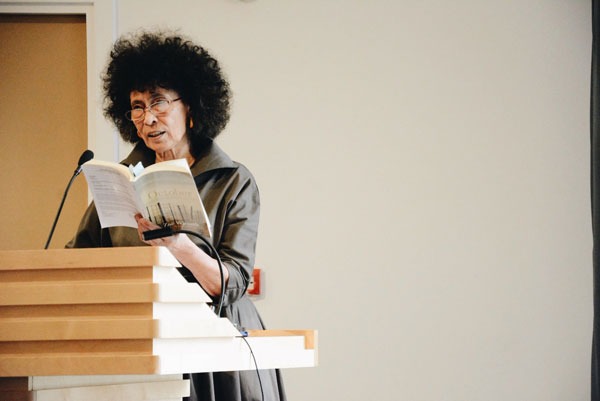 South African novelist Zoë Wicomb reads from her latest novel, October (2014).
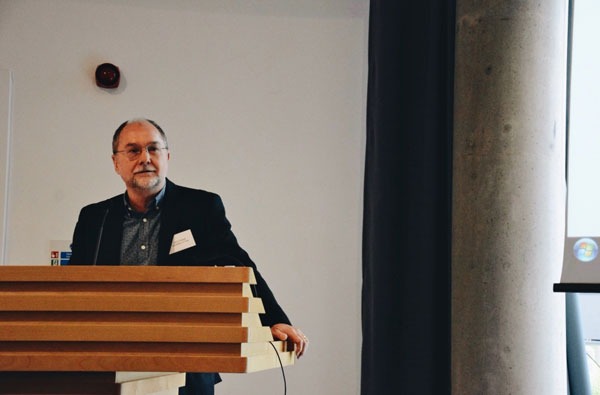 David Attwell opens the conference.
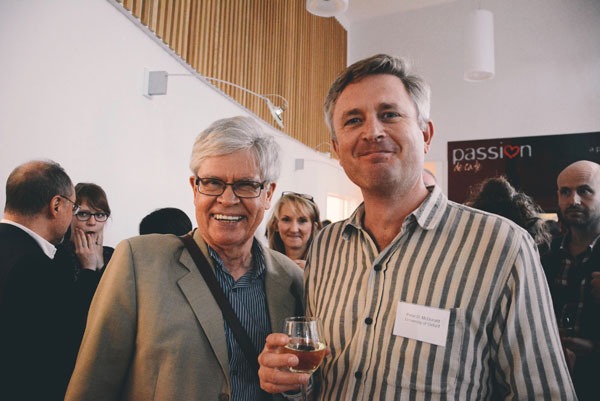 The man of the hour, Derek Attridge (University of York), with Peter D McDonald (Oxford).
 “Global Singularities”: South African scholars Andrew van der Vlies (Queen Mary University of London) and Elleke Boehmer (Oxford), Jahan Ramazani (University of Virginia), and Zoe Norridge (King’s College London).
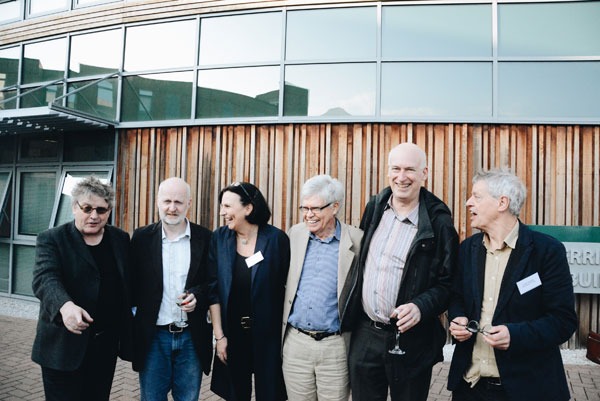 Writers at York: poets Paul Muldoon and Don Paterson, Judith Buchanan (York), Derek Attridge, poet John Wilkinson, and Hugh Haughton (York).
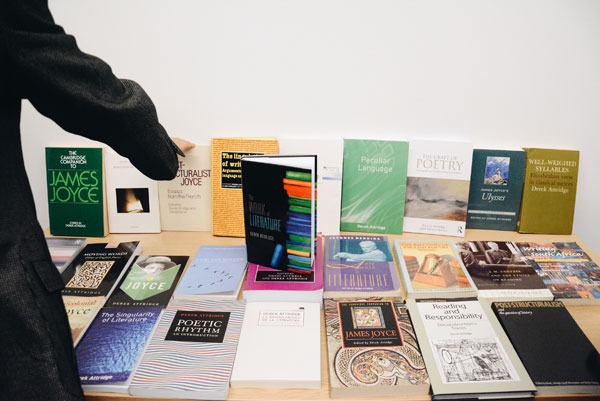 A selection of books written or edited by Derek Attridge.
Photos by Imke van Heerden