

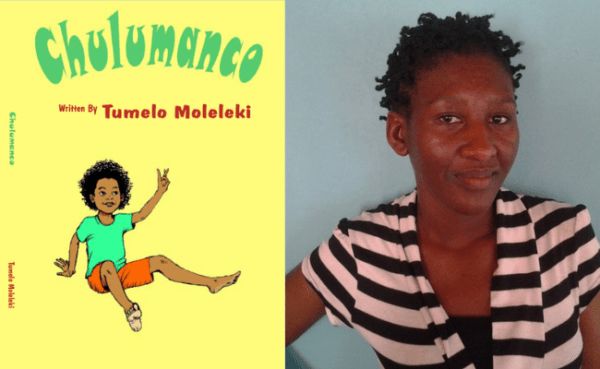
Book cover: Amazon; picture of Tumelo Moleleki: provided
Tumelo Moleleki is a South African author whose mother tongue is Sesotho. She recently read from her isiXhosa children’s book at the SA Festival of Children’s Literature. She talks to Naomi Meyer about her book, Chulumanco. The interview is published in English and isiXhosa.
Molo, Tumelo. Unjani? Sadibana kumnyhadala weencwadi.
You read from your book Chulumanco at the recent SA Festival of Children’s Literature.
Please tell me about yourself. When did you decide that you wanted to write a book for children? Did you grow up with many books – and did you read books written in isiXhosa when you were a child?
Molo, Naomi. Ndiphilile, unjani wena?
Ndazalelwa kwindawo apho umama wam ebengavumelwanga ukuba angazalela kuyo ngoba kwakungelaa xesha abantu abamnyama bebengavumelekanga ukuba bangahlala noba kuphi. Ngoku ke ngemva ekubeni ndizelwe, wandisa kumakhulu wam eTranskei ukuba ndiyokhulela kuye. Yiyo loo nto ndiye ndakhulela ezilalini. Into yokubhala yandifikela sendisebenza kodwa ukubhala iincwandi zabantwana kwakuyinto ebendingafuni ukuyenza ngesiNgesi, yiyo loo nto ndaqala ngokubhala ezabantu abadala ngesiNgesi kuba bendisazi ukuba ngeke kube lula ukuthengisa iincwadi ezibhalwe ngesiXhosa okanye isiSuthu kum. Ngoba ndiwashicelela ngokwam amabali wam, ndidinga imali yokuhlawula iindleko zokwenza loo nto. Ndacinga ukuthi kungaba lula ukuthengisa ezesiNgesi ndizokwazi ukusebenzisa imali ezithengwa ngayo ukushicelela ezi zabantwana ebendifuna ukuzibhala. UChulumanco ndambhala ngo2019, kodwa yaphuma ekupheleni kuka2020, ngoDisemba. Umakhulu wam yayingumntu owayefunda amabali, ewathanda gqitha futhi, ngakho ke ndakhulela kwikhaya elalinazo iincwadi. Esikolweni apho ndaqala khona ukufunda, sasifundiswa ngesiXhosa nesiSuthu ngutitshalakazi wethu. Ndafunda amagama wealphabet ngazo zombini. Ekhaya singabeSuthu. Ecaweni sasicula ngesiXhosa nangesiSuthu.
I was born in a place where my mother was not allowed to be during the old regime, and so she sent me to go live and be raised by my grandmother. That was in a village in the Transkei. The writing bug bit me as a working adult. As a child, I used to despise creative writing in school, but wrote my own stories using old exercise books. I never wanted to write children’s stories in English, but I knew I would struggle to sell books written in our languages; so, I needed books that would sell first to finance the production of these ones, because I self-publish. So, I started with adult fiction in English. I then used the income from selling these books to publish the children’s books that I have. I wrote Chulumanco in 2019, but it was released only in December 2020. My grandmother loved reading fiction, so we had books at home, but only the Bible and hymn books were in Sesotho and Xhosa. The school I went to for my elementary education taught us in both languages, so I learned the alphabet in these two languages. My home language is Sesotho. In church, we read texts in both languages because the proceedings were done in Sesotho, but the hymns were in both.
This is the summary of Chulumanco:
UChulumanco woyika izilwanyana ezasendle, acingayo ukuba angadibana nazo endleleni esiya kwaninalume. Yhoo! Usizana lwenkwenkwana encinana kangaka, oluzifumana lujongene nezinje zona iingozi lulodwa jwi. Kodwa ke, uneqhinga. Zifundele ngokwakho nawe ukuba iqhinga lakhe liza kumsebenzela na?
Chulumanco is afraid of wild animals, which he thinks he might meet on the way to his uncle’s house. Oh! The caregiver for such a small boy, who finds himself facing such dangers, is alone. But then, he has a strategy. Find out for yourself if his strategy will work for him.
Google Translate helped me with the translation of this story. Please help me understand even better. The pictures in the book made me realise that this little boy is walking in the woods and he is all by himself. But who is the caregiver? His grandmother?
UGoogle ukulahlile ngokuthi “usizana” lutheth’ ukuthi caregiver ngesiNgesi. Usizi yinto ebuhlungu evelela umntu okanye isilwanyana - ngeAfrikaans singathi, “arme kind”, masiphedulele isibhalo “usizana lwenkwenkwana” - umakhulu nguye umntu omdala omkhathalelayo.
What Google has done is mislead you with that word. The word it has translated as “caregiver” is actually what in Afrikaans would be apt to use “arme kind” for, for this phrase “usizana lwenkwenkwana”. In essence, that sentence is saying: what a pity such a small boy has to face these dangers alone. The grandmother is the caregiver.
On the first page, I read this passage:
UChulumanco yinkwenkwana eneminyaka emihlanu. Uhlala nomakhulu elalini. Xa eneminyaka emithandathu, uya kuya kuhlala nonina aqale nesikolo.
Chulumanco is a five-year-old boy. He lives with his grandmother in the village. When he is six years old, he will go to live with his mother and start school.
These few sentences helped me understand the background to the story. Chulumanco is about to start a journey through the woods, and he is almost ready for school. Do you really know this little boy, or is he fictional?
...........
Chulumanco is completely fictional, but is very much representative of boys and girls living in the villages and the kind of lives they lead.
............
UChulumanco ungumbono wenqondo yam nje, kodwa uphila impilo efana ncam nezabanye abantwana abakhulela ezilalini.
Chulumanco is completely fictional, but is very much representative of boys and girls living in the villages and the kind of lives they lead.
In the book, I see him encounter many different animals: a lizard, a leopard, a snake. Scary animals! And then, finally, there is another animal. A friend! Please tell me about his journey – and about this last animal. Because of the pictures and some of the words I could read, I understood the story up to the part where he finally is at the village with his grandmother. But he is crying and I don’t see the dog anymore! Please tell me what happened?
Xa uChulumanco esendleleni esiya kwamalume wakhe, uzibona ejongene nazo ezi zilwanyana ngeliso lenqondo yakhe. Akadibani tuu nalezi zilwanyana, uzidibanela nabantu nje. Le nja yekamakhelwane kamakhulu. Xa imbona ehamba, iyamlandela. Uzama ukuyigxotha kuba esoyika ukuba umniniyo uza kumngxolisa. Xa esithi uyigibisela ngelitye ukuze ibaleke, ibaleka nje kancinci iphinde imlandele futhi. Ngoku ugqiba ekubeni ayiyeke imlandele. Ngoba usacinga ngenjana le, akasacingi ngezilwanyana ezimthusayo. Uye waphupha ngezi zilwanyana zimothusayo. Ithe evuka kwelo phupha, wangamboni umakhulu endlini waqala ukulila, umakhulu wabuya masinyane ngoba yena ebesele evukile, ezenzela imisebenzi yakhe yangaphandle. Uye wahoya uvalo lukaChulumanco wabona kungcono amfundise ngezilwanyana ukuze angasazisabi kakhulu. Mhlawumbi ngelo xesha inja ibikhonkotha abadluli ngendlela phaya kwamakhelwane.
So, when Chulumanco is walking to his uncle’s house, he imagines himself encountering these different animals. This is all in his head and a source of fear, because he doesn’t really encounter these things on his way there. The dog belongs to their neighbour, and when it sees him leaving his home it decides to follow him. He is afraid to let it follow him because maybe the neighbour will be upset, so he tries to chase it away, but it persists and he ends up relenting and allowing it to accompany him. He encounters only people on his journey, and because of the dog his mind gets preoccupied and he stops feeling spooked. But his fear is still there, so he dreams about some of these animals one night and wakes up from that nightmare to find that he cannot see his granny anywhere in the hut they sleep in. So, he cries and she comes rushing in to see why he is crying, because she was already awake and doing her chores. She discovers the problem in his mind, so she decides to tell him more about the animals so he will understand them and be less afraid of them. The dog, at this juncture, is at its home, probably asleep or barking at passers-by.
Tumelo, have you read your story to Xhosa children, and what was their feedback? Why write books for children in their home languages in this country? And what do we do with the crucially important matter of money for books – do you think maybe this book of yours can be bought by a school and the teacher can read it for the children, so that they can be made aware that there are books written in their own language and that they can access them if they look in the right places? Or please tell me your own thoughts on this.
Bendiqala ukufundela abantwana aba ngamaXhosa incwadi ngesiXhosa kulowa mbhiyozo wezincwadi esadibana kuwo. Ndivame ukufunda eyesiNgesi kakhulu kodwa ndikhe ndafundela abantwana baseSoweto eBook Ibhoni eyesiSuthu. Abantwana bayakuvuyela ukufundelwa ngolwimi lwabo. Njengesiqhelo ndibabuza imibuzo, ndibaxoxise ngebali xa ndisayifunda ukuze ndibatsalele ngakulo eli bali bangaqabuki sebesozela.
............
Abantwana bayakuvuyela ukufundelwa ngolwimi lwabo. Nje ngesiqhelo ndibabuza imibuzo, ndibaxoxise ngebali xandisayifunda ukuze ndibatsalele ngakulo elibali bangaqabuki sebesozela.
.................
Abantwana banokuziva besoyika ukuthetha okanye babuze imibuzo kuba benentloni ukuthi abayazi kakuhle intetho ngolo lwimi ubafundela ngalo, kodwa xa besiva ulwimi lwabo lwenkobe bavame bancume ubone nawe ukuthi bayakuvuyela ukufundelwa ibali. Kubalulekile kum ukuba ndibhale ngolwimi lwam ukuze lingafi liphele apha emhlabeni mhla sabhubha. Ndenzela ukuthi nabo abo bantu baza kuphila ngexesha elizayo bazuze njengam ukufunda ngabokhookho babo ukuthi babephila njani. Iilwimi zethu zisebenzisa izaci nezilinganiso-dolo ukugcina amasiko, nezinto esebezifundile ngempilo. Ngumbono wam ukuba le ncwadi ingakwazi ukufundisa abantwana besikolo izinto ezininzi xa utitshala eyifunda nabo ngoba ithetha ngezinto abahlangana nazo empilweni yabo yemihla ngemihla, nokubonisa ukuthi xa umntu omdala ebetha umntwana, kungenzeka loo nto imenze asabe ngendlela engeyiyo. Omnye wabafundi bakaChulumanco ukhe wandibonisa apho wayebhale ngayo njengomsebezi wakhe wesikolo apho khona wafumana ukuphawula okukuhle kakhulu.
At the South African Festival for Children’s Literature, I had my very first instance of reading the Xhosa version of Chulumanco. I have read the Sesotho version to children in Soweto at Book Ibhoni, and the reception at both times was very encouraging. The children were attentive and enjoyed the story. They were engaged and they answered my questions and prompts throughout the reading – which is what I do when I read: I prompt the children to participate actively. Children enjoy being read to, whatever the language, but when you have those who are still struggling with a second or third language, being read to in their mother tongue brings on this edification to their faces. It is magical. My reason for writing in my mother tongue is to preserve the language, culture and inheritance I received from being raised speaking, reading and writing the language. I can glean a lot of history and some of the way of life of the early Basotho from dissecting the idioms and adages that we have in the language. I can tell which animals, birds and plants they encountered because they have names for them.
..............
My reason for writing in my mother tongue is to preserve the language, culture and inheritance I received from being raised speaking, reading and writing the language. I can glean a lot of history and some of the way of life of the early Basotho from dissecting the idioms and adages that we have in the language. I can tell which animals, birds and plants they encountered because they have names for them.
...................
I want to give this gift to the current and future generations. This book has shown that it can teach children so much, even how to summarise a book in short essay form. A reader shared with me the outcome of an essay they had written for school about Chulumanco, and they had got such amazing marks for their effort. There is a school that is actually interested in the English version of Chulumanco’s sequel, to use for their grade eight learners, because they like the themes in the book and they believe the story will help students who have anxiety about starting a new school or a new grade. Books in other languages besides English are actually not as hard to find as people think. The only problem is the community’s attitude towards self-published books; they want to consume only traditionally published books, and not many publishers publish books in our languages, unless it is an academic publisher doing it because the Department of Education has requested such a book to be written. It is mainly self-publishing that is producing non-commissioned children’s fiction. As to the money for books, I suggest a levy on alcohol products, where the cost of a book that is, say, R200 can be subsidised by the sale of, let’s say, 24 bottles of beer, so that each beer contributes R8 to the pot; or, for more expensive alcohol, one item can subsidise one book, while others might subsidise a third of the cost, and the money can be collected to ensure that every home has books for children in their mother tongue. How I see this being implemented is that the company that produces alcohol can use its corporate social responsibility people to enforce compliance by their clients who resell their products to the masses, ensuring that the money collected is not improperly used but is used for the purpose it was collected for; and if an organisation has been given some of the money to do the sourcing of the books for an area they operate in, they can provide proof of where they source the books, and the beverage company can verify the legitimacy of those sources.
Books become expensive because they rely on the economies of scale to recoup capital outlays, so we price books based on what is possible to sell; our current market is very small, and we deal with printing costs that are high because we cannot print volumes that are advantageous enough to us to drive the costs down. My books are affordable because I opt for functional covers that might not be all that appealing to the eye, but they are professional and appropriate.
How can people buy this book – or where?
Inombolo yam ka WA ithi 0655258987, apho khona bazofumana okukhulu ngazo zonke iincwadi zam. Banga faka isicelo sokuthenga ngale Google form https://forms.gle/rH4S7dw41GapQeda7 futhi. Enkosi.
My WhatsApp number is 065 525 8987, and there it is possible to see my catalogue and view all my books and their blurbs. People can also place orders via this Google form: https://forms.gle/rH4S7dw41GapQeda7. Thank you.
Also read:
SA Festival of Children’s Literature 2024: an interview with Darryl David