

 William Kentridge
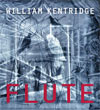
 This beautifully produced book attempts to capture in print the concepts explored through the projections created by William Kentridge for his production of Mozart’s The Magic Flute and for Black Box / Chambre Noir, the work which developed out of his engagement with the opera. The ephemeral nature of these performances is arrested and framed here for scrutiny through a number of articles, one by Kentridge himself, and also through an illuminating interview with him. The book has numerous photos, both of the productions and of Kentridge’s working drawings, which are necessary to the understanding of this visual medium.
One might wonder what an opera (that elitist conglomerate of art forms) composed in the eighteenth century has to say to a contemporary South African audience. As one of that audience I found the Kentridge design and projections to be vital to my understanding of the esoteric but significant meaning of the work. This book further explains the thinking behind Kentridge’s designs and his understanding of the metaphorical meaning of the opera. "The argument has to do with questions of light and darkness and – within the strict trajectory of the story – light triumphing over darkness" (23). The choice, then, of projections and a largely monochromatic palate links directly to the theme of the opera.
Kentridge has further chosen to use the traditional stage set with its box shape and perspective scenery as a reminder of the interior space of early bellows cameras, alerting us to both the importance and the limitations of perception, and of the themes of sight and insight.
Following the introduction and interview with Kentridge by Bronwen Law-Viljoen are two sections written by Kentridge himself. The first, “Notes Towards an Opera”, explains Kentridge’s drawing and filming techniques and the importance of the play between the positive and negative versions of the same image, which is such a striking aspect of this work. Kentridge further explains that "the main discovery was the photographic ur-metaphor and the realisation that the very way of working, of doing negative drawings, had a connection to the larger structure and themes of the opera. The specifics of the images shown were less significant than the associations thrown forward by their form" (50). This invitation to create meaning for oneself through association draws the viewer into the creative process rather than leaving one a passive recipient.
While these writings explain the ideas and journeying undertaken by Kentridge, they enhance rather than detract from the personal process of understanding the opera and its presentation. Kentridge provides directions for our own journey of discovery.
The second section, “Drawing the Stage”, offers notes on that fascinating process of embodying ideas in the performance space, commenting on the effect of the three-dimensional space and the impact of human (the singers') movement and gesture on his designs and the accommodation which needed to take place between actor and image.
Stéphane Roussel’s article, “Drawing with Light”, contextualises the original production of the opera and the Enlightenment ideals underpinning it, and also analyses Kentridge’s interpretation of them. This analysis and the accompanying photographs and drawings are particularly useful to the reader unfamiliar with the opera.
The article “I am the Bird Catcher” by Kate McCrickard focuses on Kentridge’s prints and particularly on the bird imagery related to the character of Papageno in The Magic Flute, comparing the gentle and playful doves with the falcon/Horus images. Some attention is also given to the reappearing image of the rhinoceros (a favourite of Kentridge), and its significance is explained in terms of the Enlightenment and the influence of its ideals on the development of colonialism.
The final article, “Footnote on Darkness”, which engages with Kentridge’s Black Box / Chambre Noir, further explores the negative aspects of Enlightenment thinking expressed in this enquiry into the massacre of the Herero in German South West Africa in the early years of the twentieth century. This work, with its images of skulls, measuring, mechanisation, and the destruction of human and natural life is an interesting counterpoint to The Magic Flute. As Law-Viljoen states, "(Its) dark memorial to the 'strange fruit' of the German colonial endeavour dissects the values of truth, light and rationality celebrated in the opera" (185). The imagery resounds with later twentieth-century trauma, namely the holocaust and apartheid, through its suggestions of eugenics. "Many of the texts in ‘Black Box’ are about various forms of measuring and counting. They draw together several thematic strands in the work, from the journeys of exploration that resulted in Europe’s encounter with the New World and Africa and through the Enlightenment concern with order and rationality (witnessed most obviously in Linnaean taxonomy), to the systematic mapping and carving up of Africa in the nineteenth century, a direct outcome of which was the massacre of the Herero in 1904 (176).
The conversation between these two works has continued beyond the opening of the opera, in that Kentridge has now introduced into the South African version archive film footage of the hunting down of a rhinoceros in German East Africa in 1911/12. "By introducing photography into his production, Kentridge reinforces the conception of colonialism’s perverse relationship to the Enlightenment and its belief that it was bringing light to the Dark Continent" (152). The image of the rhinoceros used in Black Box / Chambre Noir deliberately, yet subtly, draws lines of thought between the two works.
The appendix includes a synopsis of The Magic Flute, cast lists of the various performances in Europe, America and South Africa, and a chronology of exhibitions and events completed by Kentridge during the time he was working on the two productions highlighted here. One small quibble would be that the photos of the opera in this book all relate to the first performances in Brussels in 2005, no doubt necessary for the production of the book to coincide with these performances and the subsequent tour. However, the multiracial nature of the South African performances made a significant comment on the work, and this is lost in these photographs.
This is a book to be savoured and returned to. A fascinating account of the creative process, it unveils the complexity and significance of two striking works from a mature artist at the height of his skills, able to engage with ideas of universal and historical significance and relate them to the specifics of Africa.
For someone who has seen the opera this book is a valuable reminder of that mesmerising experience, and it also provides additional information essential to a thorough appreciation of the production. For those who have not seen the opera, the book provides a very useful introduction to it and to the painstaking, multi-layered, creative task undertaken by Kentridge. It is a suitable appetiser, hopefully, to a DVD which would in a small way help to conjure up the essential processes of singing, playing instruments, moving light and images, and bodies in action, which are the heart of the production.