

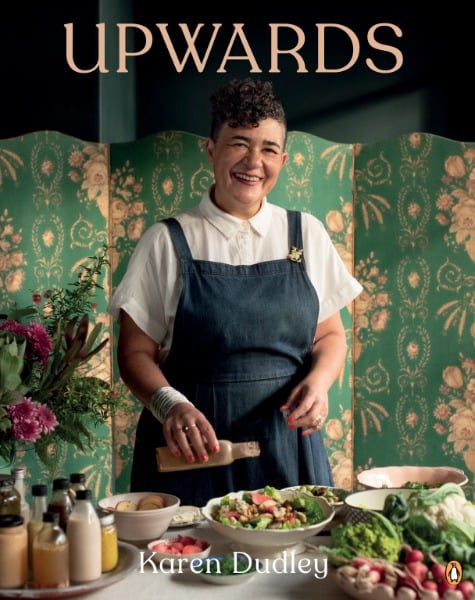
Karen Dudley’s fifth recipe book, Upwards, coincides with a new offering at Marble Cape Town – the city’s temple to live-fire cooking. Forget the dusty crackers and uninspired bries of the past. Marble has unveiled a reimagined cheese and wine menu that feels less like a course and more like a curated gallery of South African soul.
A culinary icon synonymous with Cape flavour, Dudley has infused the experience with a playful, “naughty-but-nice” energy inspired by the region’s Cape Malay roots.
“Cape Malay cuisine has always been about generosity, ingenuity and bold flavour,” Dudley explains. “We’re honouring that spirit – while having a little fun.”
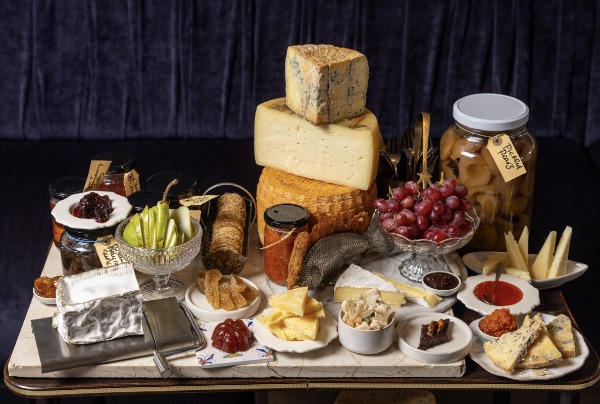
This isn't your standard condiment spread. Dudley’s trolley is a vibrant tapestry of naartjie spoon sweets, pineapple mostarda spiked with Tajín, and guava gochujang jam. It’s a bold nod to the heritage of the Cape, reimagined for a modern palate.
The trolley experience is designed to be interactive. Rolled tableside, it allows guests to assemble a bespoke plate from a rotation of the country's finest artisanal gems. Current "must-haves" on the rotation include: the Karoo Crumble (Langbaken), paired with sharp cauliflower pickle and cherry mustard; the Forest Phantom (Bel Nori), complemented by classic watermelon konfyt and green fig preserve; and the Huguenot (Dalewood), a local legend served with waterblommetjie pickle. Feeling adventurous? Reach for the peanut chutney podi or the chaat masala crisps for a crunch that defies convention.
Some of these recipes are included in her new recipe book. In Upwards, Dudley invites us on a culinary journey that transcends the ordinary, encouraging us to look up to what is true and essential – living simply and well. In this follow-up to Onwards, Karen, with her signature warmth and insight, shares how the act of cooking can, and should be, a letting go of life’s daily preoccupations – a way to connect with ourselves and others – by paying attention to the pleasure and enjoyment of cooking something beautiful, delicious and even surprising.
Sharing recipes from a vibrant palette of flavours, Upwards lifts Karen’s loyal community towards the next level – to learn new skills, to look up to quality over quantity and to pay attention to the splendour that can come from the meditative act of cooking. Upwards is thus a call to be inspired, to create and to connect, all the time looking up, up, up, as we invite into our kitchens new dishes, new flavours and new possibilities.
Questions for Karen: Did you grow up in District Six, or where does the inspiration for the cooking and pickling traditions come from?
I am a coloured person living in Woodstock with my family, though I have only tenuous connections to District Six and the Bo-Kaap. Like many coloured people, I grew up all over the place, living in Fairways, Heathfield, Zeekoevlei, Constantia and now Woodstock. I attended Sunday school in District Six, and my mother was forcibly removed from De Waterkant during the implementation of the Group Areas Act; however, I personally feel that my connections are quite slim. What I do have is a deep curiosity and love for the traditions coming out of the Bo-Kaap and from all over the Cape.
Some of these traditions, such as recipes for watermelon and sour fig konfyt, are kept alive by women from all over Cape Town – often from the Cape Flats, but truly from everywhere. I have the same curiosity about the flavours of the Cape as I do about any other flavour in the world, to be honest. Of course, there is a bit more fondness here, because I am from this place and have nostalgic connections to these flavours.
Why did you decide to include so many traditional Cape flavours?
I believe that South African flavours are the flavours we are eating right now. It is the food of the present, containing all the nuance and complexity of people who have lived in many different places with all kinds of memories. While I might not have all the historical answers, I can speak about the women of the Cape and the traditions we carry.
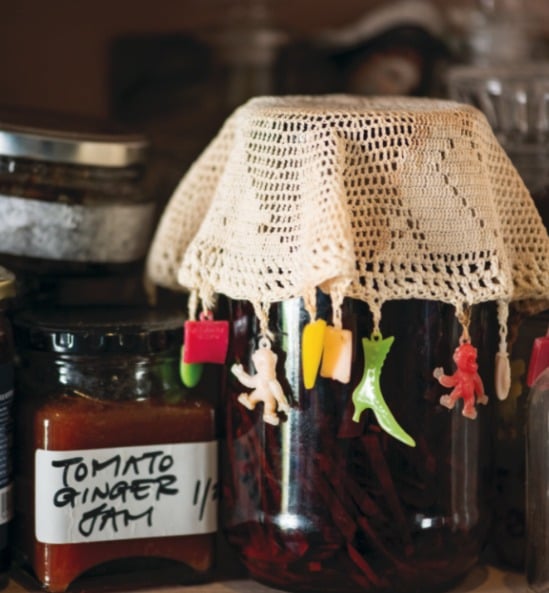
Regarding the jams and preserves that you see at Marble, which accompany the cheese trolley, I am incredibly proud of how people, over generations, have been resourceful and able to use every last bit of what they have, whether it be vegetables, meat or fish. Today, I still use the traditional disciplines of pickling and preserving to create new flavours. I lean into that history of innovation to develop new ideas. I am proud of how our people wasted nothing and practised incredible sustainability; nothing goes to waste, and we use whatever we have to make delicious things.
For example, kohlrabi is currently in season, so I am making kohlrabi pickles and preserves using heritage disciplines. I have also made sweet melon achar, chutneys and jams, essentially reworking old recipes and leaning into flavours both familiar and unfamiliar.
Not everything accompanying the cheese is made by you. Could you elaborate?
Preserves like watermelon konfyt and sour fig konfyt are incredibly taxing and time-consuming to make. You really need the experience of having made them repeatedly, because the process is so laborious. Women on the Cape Flats are still doing this work, but there are fewer and fewer “Aunties” making these preserves now, which makes them very special.
I often ask around – neighbours, people at markets, or vendors in Gatesville – to find these items. In Woodstock, I know of an Auntie who supplies specific people, and I practically have to beg and hope that some green fig or watermelon konfyt becomes available. Watermelon konfyt is particularly hard to make right now, because it requires a specific kind of thick watermelon skin that isn’t always easy to find. It is incredibly seasonal.
What are you pickling now?
Currently, I’ve been making membrillo (quince cheese), since quinces are in season, along with other nice jams.
Could you share one recipe with its roots in the Cape?
One example of a recipe with Cape roots is in my book on page 51. I call it "Woodstock Tajín". While Tajín is originally Mexican, you could call this a "Woodstock Podi" – a dry chutney. It uses mebos discs (proper apricot, not peach), sugared pumpkin seeds, curry leaves, tamarind, dried chillies, lime, palm sugar and citric acid. It all gets blitzed together to make a crunchy topping. It goes beautifully with roasted carrots on lime-pickle yogurt; you get that sour, sweet, crunchy element scattered over the top. It’s a great recipe that remains reminiscent of the Cape, using mebos, tamarind, chillies and curry leaves.
Title: Upwards
Author: Karen Dudley
ISBN: 9781432311957
Publisher: Penguin Books (South Africa), November 2025
Price: R450
Paperback
- Photos: Jan Ras and Claire Gunn