

Philani Nyoni interviews Tanaka Chidora about his experience translating Tsitsi Dangarembga’s The book of not (Ayebia Clarke Publishing, 2006).
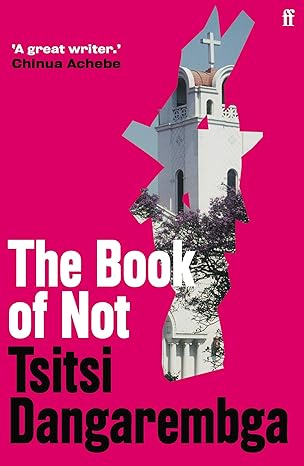 If you walk into any bookstore, you will be alarmed how many books we publish in the English language in comparison with all the indigenous languages we have in the country combined. I know not all of them are as good as The book of not, but why did you choose to translate this one among all the others? And while we are there, why did you choose to start in the middle of the trilogy, instead of chronologically, with Nervous conditions?
If I had my way, I would have translated This mournable body for the sheer beauty of its narrative technique. I really want to know what using the second person narrator sounds like in Shona. Anyway, it was House of Books who approached me with a proposal to translate The book of not. I was already immersed in a labour-of-love translation of Tinashe Muchuri’s Chibarabada and going through Monica Cheru’s translation of Ignatius Mabasa’s Imbwa yemunhu when this offer came along. It was an irresistible challenge because while This mournable body is stylistically innovative, The book of not is syntactically adventurous. There are sentences that need multiple re-readings for you to get the translation right. Ignatius Mabasa had already chosen Nervous conditions, so it was logical for House of Books to choose The book of not first before This mournable body.
After the publication of the translations, I was surprised by the sheer number of Zimbabweans (especially those outside academia) who were not aware of The book of not. Don’t get me wrong, The book of not was already a popular novel by the time I embarked on the project. It’s just that after the translations came out, I received many questions from people who were not aware of the novel. So, in a way, the translation worked as a kind of PR for the second book in the Tambu trilogy.
Another interesting aspect is that while working on the translations, Mabasa and I did not exchange notes. But it was amazing to notice that the translation of the title Nervous conditions was Kusagadzikana, because I had used that word several times in my translation to communicate an uncomfortable situation.
Also, I can’t say I started in the middle. One of the unspoken requirements for translating The book of not was that one had to know the Tambu story in its entirety, from Nervous conditions to This mournable body, because the translation would only take place through interpretation. I needed to know the story because there were some things that only began to make sense after reading This mournable body.
Would you mind sharing your process with us? How did you approach the text, how long did it take and what were the challenges?
The book of not, in my opinion, is the most syntactically adventurous novel in the Tambu trilogy. Thus, I had to make sure that I did not dilute that adventure through translation. At the same time, I did not want to be literal in my translation. So, I had the option of trans-creation, while also making sure that the Shona voice remained Tambu’s, and not that of a village elder, which is my favourite when it comes to my Shona writings. I had read The book of not before, so this time I needed to read it in order to immerse myself in its rhythms. I had to sit down and think about what the novel is all about, the overall meaning. I remember spending vast expanses of time just thinking about Tambu’s story, not just in the context of The book of not, but within the trilogy itself. So, the question was: what is it that Tsitsi is communicating via Tambu in the trilogy? And what is it that The book of not is contributing to the trilogy? Once I had mapped the story’s trajectory, I felt ready to begin translating it.
I translated parts of the novel when I was still in Germany. I was trying to balance research work, lecturing, my own creative writing and translation. Even though I spent most of my time alone and did not have to worry about too many things, I discovered that translation is like creation: sometimes you find yourself nursing a writer’s block even though the original work is right there before you. When I came back to Zimbabwe, I had to leave Harare for my uncle’s farm. My uncle, Josphat Nyika, who is also a Shona poet himself, became the audience I needed to verify some aspects of the translation. Actually, the real reason I moved to my uncle’s farm was because there was a two-week blackout in my neighbourhood and Zesa needed a dose of motivation to do anything about it.
Is there a viable place for literature in indigenous languages in these times when book buying has become a luxury and many insist that social media has made them illiterate?
You remind me of the Nama Awards. During the ceremony, you get the feeling that the bulk of the people in the audience are not really keen on literature awards and that the segment of the literary awards is just a tolerable hiccup in a night of music and glamour. It’s made worse by the fact that even those who call out the nominees either mispronounce the names or are not even aware of what the hell they are nominating. Ha ha! Goes to show you that literature is for a small community. But my thinking is that that’s not unique to Zimbabwe. Reading is a unique exercise. Very few are ready to engage in an activity that is less communal. However, I still believe that a good book will find its readers. The trilogy that Tsitsi has given us has already found readers the world over, and I have confidence that the translations will also find an audience in Zimbabwe and even among academics who research indigenous languages and translation.
Who do you envision will benefit from the translation of this work, and how?
My belief is that texts written in English, usually published outside Zimbabwe, are difficult to access, given the country’s policy on importing books. Thus, translating such works is a necessary step towards making crucial stories available to Zimbabwean readers. Whether Zimbabweans are going to read these stories or not is another matter.
Years ago, I publicly lamented that NoViolet’s debut was too expensive, at $25 a copy, for the majority who could primarily relate. I fear that even her new novel, an excellent work by the way and much better than her debut, is out of reach in terms of pricing and general availability. In the case of the work you have done with the translation, are there any deliberate steps being taken to ensure that it gets to “the people”?
I love NoViolet’s novels. My favourite remains We need new names, though. We can argue about this over a beer (on you).
I am a member of a book club that has tried to get its members to read as many Zimbabwean authors as possible during the course of a year. We have read Gappah, Chinodya, Marechera, Rosa Tshuma, Dangarembga, Huchu, Fatima Kara, Mthulisi Ndlovu, Siphiwe Gloria Ndlovu, Sue Nyathi and many others. Sometimes one is forced to settle for a Kindle copy because of the sheer expense of the books. However, what has impressed me is that the members are committed to buying these books. The policy in the book club is to avoid pirated copies. You may have noticed that virtually all the authors I have mentioned have been published outside Zimbabwe. The book club tries to bring the copies in. We also have Book Fantastics, a bookseller with both a permanent bookshop and a mobile one. The advantage of the translations we have done is that they were commissioned by a Zimbabwean publisher – House of Books. So, they are locally available and less pricey. House of Books is based in Harare and they do deliveries in Harare. They also have a bookshop at the airport and a website, too! You can place an order there.
In our discussion, Mabasa suggested that a lack of political willpower is holding literature in African languages back. While the Rhodesian Literary Bureau has been accused of having sinister motives with the works they published, it is abundantly clear that they did immensely more for the languages of “the native”, particularly Shona and Ndebele, than any entity in postcolonial Zimbabwe. In your opinion, what would political will for the promotion of indigenous languages look like? In South Africa, for example, the Polokwane Literary Fair is a local-government-funded festival that has the express interest of promoting indigenous languages through various programmes in schools, libraries, correctional facilities and beyond. What roadmap would you suggest to a listening president?
Right now, we are in a situation where our Zimbabwean universities are under the strange impression that a country that needs to industrialise does not need the literary arts. So, we no longer have departments of literary arts at our Zimbabwean universities. There is this strange belief that our ancestors were more labourers than artists, but if you study the past, there was a symbiotic relationship between art and economic production, between art and war, between art and religion and so on. Literature is a multi-billion-dollar industry. Unfortunately, African storytellers, as commodities, are now being sold elsewhere, while at home the thinking is that storytellers cannot constitute a development-oriented industry. This is a very strange notion. I would start by changing that mindset before talking about anything else.
Thank you for your time. Before I let you go, what does Tsitsi Dangarembga – a woman described by some as hard to please – think of the work you have done on her book?
The thing with a translation is that it is the translator’s version of a story, that is, Hakuna Zvakadaro is Tanaka Chidora’s version of The book of not. Of course, naturally, the author of the original version still wants something that reflects who they are, what they wrote. With Tsitsi, we exchanged a series of emails about a few aspects of the translation. It was a friendly conversation. At first, I was in awe. I was having a creative conversation with the Tsitsi! But I cannot think of any moment when she appeared to be difficult or hard to please. Translating her novel will remain a memorable creative journey for me.