

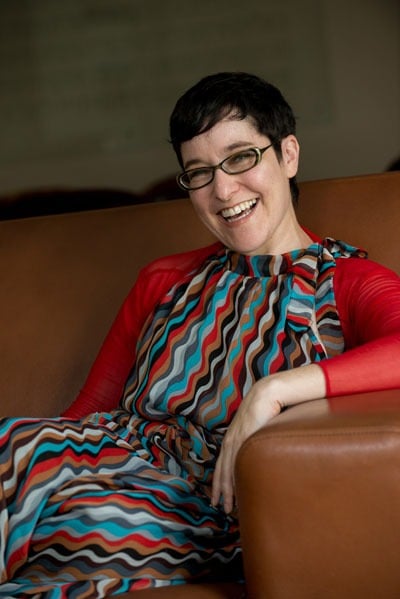
Batya Bricker (Jason Crouse Photography)
Batya Bricker talks to Naomi Meyer about this year's event.
Hi Batya, thank you for your time. You are the curator of the South African Book Fair. Please tell our readers a little about yourself?
I am a kind of story-smous – project-managing all kinds of book initiatives from publishing books to library developments and book fair programmes.
Before that, I worked for Exclusive Books for 13 years, in the role of strategic marketing manager for the group, as it grew from 9 stores to over 50. I was instrumental in evolving the Exclusive Books name into a fresh, relevant and internationally recognised brand. Even before that, I qualified as an architect – learning to tell stories with bricks.
In June 2014 I was appointed the programme director for the South African Book Fair that featured over 130 events and over 100 authors over a three-day gathering at the CTICC in Cape Town. This book fair is the biggest and most important on the continent, and we are so delighted to have it in Joburg for the first time.
This is the first year that the South African Book Fair takes place in Johannesburg (in the past it took place in Cape Town every year), am I right? What is the background to this decision?
A world-class book fair that encompasses all aspects of the South African book trade (and, to some degree, the wider African book trade) does not currently exist, particularly in Joburg – the commercial and cultural capital.
When organising a festival, do you look at fairs like the Frankfurter Bucher Messe or other international book fairs – or is this one uniquely South African? What can people expect at this year's festival?
We certainly look at international counterparts for inspiration, but ultimately it is the mix of authors and topics that sets the tone for the book fair. And that is undoubtedly local.
Please give our reader’s a bird’s-eye view over the festival line-up for this year.
Over 100 events, with over 100 authors, over three days, with writers, thinkers, publishers and poets sharing their wisdom in words.
Will the festival focus on the English book market, or can Afrikaans readers expect to see something for them on the programme too?
We have paid careful attention to incorporating an interesting Afrikaans offering in what has traditionally been an English book fair. For me, two highlights are a masterclass with Riana Scheepers and the screening of the groundbreaking and very beautiful Filmverse – poetry in animation – throughout the three days of the fair.
How about other South African languages – or any other events, apart from book events? Is there something / an event you would like to highlight?
The schools programme boasts events in five South African languages: English, Afrikaans, Zulu, Xhosa and Tswana. For me the highlight is the grand finale to the book fair programme – a mad hatter’s tea party – in celebration of Alice in Wonderland’s 150th anniversary. Besides prizes for the best hat, Alice-inspired food and loads of fun and activities, we will be launching Alice in Wonderland in Zulu.
What is the main focus and aim of the South African Book Fair for this year?
As programme director I curated the events programme for SABF. My main aim was to find ways of allowing the books and authors to shine.
Sometimes this is not easy. Obviously, and most often, writers express themselves best in the written word and I tried to find ways of making their talents shine off the page.
It is interesting that once you start analysing and noticing common themes across widely disparate books, there are threads that start to come together.
I particularly enjoyed exploring all the different ways of telling stories – through fiction, poetry, social commentary, children’s books, even cooking – and I wanted the events to reflect that.
We’ve also used the book fair as a platform for wider aims of turning South Africa on to the joy of reading. No matter what you read, or why you read, books are an essential tool for growth and entertainment.
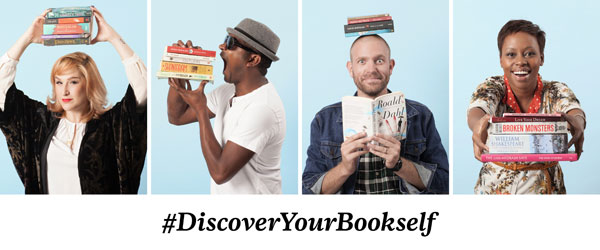
That’s what the DiscoverYourBookself campaign is all about.
After the Franschhoek Literary Festival everybody started talking about social implications of book fairs. What is your take on this matter?
Book fairs are all about discussion and dialogue, and books are a mirror to society and its issues, so it makes sense that sometimes uncomfortable issues emerge.
It is ideal if these can be the impetus for addressing the issues in a meaningful and constructive way.
On another note, while book fair organisers can’t control the diversity of an audience, I do think that location and geographical accessibility can make a big difference to who attends.
In addition, the SABF has paid careful attention to the diversity and profile of speakers, topics and event formats. We are hosting events in four South African languages and we have explored different formats of event- and storytelling – from poetry in the bar and workshops to word-inspired Joburg walking tours and a book party.
Can anybody who likes books turn up at the festival? Where can they buy tickets and how much do they cost?
Yes! Entrance to the book fair is R50, with tickets being sold either at the door on the day, or via Webtickets beforehand.
In addition, each event on the programme needs a ticket – also bought through Webtickets. Events are generally R15 each.
Other practical matters: Where is the fair taking place and where should people park their cars?
Turbine Hall, Newtown, Johannesburg. Parking is secure and is clearly marked, either at the venue, or across the road.
Photos provided by the South African Book Fair
http://www.southafricanbookfair.co.za/