On Saturday, 22 September the Open Book Festival in Cape Town had a distinctly international flavour.
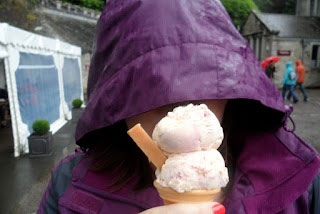
The weather reminded one of the Edinburgh Festival, where people would usually enjoy ice cream not because of, but in spite of, the weather.
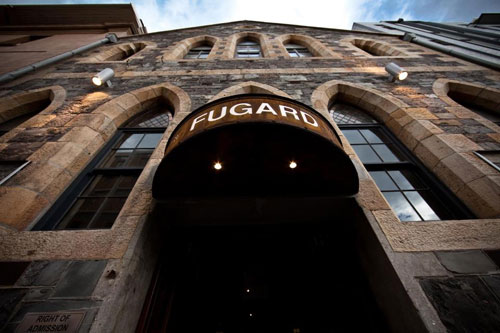
And inside the Fugard Theatre three writers from outside South Africa’s borders were discussing The Caine Prize for African Writing 2012.
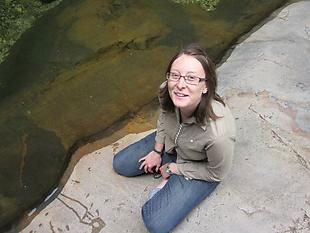
Caine Prize administrator Lizzy Attree, a resident of London, talked about the entries for the Caine Prize: "The stories were unusual and unique – and all of the stories reflected exciting tales from the whole continent." She then introduced the three Nigerian authors with her on the stage.
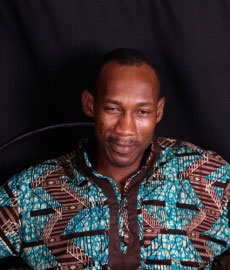
Nigerian author Ifeanyi Ajaegbo, who won the 2005 African Region Prize for the Commonwealth Short Story Competition, and whose debut novel, Sarah House, was published early in 2012, chaired the event. He asked his two fellow authors about their work.

2012 Caine Prize winner Rotimi Babatunde was the fourth Nigerian author to win the prize in the thirteen years of its existence.
Rotimi explained to Ifeanyi that he came from a strong writing background – he grew up among stories.
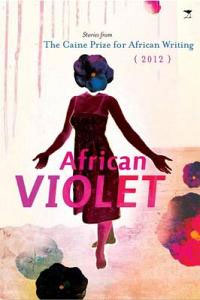
Ifeanyi asked Rotimi about his winning story: "The Colonel-Sergeant who left as a man and came back as a spotted leopard. Can you tell us about this person?"
Rotimi: "The story is set in the context of the Second World War. My character left home – and came back a different person." He then elaborated on the representation of The Other in his fiction.
"The white person couldn’t do anything wrong before he left; the white person was almost a god. When he went to the war, he saw that the white man could also die."
"Why did you make him kill a white man?" asked Ifeanyi.
Rotimi smiled. "I didn’t make him do it, he had to do it himself.
"In his own country, if he even killed a servant of a white man, he had to kill himself," Rotimi explained further. "This moment was part of the transformation, of how he changed."
Rotimi discussed the story in more detail and it was clear to the audience that the theme of power was recurrent: "On our continent, sometimes, a leader can stay in control for eighty years."
"Mugabe," coughed Lola Shoneyin at that point ... and the audience laughed out loud.

Nigerian author Lola Shoneyin has published three volumes of poetry: So All the Time I was Sitting on an Egg (1998), Song of a Riverbed (2002) and For the Love of Flight (2010). Her debut novel, The Secret Lives of Baba Segi’s Wives, was longlisted for the Orange Prize in 2011.
"She used to live in the UK and now lives in Lagos again," Ifeanyi said as he introduced her to the audience.
Lola: "I was born in Nigeria, in Ibado, which used to be the intellectual capital of Nigeria – the university was established there. Not particularly exciting – people used to say, ‘It is a city for funerals’, but to me it was ’my Ibado’. You can live in one place and can be from another place completely.
"Nigeria was the world I knew, and while I was living in England I wanted to reconnect with my roots. It was very difficult to root my stories in the UK – I felt I hadn’t earned the right to do that. Ibado was the natural choice as setting for my story."
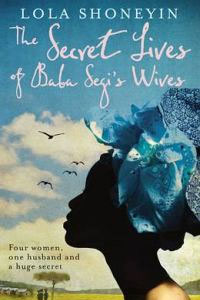
"Your book is about a man with three wives; he had to get a fourth wife ...?" Ifeanyi asked.
"Well," Lola replied, "he didn’t exactly have to ..."
Her character wanted a trophy wife – that is why he got a fourth wife. "An improvement on the last one."
"Does this book speak to Nigerian society as it is today?" Ifeanyi asked.
Lola: "Yes, 30 percent of Nigerian women live in polygamous marriages today. You are nothing without a man, nothing without a husband.
"There is conflict between the traditional and the modern in Nigeria. Writers are trying to make sense of it all. Documenting what is going on now. Nigerian writers do the same."
After the event, outside, the sun was shining again.
It was time for South Africans and non-South Africans alike to gather at Charley’s Bakery to enjoy their home-made and home-grown cupcakes – and to be happy about the fact that you didn’t have to leave the country (or the city of Cape Town) to look for an inspiring literary festival.