

This reader’s impression was written and sent to LitNet on the writer’s own initiative.
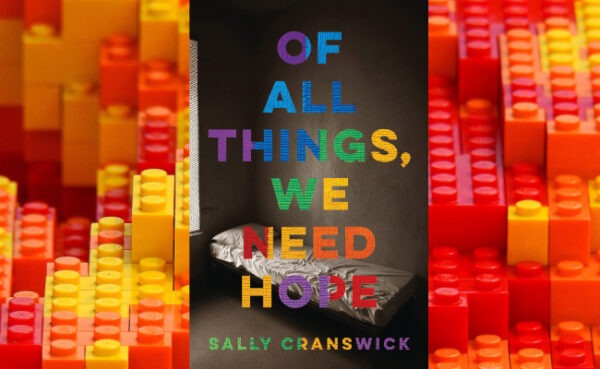
Title: Of all things, we need hope
Author: Sally Cranswick
Publisher: Modjaji Books
ISBN: 9781991240545
Of all things, we need hope defies the standard frame of plot, character and resolution. It resists summary from the start. What lingers is something beyond the sequence of events.
The story circles loss, justice and aftermath, at first. But the novel breaks apart any predictable path. The central crime slips to the margins: It carries weight, yet yields no clear answers. What takes over is a deep dive into the fallout: the emotional strain, the mental toll and especially the moral questions that refuse to settle. This achieves something rare, a narrative that prioritises resonance over revelation, turning absence into its most potent presence.
Heather’s weekly prison trips anchor the book. She endures the 6:00 am queue in the cold, shares cornbread with fellow visitors and submits to hours of waiting that already contain the possibility of refusal. When Smith denies her, it does not break the pattern. It confirms it.
These rituals do not build toward catharsis. They repeat and accumulate, mimicking grief’s circularity, resistant to the linear “healing” peddled by outsiders. Here, the novel is at its most exacting: It renders waiting as existential weight, stripped of suspense, where time passes but does not move. Tedium is not incidental; it is the point. The reader is made to inhabit grief’s stalled rhythm, where nothing resolves and nothing releases.
Quiet erosion, rather than melodrama, is where the real power lives. Relationships fray through persistent misalignments. Richard clings to normalcy, golf games and forced small talk, his patience fraying into confrontation and his marriage collapsing into separate rooms. Sarah’s interventions, from orphanage mentoring to panicked retreats when Heather’s visits leak, expose the limits of empathy. Heather rejects both, finding purpose in pie tins and fleeces slipped through Perspex, her small acts defying societal scripts. The prose remains even and restrained, amplifying impact through understatement, a masterstroke that lets devastation seep in undetected.
Moral ambiguity elevates the book to its highest register. Victim and perpetrator remain distinct – Smith’s youth and isolation do not absolve him – yet the clarity of that distinction is continually destabilised by Heather’s responses to him. Her concern for his well-being, including anxiety about his safety and the conditions of his confinement, produces an unsettling proximity: two boys “almost the same age”, one lost forever.
This is neither redemption nor betrayal, but an unnameable tether that resists justice’s binaries. The novel persistently dismantles easy judgments, whether in the fury of protesters or in the accusations of desecration voiced by friends, revealing how grief distorts propriety and moral certainty alike.
Heather’s quiet dismissal from work, managed through HR platitudes and reduced hours, extends this pattern of erosion, underscoring the totality of her isolation as her private grief seeps into institutional indifference. Flashbacks and vignettes deepen this: Heather’s bird-revival memory reframes her vigils as instinctive nurture; prison sirens and baboons evoke a feral world indifferent to human constructs. Lesley, the missionary bridging families, hints at communal grace amid fracture.
No tidy wrap-up arrives. That’s the genius. The book leaves residue – unease that outlives the page, compelling readers to dwell in its frictions. In refusing closure, it achieves the fantastical: profound truth from the ordinary moral complexity, without preachiness. A triumph that lingers, reshaping how we read grief.
Kommentaar
Excellent review. Can't wait to read the book!
Great review of a fantastic novel.