

 |
Writing South Africa Now: Twenty Years On is a graduate conference on South African literature that took place at the University of York, UK, in June 2014. The event is the second in a series of annual colloquia initiated by the University of Cambridge, aimed at making new critical voices within the field of South African Literary Studies heard. A selection of abridged papers has been made available on LitNet, including the following article by Anneke Rautenbach, "Literary Trials: Janet Malcolm, Narrative Journalism and the Courtroom in South Africa and the United States".
|

Like many works of courtroom journalism, Antony Altbeker’s Fruit of a Poisoned Tree, published in 2010, collates the narrative puzzle pieces of a crime that captured the South African imagination, dominating headlines for months, even years, on end.
It follows the series of events that took place after the gruesome murder of a beautiful 22-year-old student, Inge Lotz, who was found dead on her couch inside the tightly monitored security estate where she lived in Stellenbosch. Because there were no signs of a break-in, the police concluded that it was most likely to have been someone she trusted to let in. The prime suspect, due to several pieces of seemingly watertight physical evidence, was her boyfriend, Fred van der Vyver. After spending up to R10 million on his defence, Van der Vyver’s father managed to find international experts who systematically proved faulty every piece of the police’s forensic evidence against his son, proving that they were “fruit of a poisoned tree”: the legal term for corrupted evidence.
But this text far exceeds a mere journalistic account of the facts. It probes issues much more philosophical: how society determines what is right and wrong, how it establishes truth, and the meta-narratives which contribute to its understanding of these concepts. In this way it is an excessive text. It can be called, quite literally, extravagant – wandering beyond the bounds of the prescribed methods of courtroom reporting.
Last year I suggested that this trend of "sophisticated" true-crime, exemplified by the work of Jonny Steinberg, Antony Altbeker, Mandy Wiener and others, presents an alternative to the aesthetic and ethical limitations of genre fiction; that with their hybrid, sometimes essayistic form – combining dense historical and political analysis with a philosophically “meandering” narrative voice – such post-apartheid texts may broach more probing questions about South Africa’s stratified social worlds and the challenge of representing them. In this sense they hide a pill of “truth” within the sugar of sensationalism.
To consider the "courtroom drama" as a subgenre of true-crime, it is useful to read the work of the South African writers mentioned alongside the work of the American journalist Janet Malcolm, a pioneer of this style. As a writer for The New Yorker, Malcolm has with characteristically shrewd analysis and acute linguistic sensitivity produced several book-length texts about specific court cases, which deal more broadly with the nature of the American judicial system: giving, receiving and interpreting testimony and the institutional, social and literary power of the courtroom.
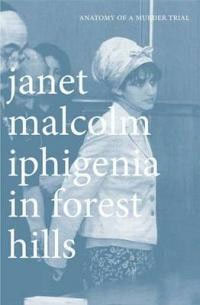
Iphigenia in Forest Hills: Anatomy of a Murder Trial (2012) is an account of the trial of Mazultov Borukhova, a Bukharan Jewish physician living in the Forest Hills area of New York, who was accused of arranging the murder of her husband following a custody battle over their 4-year-old daughter. "She couldn't have done it and she must have done it” is the mystery at the heart of Malcolm’s text (Malcolm 2012). The defendant's husband, Daniel Malakov, a respected orthodontist, was shot in public, in front of their child. The prosecutor called it an act of vengeance: just weeks before he was killed, the couple's daughter was taken from her mother's home and custody was given to her father for (seemingly) inexplicable reasons.
Like Altbeker’s, Malcolm's work on one level acts as a journalistic account and on another level probes issues much more philosophical. She frames the trial as a contest of competing narratives, exposing the chasm between our theoretical ideals and the human factors at play in every trial.
How do these texts use the courtroom as a literary realm? What distinguishes the setting of the courtroom from other forms of true-crime? In most cases the crime itself is not the event in question. The crime is being related second- and third-hand, already having been mediated by testimony and influenced by the agendas of the prosecution and defence. In this sense the courtroom can be seen to propagate linguistic and narrative tropes that are further propelled by a prejudiced jury or media. According to this view the courtroom facilitates the reduction of language as a closed system with clear categories, as divorced from reality as theory is from practice. In each case the defendant or the prosecuted has to fall within one of several conventional narratives for the sake of strategy.
However, it is not the crime, but the act of its interpretation, which provides the raw material for the courtroom journalist: the myriad ambiguities, arguments and counter-arguments, perceptions and assumptions that surface throughout. The journalist is removed from the crime in question in multiple ways, in addition to being removed from the structure of the courtroom; the result is that courtroom journalism becomes an observation of observations, the journalist a witness to witnessing, and a “judge” herself.
Beyond that, what is the significance of trials in these particular societies? Why compare South Africa with the United States? Court cases have tended to play an important role in South African and American history and current affairs, acting as public platforms from which marginalised groups are given a voice – Nelson Mandela’s famous speech from the dock is an iconic example, as is the TRC. In both countries the courts have been a space from which to criticise political policies and practice and have conducted societal cross-sections, especially in the case of the American jury system. Both societies are heterogeneous, with histories of slavery and racist laws, and many of the issues that emerge before their courts grapple with the notions of discrimination, affirmative action and ethnic diversity.

In this context even “soap opera” cases like that of Oscar Pistorius become important sociological objects of enquiry. Similar American examples, like the trial of OJ Simpson, have produced insights about deep-seated sexism and a celebrity-obsessed culture. In both countries trials have acted as the ethical litmus tests of their societies, and the public involvement in these trials goes to the heart of that which connects South Africa with the United States.
Most essentially, both states operate within a common law system that has been inherited, through colonialism, from Great Britain. This operates differently from statutory law, which relies on legislation passed by parliament. Common law relies on judge-made law, which is guided by historical precedent. While statutory law ensures legal certainty and predictability, common law allows for the development of legal rules over many generations and is responsive to public demand and ethics of the time. The public reaction, then, is intrinsic to the practice of common law. Those on trial fight for the moral high ground, legitimacy and credibility not only in the courtroom but in the public eye.
Mark Sanders argues that the idea of linguistic ambiguity, or the literary, is at the heart of common law (Sanders 2007). When considering how testimony is understood and who holds power over a statement once it has been made in court, Altbeker comments that it is “the classic question of literary criticism – who determines the meaning of a text, its author or its reader?” (Altbeker 2010). Sanders writes that the objectives of the TRC changed as the Commission progressed, not in spite of the law, but because of it (Sanders 2007).
It is the built-in responsiveness to the ambiguity of language that ensures that the outcomes – or even, in some cases, the objectives – of a commission are shaped as testimony is heard. In this way the law is dependent on the literary. The law, therefore, is not something that shapes language according to its aims. As Carrol Clarkson argues, the law itself does not have agency, and cannot exist without the literary (Clarkson 2010). Rather, it is a facility designed to accommodate and expand language to its outer limits and possibilities. The courtroom, then, can be seen as a kind of laboratory of language in which all possibilities must be accounted for.
This intrinsic ambiguity in the language of the courtroom opens it up to irony and wordplay. Sanders has compared the feigned ignorance of the cross-examiner to Socratic irony, and Constitutional Court judge Albie Sachs has gone as far as to say that the law has a sense of humour (Sachs 2009). Sanders challenges the well-established notion that the law and the literary are separate or at odds with one another, not only by outlining their essential interdependence, but also by tracing their common roots in democracy (Sanders 2007). Sanders quotes Derrida: “Is it not also democracy that gives the right to irony in the public space? Yes, for democracy opens public space, the publicity of public space, by granting the right to a change of tone, to irony as well as to fiction” (Sanders 2007). Democracy grants the common public a voice with which to criticise and “cross-examine” authority, through fiction and art, and with the use of irony – with the feigned ignorance of a rhetorical question. It is through this gap that the texts in question sprout.
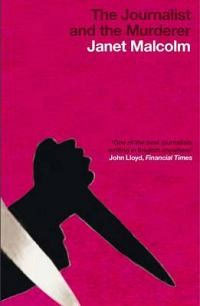
Far from being a place where the ambiguity of life is removed, as Malcolm suggests in The Journalist and the Murderer, far from being a place where conventional narratives are projected on to complex situations, the court’s intrinsic responsiveness to testimony, theoretically at least, is a place that showcases ambiguity, the myriad possibilities of a single situation. What threatens testimony with misinterpretation and reduction – with quick or unfair judgment – is not the law, but human folly: the prejudice or incompetence of a judge or jury, a hungry media machine, and the million and one human factors like time, weather, hunger and weariness that may influence the effectiveness of a working day. These factors influence the interpretation itself and render the outcome of a court case infinitely unpredictable. These informal variables are not recorded in the court transcript but are immortalised in the texts of Altbeker, Malcolm and others.
In conclusion, I'd like to ask: What is the role of these non-fiction texts in both the literary community and democratic society as a whole? I would like to suggest that, as a sub-genre they emerge as a function or a by-product of a highly sophisticated democracy, evident in the way they frame themselves as a third body – separate from both the courtroom and the media, mindful and critical of both, as well as of themselves. How are these texts received by the literary communities in which they circulate? A common criticism in South Africa is that they are “undemocratic” in the sense that they do not address the common man, their intellectual, highbrow and quasi-academic style accessible only to the well-educated, and by extension the wealthy. This judgment goes to the heart of our understanding of what democracy means, a concept that is by no means static, but as malleable as court testimony itself.
References
Altbeker, A. Fruit of a Poisoned Tree, Jonathan Ball Publishers (2010)
Clarkson, C. Fences, Current Writing, special issue entitled Law and South African Literature, 22(2):83–100 (2010)
Malcolm, J. Iphigenia in Forest Hills, Yale University Press (2012)
Sachs, A. The Strange Alchemy of Life and Law, Oxford University Press (2011)
Sanders, M. The Ambiguities of Witnessing: Literature in the Time of the Truth Commission, Stanford University Press (2007)
>>>>Back to the conference's index page for more papers.

|