

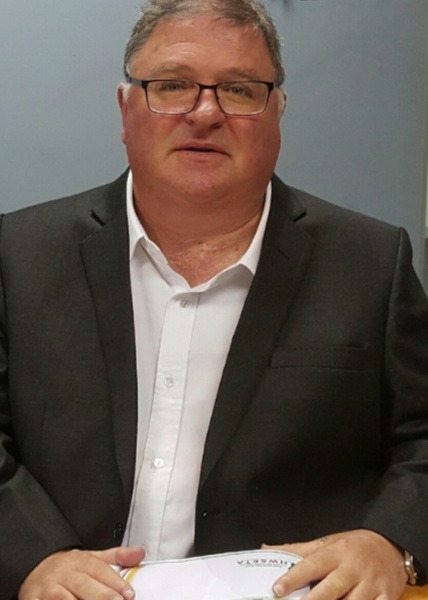
Ari Seirlis (Photo: LinkedIn)
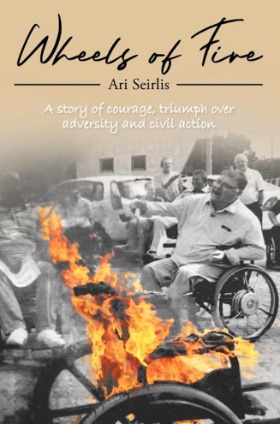
Ari Seirlis is the author of Wheels of fire. He once famously helped Pik Botha on the Angolan border, and eventually Superman called him up to assist, as did Nelson Mandela.
Ari will be at the Schreiner Karoo Writers Festival in Cradock. On 17 June, he will chat to Tony Jackman in the Victoria Manor.
 Hi, Ari. I do not want to steal Tony’s thunder, but briefly tell us about using two wheels attached to a 50cc engine as a youngster. Did you dream about meeting presidents and Hollywood stars back in Ladysmith?
Ha ha! Being part of the 50 crew in Ladysmith was like a dream coming true. Little did I realise that this group of ragamuffins was not well thought of in the community. I had no idea that I would ever get to mix with presidents and Hollywood stars.
You lived a life of privilege, but you also made the most of that life. You did active duty on the border, and even ran the Comrades in a pretty decent time. What were your life goals back then?
I wanted to make my father proud; that was most important for me. I knew how much he suffered to afford to have me at private schools. I guess I had not worked out what my purpose in life was going to be, nor did I have many goals other than to find a way of earning well as soon as possible.
Then the accident. Your colleague Jean-Marc Tostee narrates it in chilling detail. Somehow, you remember asking someone to get rid of the cigarettes in your cubbyhole. That was interesting, as was the steely determination not to make your family suffer too much. You knew that you were in trouble, and yet you thought of others. Would you care to explain?
I would have been embarrassed if my father knew I was smoking on the side. I never wanted to let my father down in any way. Actually, I felt that even by having the accident I had let him down, as I knew this was going to be life-changing for him as well as my mum.
You became quite famous for your sex talks after the incident. We have kids reading this page, so I am not going to ask details. Rather, I am interested in how you respond to people who may think that you are a lesser version of yourself just because you are wheelchair-bound.
That is an interesting question and observation. There are many unintended consequences of being a wheelchair user and especially a quadriplegic, and you need to be bulletproof when it comes to being sensitive to the enquiries and observations made by people. The most important element of anyone’s life, and I guess a priority for someone who has a disability, is to learn the art of getting into a relationship and sustaining it. Once you get that right, everything else falls into place.
You had to learn to embrace the Disability Movement. And you did. Those who cannot make it to Cradock should buy Wheels of fire. Those who can should hop into their cars and get to Cradock. What are you going to teach them about themselves?
I realised immediately after my rehabilitation and having been sent home to cope with quadriplegia, that I needed to find my FEET, find my WHAT, find my HOW and, most importantly, find my WHY (PURPOSE). I look forward to expanding on how I managed to achieve that.
I want to end with a naughty one, as you are clearly very brand-conscious. On the back of your book, you wear a T-shirt that says: I am not trying to be difficult, it comes naturally. Why?
That T-shirt grabbed my attention one day, and I realised it had my name on it. It made me smile, and I wear it occasionally with pride. It creates a talking point. It gives me an opportunity to explain and engage, so let’s call it the icebreaker T-shirt.
*
For more information on the programme of the Schreiner Karoo Writers Festival and the wonderful work sponsored by The AVBOB Poetry Project, please follow this link.
See also:
Press release: Stoepsitting, storytelling, Schreiner and a sumptuous ménage à trois