

The auditorium in the Nelson Mandela University’s Business School was packed for the launch of Rory Riordan’s Apartheid’s Stalingrad.
The who’s who of the greater Gqeberha were in attendance; even Imtiaz Sooliman and his wife were in the audience.
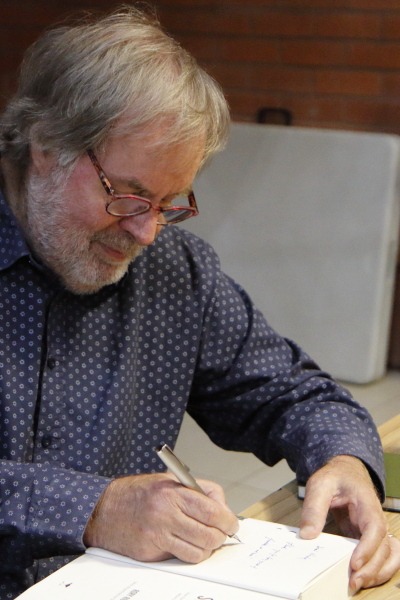
Rory Riordan was a busy man, signing book after book.
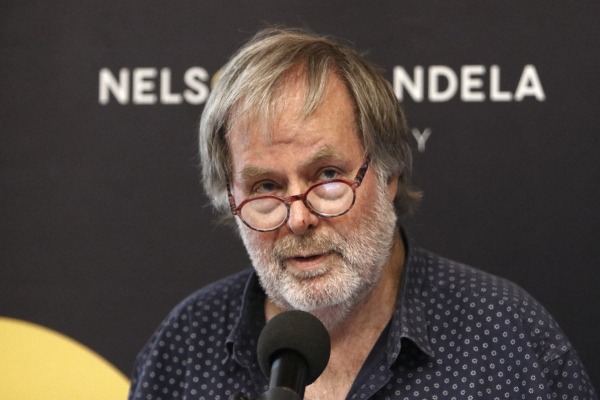
The mood was expectant, yet somehow subdued. Firstly, the book talks about a horrid time in South Africa, and while it ends with a story of triumph, it also reminds one of the horrors that preceded the unbanning of the freedom movements and our ensuing democracy. Secondly, the launch’s scheduled start came only hours after an Article 89 committee delivered a seemingly devastating set of findings against Cyril Ramaphosa. As the audience filled the auditorium, there was a very real expectation that the president might have resigned by the time the book was officially launched. (For the sake of posterity, he did not, due to questions about the validity of the committee’s findings.)
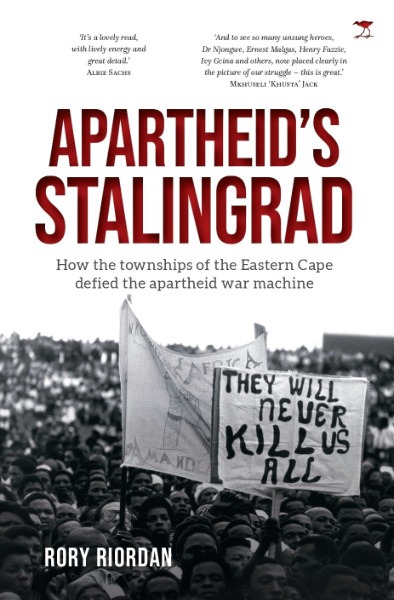 Apartheid’s Stalingrad: How the townships of the Eastern Cape defied the apartheid war machine takes the reader back to 1940, when Ray Mhlaba was 20 years old. The next 40 years are covered at a brisk pace, looking at the Defiance Campaign, the destruction of South End (the District Six of Port Elizabeth), the year 1976, the state’s response and the founding of PEBCO.
Then it slows down and takes the reader through the 1980s in enormous and often gruesome detail. We read about the founding of the UDF, the Port Elizabeth consumer boycott, the murder of the Cradock Four (and many, many more), PW’s responses, the second state of emergency and the impact of economic sanctions against PW’s reign.
In the end, ordinary people from the township brought the once mighty apartheid juggernaut to its knees; the Nats had no choice but to start negotiating. Many of these “ordinary people” attended the launch.
Part three of the book is joyous and tells the story of Mandela’s release and consequent welcome in the Eastern Cape.
There is more, though. Eighteen of David Goldblatt’s portraits are in the book, and Riordan shares how this famous photographer took these portraits in 1990. During the launch, these photographs were projected on the wall behind the panel.

The book launch was part of a community dialogue programme jointly run by The Herald, a local newspaper, and the Nelson Mandela University.
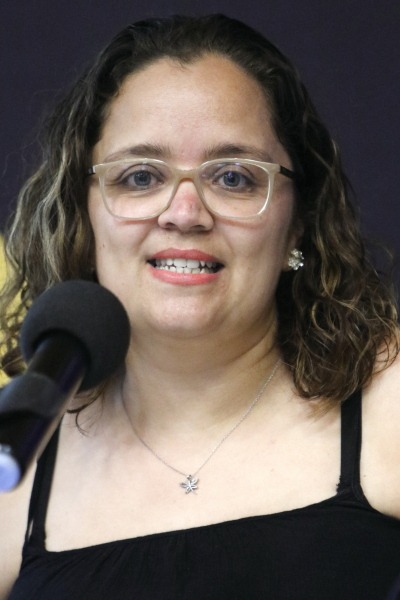
Rochelle de Kock, the editor of The Herald and Weekend Post, opened the event.
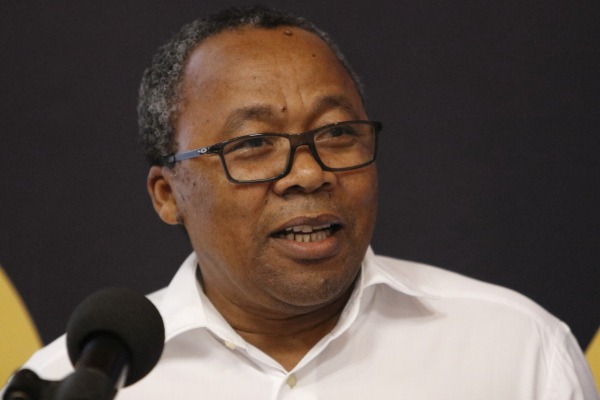
Mkhuseli Jack, deputy executive mayor of Nelson Mandela Bay, knew Riordan during the hard years, and spoke about those times.
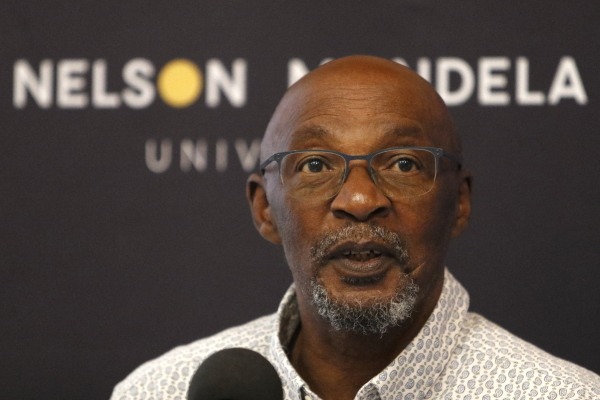
Phil Goduka, a board member of the Mandela Bay Development Agency, shared his views on the book.

Peter Vale, a professor of politics at the Nelson Mandela University and emeritus professor at Rhodes University, explained why the book is important from an academic and historical perspective.
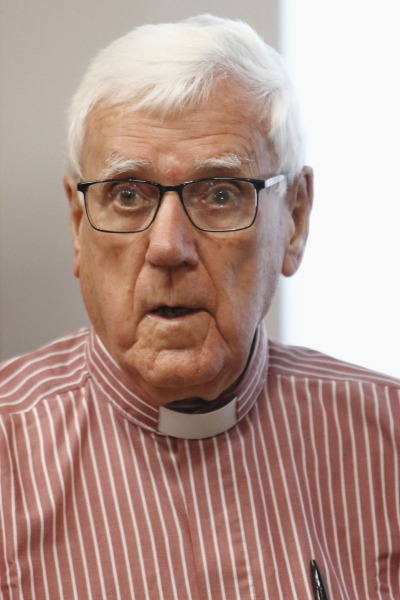
Bishop George Irvine was the facilitator for the event.
During question time, the prospect of a modern-day UDF challenging the hegemony of the ANC was raised. This was not discussed at length, but Apartheid’s Stalingrad certainly is a valuable resource to remind the reader that no institution is above its people.
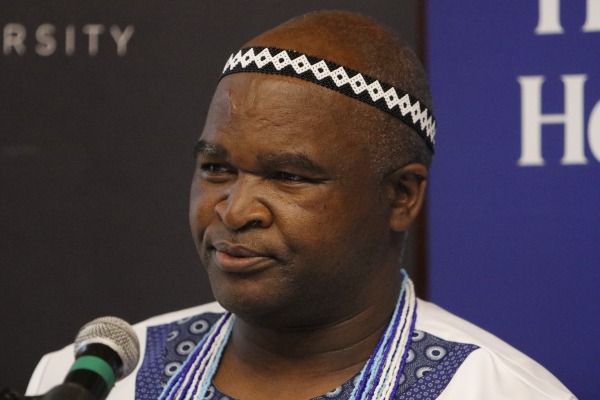
Bassie Kamana of the PAC, who is a councillor of Nelson Mandela Bay and on the mayoral committee for Sport, Recreation, Arts and Culture, closed the event. He did it with flair, the way an imbongi would have done.
Title: Apartheid’s Stalingrad: How the townships of the Eastern Cape defied the apartheid war machine
Author: Rory Riordan
ISBN: 9781431432806
Publisher: Jacana Media