

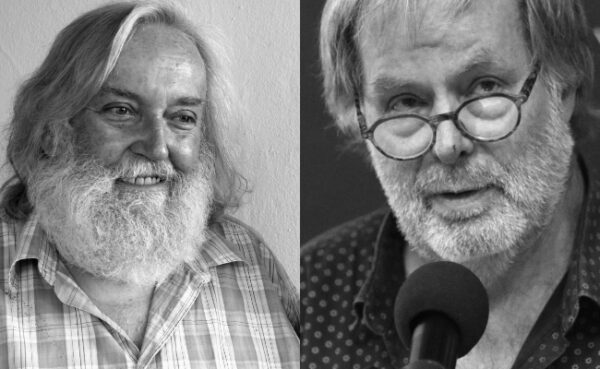
Alan Kirkaldy (left) and Rory Riordan (Photographs: Izak de Vries)
...
Despite many years of reading and conducting interviews on the struggle, and operating in its structures, I learned much that I had not been aware of before. This is the most obvious strength of the book – it highlights the importance of Port Elizabeth and the wider Eastern Cape in the history of the struggle.
...
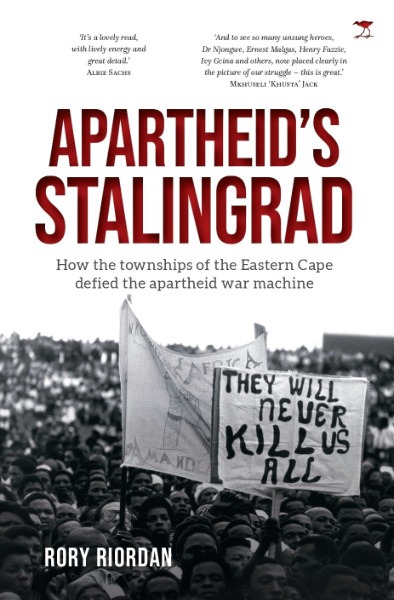 Title: Apartheid’s Stalingrad: How the townships of the Eastern Cape defied the apartheid war machine
Author: Rory Riordan
Publisher: Jacana Media, 2022
ISBN: 978-1-4314-3280-6
In my own work and lectures on the liberation struggle in South Africa, I have frequently come across references to the central role played by activists and organisations in the Eastern Cape in general, and Port Elizabeth (now Gqeberha) and Uitenhage (now Kariega) in particular. I have often been left with mixed feelings. On the one hand, I have felt that many authors’ focus on major events in the then Transvaal (especially today’s Gauteng) and Cape Town has seriously undervalued the contribution made by the Eastern Cape. While many of the leadership originally came from here, it has almost seemed as if texts and the reminiscences of old activists have suggested that they had to move to the major centres to reach their full potential. On the other hand, I have sometimes been left with the uneasy feeling that Gqeberha activists have overstated the centrality of this city in the struggle. Apartheid’s Stalingrad has finally crystalised my opinions. Tactics and strategies first developed by activists and organisations in the Eastern Cape were adapted and fine-tuned in other parts of the country to resist the apartheid regime. Many existing works have done a serious disservice to activism in the province as a whole, particularly in Port Elizabeth. Its townships, and those in other parts of the province, served both as a microcosm of the wider struggle and a testing ground for modes of opposition.
...
Riordan’s experience as a journalist leads to his having an extremely engaging style of writing.
...
Rory Riordan has proved to be the ideal author for this book, which focuses on the period from the 1940s to the 1990s. A former columnist for the Eastern Province Herald, he worked extensively in the strife-ridden townships of Port Elizabeth in the 1980s. Well known as a human rights activist, he founded the Human Rights Trust in 1986, and its magazine Monitor. He later served as the organising secretary of Port Elizabeth’s “One City” process and served in other capacities as a city councillor. The 2020 lockdown gave him the opportunity for extensive study in the archives of the Human Rights Trust and Monitor, and for consulting the other primary and secondary sources which form the core of this book.
Riordan’s experience as a journalist leads to his having an extremely engaging style of writing. When I received the book for review, my first reaction was, “It’s far too long” – 516 pages of core text, excluding the introductory and other material. However, once I started reading, I struggled to put it down. It takes time to read because there’s so much of it, but I never found my interest waning. The author is also extremely skilled at weaving together personal biographies of activists, with events in Port Elizabeth, in the wider Eastern Cape and in the country as a whole. Of course, the reader encounters the national stalwarts of the struggle (some having their origins in the Eastern Cape), both black and white – Steve Biko, Allan Boesak, Frank and Moses Chikane, Chris Hani, Nelson Mandela, Walter and Albertina Sisulu, Robert Sobukwe, Joe Slovo, Oliver Tambo and many others are discussed in fair detail. Their contemporaries, adversaries and outright enemies – such as PW Botha, Pik Botha, Gatsha Buthelezi, Jannie Hofmeyr, DF Malan, Jan Smuts, justice ministers Jimmy Kruger and Kobie Coetsee, minister of law and order Adriaan Vlok, President FW de Klerk, spy boss Niël Barnard and special branch commander Dirk Coetzee – are also given space and attention. The contribution and role of organisations from across the political spectrum – such as the ANC, APO, AWB, AZAPO, Black Sash, BPC, Broederbond, Bureau for State Security, COSAS, COSATU, CPSA/SACP, Congress of Democrats, Education Crisis Committee, End Conscription Campaign, FOSATU, HNP, IFP, Labour Party, PAC and UDF – are discussed and skilfully woven into the narrative.
On a more local level, there is a considerable focus in the work on the life histories and contribution of stalwarts of the struggle such as Raymond Mhlaba, Govan Mbeki and Wilton Mkwayi. The role of activists such as Janet Cherry, the Cradock Four, the activist journalist Mono Badela, Nkosinathi Benson Fihla, the PEBCO Three and the Watson brothers, and formations such as the Cradock Residents Association, Motor Assembly and Component Workers’ Union of South Africa, Port Elizabeth Women’s Organisation and Port Elizabeth Youth Congress is also considered.
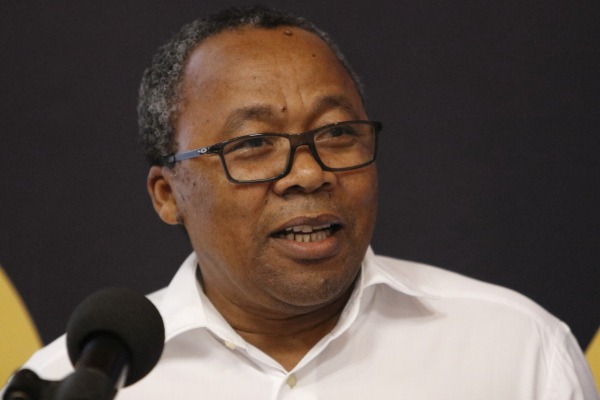
Mkhuseli “Khusta” Jack (Photo: Izak de Vries)
Despite many years of reading and conducting interviews on the struggle, and operating in its structures, I learned much that I had not been aware of before. This is the most obvious strength of the book – it highlights the importance of Port Elizabeth and the wider Eastern Cape in the history of the struggle. Far more importantly from my perspective, the lives and activities of lesser known, previously unheralded activists such as Ivy Gcina, Henry Fazzie, Mkhuseli “Khusta” Jack, Ernest Malgas and Dr Njongwe are treated sympathetically with as much detail as is possible to recover. This is the book’s greatest strength. My own work (for example, Alan Kirkaldy, Everyday communists in South Africa’s liberation struggle: The lives of Ivan and Lesley Schermbrucker, in Palgrave studies in the history of social movements, Cham, Palgrave Macmillan, under licence to Springer Nature, Switzerland, 2022) focuses on the work of ordinary activists working in the background of the struggle. While the icons achieved fame or notoriety, it was the ordinary, often unremembered activists who provided the crowds, raised the money, provided the safe houses, printed and distributed the leaflets, provided the transport, built the platforms for the dignitaries who signed the Freedom Charter, and performed the countless other tasks that made it possible for the movements to operate and eventually achieve success. There is also a strong undercurrent in the book providing a call to mobilise creatively against injustice today – hopefully a salutary lesson for all of us, including those who wield power.
To use a word I learned from my students, much of the content of the book is triggering – one is again chillingly reminded of the brutality of the apartheid regime and the lengths it would go to in order to repress resistance and hang on to, and extend, its power. On the other hand, there is a clear celebration of the power of the dispossessed. Through creative and sustained resistance and regrouping and reorganising in the aftermath of numerous defeats, the townships of Port Elizabeth and the people of the wider Eastern Cape showed that apartheid could be defeated. This is where the reference to the Soviet’s holding of Stalingrad in 1942, and its demonstration that the Axis powers could be beaten, has its origin.
...
“Comrade, if we are going to conquer all South Africa one shithouse at a time, we’ll all be in the grave before liberation.”
...
There are also moments of humour. My personal favourite is the response of one of the witnesses to a demonstration explosion of the first MK bomb in a toilet at a deserted beach at the small seaside village of Schoenmakerskop, to the south of Port Elizabeth. They reportedly exclaimed: “Comrade, if we are going to conquer all South Africa one shithouse at a time, we’ll all be in the grave before liberation” (73).
Eighteen portraits by the famed photographer David Goldblatt, a personal friend of and mentor to the author, are a useful addition to the text and capture the spirit of some of its actors.
From an academic point of view, I am afraid that I must be permitted some slight quibbles. Perhaps reflecting my own biases, I would have liked to have seen more discussion of the international and transnational dimensions of the struggle. The South African liberation struggle had very strong links with other parts of Africa and the wider world, through the establishment of external wings of the liberation movements (particularly after their banning), the provision of training facilities for guerrillas, the growth of the international anti-apartheid movement, and the core transnational nature of socialist/communist ideologies themselves. Due to the scope and focus of the work, this would never form a central theme. There are references to, among others, the Angolan Bush War, the Carnation Revolution, the CIA, Cuba and the Cuban Missile Crisis, Cuito Cuanavale, FAPLA, FRELIMO, the Mozambican struggle, events in South West Africa/Namibia, UNITA and the World Alliance of Reformed Churches. There is also a section on South Africa’s regional destabilisation. International and transnational linkages should nevertheless have been considered in more depth.
The work could also have been more thoroughly referenced and should have included a bibliography. These criticisms should nevertheless not be read as detracting from its value as a highly readable and well-told account of resistance, resilience and creative forms of struggle. These are well worth the attention of the wider reading public, academics and activists concerned with South African history, the history of liberation movements and the role of otherwise very ordinary people in shaping history. I strongly recommend purchasing Apartheid’s Stalingrad, borrowing it or finding a library copy. If you fall into any of these categories of readership, you will not be disappointed.
- Alan Kirkaldy, Head of Department, Department of History, Rhodes University