

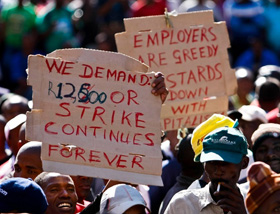
Members of the South African Transport and Allied Workers Union (Satawu) within the harbour and railway sectors have indicated that they will join the ongoing strike by heavy vehicle drivers. When will it end and can the violence that's been associated with the strike be stopped? Vincent Masoga, acting national media officer of Satawu, answers some questions about the strike.
Latest developments indicate that members of Satawu from harbours and the railways are planning to join the strike in the transport industry. How many of these Satawu members do you expect to join the strike? How long do you believe the strikes will last until parties are able to reconcile and workers can return to their jobs?
We expect over 20 000 people in that sector to join us in the secondary strike and the strike will take place until we get a better offer of a double digit from the road freight employers. We are meeting with the employers on Tuesday morning and are looking forward to a better negotiation outcome.
Are you worried that the strike might do lasting damage to the transport industry in terms of the importing, exporting and transporting of products in South Africa, as well as the image foreign countries have of the industry? Do you think these implications might have an impact on the plight of workers?
We do not think that there will be harm done to the transport sector; this is the biggest sector among other sectors in the economy. The country exports a lot of mineral resources from our mining industry and other regional countries; basically it is a gateway into the world for SADC. We believe that the workers in this industry must earn the global standards. The foreign countries also have similar labour problems and the only option is strikes or threats thereof. Our hope is that foreign countries must not give this sector a good image for as long as it treats its employees in this way.
How do you view the precedent that is being set by these strikes in terms of the way it can expand to other industries in the future - do you believe it is an action that is needed across the board or do you feel Satawu's demands are unique to the transport industry?
Indeed our demands in the industry are unique and purely based on official bargaining processes that have taken place as per regulations. Further, our strikes are legal as far as provisions in the Labour Relations Act go and we have not lost control of our members. A secondary strike is legal. We are, of course, worried about the unfortunate precedent that has been set of attempting to negotiate and win wage deals outside of centralised bargaining processes.
Satawu has already openly condemned the violence that has been associated with the strike thus far. What is the union doing to prevent further violence during the strikes, especially now that the numbers are growing?
We have deployed all our available stewards to hot spots and further sent strike committees and sector trade unionist leaders to talk to all and cooperate with the SAPS to ensure that criminals get arrested and also that those that are found with evidence to be our members face internal DC action and also further the wrath of the law.
Kommentaar
The most disturbing element of the strike is the intimidation of workers who want to work and who are not connected to the unions. The loss of life, destruction of property must, per se, be the responsibility of the unions involved and they need to be held accountable as they apparently have no control over their members. They should be taken to court for murder firstly, and secondly be held financially responsible for the costs of replacing the destroyed property.