

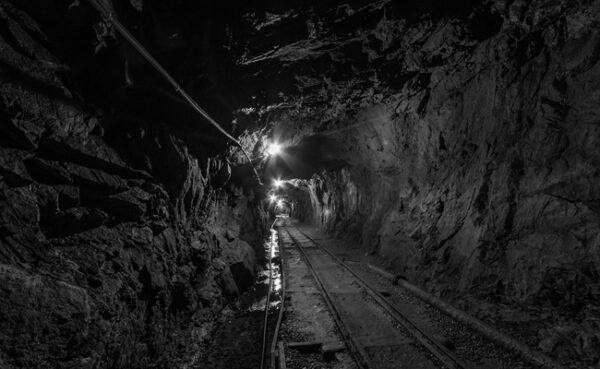
Picture credit of modern gold mine tunnel corridor: https://pixabay.com/photos/tunnel-corridor-brick-the-darkness-957963/
Within this country’s contemporary political discussion any mention of insurrection would likely refer to last July’s still unsatisfactorily understood KwaZulu-Natal and Gauteng events. Besides historical enthusiasts, comparatively few South Africans will be aware that March marks the centenary of another local insurrection: the 1922 Rand Revolt/Revolution/Uprising or Miners’ Strike – all descriptions according to varying political emphases utilised across different references – involving armed workers fighting the police and military in numerous engagements across the then termed Witwatersrand, most particularly the East Rand mining towns – Ekurhuleni today – and Johannesburg areas to the west and south.
.........
During the uprising’s initial stages Smuts’s SAP (South African Party) government forces were markedly on the defensive; the prime minister declared it a putative Bolshevik uprising, as the most radical trade unionist leaders involved made no secret of their ideological leanings and admiration regarding the 1917 Russian Revolution.
............
During the uprising’s initial stages Smuts’s SAP (South African Party) government forces were markedly on the defensive; the prime minister declared it a putative Bolshevik uprising, as the most radical trade unionist leaders involved made no secret of their ideological leanings and admiration regarding the 1917 Russian Revolution. Government and business leaders across the Western world and its offshoots considered with dread their propertied classes’ fate should the Soviet Union’s violent emergence be replicated globally. The South African mining industry and Smuts in particular were no exceptions.
Over 9–10 March Smuts responded by authorising Union Defence Forces (UDF) deployment, including artillery, aircraft, hastily mobilised citizen force regiments and burgerkommando’s; followed by a martial law proclamation – derided folk-etymologically as Martjie Louw by Afrikaner strikers. Within a week these vastly superior resources had overwhelmed all resistance. It was the most ferocious single internal military operation ever conducted post-1910 Union, endorsed by (one) casualty list of 687, including 72 and 39 dead among the state forces and strikers respectively and 42 civilian fatalities. The latter two categories were almost definitely higher; considerable variations exist among sources. The damaged and destroyed property cost was also predictably grim.
1922’s formal combatants were exclusively white, but the casualties were not; from its outset enraged white strikers seized opportunities to vent their murderous fury upon black workers. The uprising comprised one important marker along an internal South African violence trail through the first three 20th-century decades, over and above the 1914–18 Great War impact. While the 1914 Rebellion, too, was a white affair, the 1906 Bambatha Rebellion and 1924 Bulhoek Massacre resulted in hundreds of black dead, let alone the cumulative injustices consequential from official segregation policies. If contemporary mainstream opinion holds that our central early 20th-century historical theme concerns black subjugation, suppression and economic exploitation, perpetrated by whites of all cultural/language groups, where might 1922 be placed in that narrative?
........
If contemporary mainstream opinion holds that our central early 20th-century historical theme concerns black subjugation, suppression and economic exploitation, perpetrated by whites of all cultural/language groups, where might 1922 be placed in that narrative?
..........
In fact, the event deserves unique scrutiny, not just because it comprised the worst local intra-white violence resulting from an industrial dispute event, but also because it indisputably connected to black miner exploitation and followed a pattern set by earlier violent strikes during 1907, 1913 and 1914. The Witwatersrand’s very deep, low-yield gold ore profit maximisation depended entirely upon masses of cheap, unskilled labour. Historical processes provided this: Thousands of black migrant workers from within and beyond the Union sought cash wages for desired Western consumer goods and hut taxes, a direct result of their defeat as tribal pastoralists in the late 19th-century land wars, occurring simultaneously with the Mineral Revolution and consequently boosted regional economy. That black miners accepted far lower wages than white miners for any comparative work was the crucial factor catalysing 1922.
By 1922 there existed six giant mining corporations employing 200 000 workers, approximately 20 000 of whom were white, their work arranged by levels of professional managers and mining engineers. The actual Randlords / mine owners and financiers had their collective voice through the Chamber of Mines, in existence since 1887. Mining in that period was exceptionally dangerous: In the decade after 1902, 50 000 black miners died through accidents, an a smaller proportionate number of whites. Thousands more were invalided out by disabling injuries and disease – silicosis particularly – where the average age of death was 35.
From the Witwatersrand gold-mining industry’s very establishment, white artisan skills had been fundamental to its operation, ensuring that the initially mostly British-born workers successfully rooted their trade union culture, thereby bargaining wages and life-styles superior to those of their global equivalents. The unions had from their inception insisted that all skilled, semi-skilled and supervisory mining roles be reserved exclusively for whites. At a statutory level, protection rested on the “colour bar” framework – re-endorsed by the 1918 Status Quo Agreement, following tense negotiations between unions, government and the Chamber of Mines.
Party politics by early 1922 seemingly offered uncertain prospects for permanently entrenching white worker expectations. National Party leader Hertzog aggressively condemned industry as heartless exploiters of the Afrikaner urban poor, but most white worker support, including a significant Afrikaner portion, remained with the comparatively smaller, British-oriented Labour Party. After the 1920 election, Smuts’s SAP maintained their parliamentary majority only through incorporating the decidedly pro-Empire and mining industry Unionists. Many white miners, suspecting the mining industry would ultimately demolish the colour bar, believed that the Unionists’ collapse into the SAP merely confirmed their certainty that Smuts would provide political cover for white worker job losses.
White workers were acutely conscious of their privileged position, emphatically justifying it through the era’s racial assumptions. Partly behind this was simply fear – the catastrophic consequences that job loss would entail for miners’ families. Laid-off black miners might successfully retreat to a pastoral lifestyle for survival, but such was effectively unlikely, if not impossible, for most white workers, including Afrikaners who by 1922 were the larger white proletariat component.
.........
White workers were acutely conscious of their privileged position, emphatically justifying it through the era’s racial assumptions. Partly behind this was simply fear – the catastrophic consequences that job loss would entail for miners’ families. Laid-off black miners might successfully retreat to a pastoral lifestyle for survival, but such was effectively unlikely, if not impossible, for most white workers, including Afrikaners who by 1922 were the larger white proletariat component.
...........
Afrikaner workers easily matched English-speaking workers' willingness to protect their livelihoods through radical means and shared their deeply felt social class injustices, suspicions and conviction that the mine owners particularly epitomised the worst of avarice while openly displaying their utter contempt for white workers' assumed rights. But Afrikaner strikers also carried collective volk memory concerning the Anglo-Boer War, Rebellion and historical precedents of taking up arms against – so they perceived – their identical past tormentors, now in league with SAP Afrikaner allies.
Most English-speaking workers sought a country where white worker interests broadly predominated. Their tendency towards ideological extremism varied, but their union leaders presented a radical revolutionary course and goal – a communist workers’ republic – such as was attempted (and failed) in Germany during 1918–19. White worker contradictions therefore abounded, epitomised by one slogan: “Workers of the World Unite for a White South Africa”. However, their regularly announced commonalities were clear – violently overthrowing the government and establishing a republic – a provocation inevitably destined to invoke the strongest response.
..........
Most English-speaking workers sought a country where white worker interests broadly predominated. Their tendency towards ideological extremism varied, but their union leaders presented a radical revolutionary course and goal – a communist workers’ republic – such as was attempted (and failed) in Germany during 1918–19. White worker contradictions therefore abounded, epitomised by one slogan: “Workers of the World Unite for a White South Africa”. However, their regularly announced commonalities were clear – violently overthrowing the government and establishing a republic – a provocation inevitably destined to invoke the strongest response.
............
For such a threat was aimed at a (white) society historically long militarised and experienced if not brutalised by war, a repeated feature being state-armed means usage – justified or not – against perceived rebellion. Secondly, the gold mining industry’s stability was understood as indispensable to national economic growth – its state protection thereby guaranteed.
By the end of 1921 the seething industrial antagonisms reached breaking point. Mine owners faced a falling gold price and rising mining costs, discernible through sustained white miner gains since 1915, including reduced working hours, and their wages increased since 1914 by 60%. On 8 December 1921 the Chamber of Mines, citing their need to forestall the closure of several mines, formally proposed the termination of the 1918 Agreement. With little or no union consultation the colour bar was scrapped and 2000 semi-skilled workers replaced immediately by blacks with further white job losses inevitable. Reorganised underground work meant white supervisors taking charge of three rather than two underground drill teams while all the highest paid white workers had to endure wage cuts.
By early January a general strike was declared following the irretrievable breakdown of discussions; scattered violent incidents proliferated as mine management teams attempted to maintain some operations through non-strikers and scab labour. At a mass worker meeting in the Johannesburg City Hall on 5 February, the strikers’ five-man radical Council of Action reiterated long-discussed armed rebellion intentions. Attending Labour Party and National Party representatives – fully sympathetic to the worker grievances – now backed away.
Attention turned towards a phenomenon manifesting across the mining towns: Armed commandos in the Afrikaner military tradition paraded ominously, accompanied by drilling, rank structure and discipline familiar in formal militaries – unsurprising, as numerous miners had First World War experience from UDF or British forces; many decorated for bravery, while former officers and non-commissioned officer were also plentiful in the ranks.
On 22 February Smuts responded, declaring that the commandos constituted unlawful assemblies and authorising police action against them. Five days later three workers were shot dead in Boksburg – one of them, surname Krause, had been the town’s first volunteer in the 1914–18 war. A nominal overall armed worker commander was appointed: Piet Erasmus from Fordsburg, 38 years old with very limited Anglo-Boer War experience and ill with silicosis. But throughout the crisis little effective coordination existed between different striker commandos.
..........
As the situation deteriorated, nothing could possibly control the mobs roaming the streets committing arson, robbery, assault and murder against both blacks and whites. Extreme brutality reminiscent of Western Front trench warfare became a feature of several localised forays; the Primrose commando viciously attacked black mine workers at the local gold mine before the military intervened. On 8 March the Brakpan mine was overwhelmed by hundreds of strikers who, on accepting the 20 remaining mine officials' surrender, proceeded to bludgeon them to death.
...........
As the situation deteriorated, nothing could possibly control the mobs roaming the streets committing arson, robbery, assault and murder against both blacks and whites. Extreme brutality reminiscent of Western Front trench warfare became a feature of several localised forays; the Primrose commando viciously attacked black mine workers at the local gold mine before the military intervened. On 8 March the Brakpan mine was overwhelmed by hundreds of strikers who, on accepting the 20 remaining mine officials' surrender, proceeded to bludgeon them to death.
The first significant attack on the state occurred on 10 March, when the Newlands, then Fordsburg, police stations were captured; policemen armed with military rifles, bayonets and bandoliers surrendered and their attempted reinforcements skilfully ambushed. While the workers were short on rifles and replenished from captured arms, they possessed numerous revolvers and bombs made from dynamite-filled treacle tins with added iron shrapnel. In Jeppe on 11 March a commando attacked an Ellis Park-situated UDF depot, killing and wounding 48 members of the Imperial Light Horse Regiment, one of several citizen force units, while another regiment, the Transvaal Scottish Regiment, was besieged in the south as Crown and City Deep mines faced heavy attacks. These and numerous other clashes marked the insurrectionists’ high point – a diagonal piece of territory west of Johannesburg was temporarily entirely under their control.
In Boksburg hundreds of strikers were supplied with weapons at the local trades hall, but disputes between Afrikaner and English-speaking commando members along with personal clashes between leaders stifled any concerted attack on state forces. Benoni’s events were entirely different – motivated and highly organised workers controlled the town from 10 to 13 March, attacking nearby encamped UDF troops and wounding and killing dozens of Transvaal Scottish Regiment members detraining at Dunswart.
Indeed, my very own existence might never have been had one incident during the Benoni fighting been slightly different. My maternal grandfather, Algernon Charles Sparks, a decorated First World War veteran and by 1922 a 34-year-old lieutenant and profession soldier in the SA Mounted Rifles, 1st Permanent Battery (Artillery) – was instructed to use his gunners as infantry and advance on a striker redoubt within an iron foundry. During the action Sparks was shot in the groin. He awoke in a field hospital and (so the repeated family story ran) groped in panic towards his wound region, and observed by a Zulu nursemaid was immediately reassured (in Zulu), “They are still there.” A bachelor at the time, Sparks met and married my grandmother around 1926, and my late mother, their third child, was born in 1934. My childhood recollections of this old man and my fascination with his military career were entirely innocent of how easily my family – mother, siblings, cousins and now scores of descendants – might never have existed, had an unknown armed worker’s aim been truer!
Benoni also witnessed the first use of air force biplanes bombing and machine-gunning commandos; a consequence thereof included civilian deaths, further outraging worker opinion.
At Parktown, white social class divisions were revealed in the most tasteless forms – while the Parktown ridge, occupied by over a thousand Newlands commando members, was aerial bombed and shelled by artillery, seated in the public gardens were wealthier citizens with refreshments, having positioned themselves as spectators. A police colonel lost his temper with a mine manager dressed for tennis who arrived at Marshall Square police station enquiring about progress in ending the strike.
By Sunday, 12 March, the hard-pressed UDF and police had wrenched back control of most disputed districts, assisted by continual citizen force regiments and loyal commando reinforcement. The last striker redoubts surrendered, including Brixton Ridge, Vrededorp and Newlands; Smuts’s close confidante, General Sir Jaap Van Deventer, led the drive on the East Rand, sweeping aside the final resistance at Benoni; numerous platteland burgers under his command resumed their fighting against British uitlanders, only to discover overwhelming numbers of Afrikaners among those captured. Afrikaner miners – like the 1914 rebels before them – had grievously miscalculated in thinking their rural kin would seize the opportunity to forcibly displace the British Empire-supporting SAP government.
The very last concerted military action was aimed at Fordsburg’s centre. Preceded by a seventy-minute artillery barrage, thereafter a Whippet tank (which broke down), citizen force troops and loyal commandos converged on the market building, discovering inside dead by suicide Percy Fischer and Henry Spendiff, the most prominent Council of Action members. During the following week military and police searches of miner homes were conducted and final sniper resistance eradicated. The shooting of three captured Hanekom brothers in Bezuidenhout Valley was ordered by the Transvaal Scottish Captain Walter Kirby, who satisfied investigating authorities that the men suspected of hoarding arms had died attempting escape. This was just one of several further embittering incidents during the finale of the insurrection.
At the old Wanderers ground near Johannesburg station the police screened thousands of detainees; later judicial processes resulted in fines and imprisonments, most prisoners soon being released under the 1922 Strike Condonation Act. There were several cold-blooded murders of blacks, policemen and strike opponents. Those tried therefore faced a special court, not a jury trial; four accused were hanged and several other death sentences commuted. The judicial processes were followed by a commission of inquiry which noted the muddled co-existence of two entirely different republican aspirations.
.........
Smuts personally faced the most severe criticism – Hertzog accused him of deliberately allowing the situation to get out of control so that under martial law state forces could smash white worker militancy without restraint.
............
Smuts personally faced the most severe criticism – Hertzog accused him of deliberately allowing the situation to get out of control so that under martial law state forces could smash white worker militancy without restraint. Unfortunately, although the government could never have tolerated or managed the escalating anarchy without some recourse to emergency powers and state coercion, its prior deadly use of force in several earlier listed situations convinced scores of white voters of the plausibility of Hertzog’s damning slur that the prime minister’s footsteps “dripped with blood”.
1922’s political results were decisive; noting the SAP’s swelling unpopularity, the Nationalist and Labour parties concluded an electoral pact and jointly condemned Smuts’s party as a lackey of “big finance”. The Pact insisted that the white workers’ welfare was its bond, overriding incompatibilities of British Empire allegiance versus republicanism and ignoring Smuts’s ridicule of an unholy alliance between Christian Afrikaners and Bolsheviks. In the 1924 general election the Pact won 81 seats to the SAP’s 53, campaigning on a “Civilised Labour Policy” slogan which in short insisted on and implemented increased racial segregation and white worker protection.
Also read:
Kommentaar
Goeie weergawe van staking, baie dankie. Is daar enige instansie wat oor argiefmateriaal beskik oor veral naamlyste van stakers by individuele myne?