

This reader’s impression was written and sent to LitNet on the writer’s own initiative.
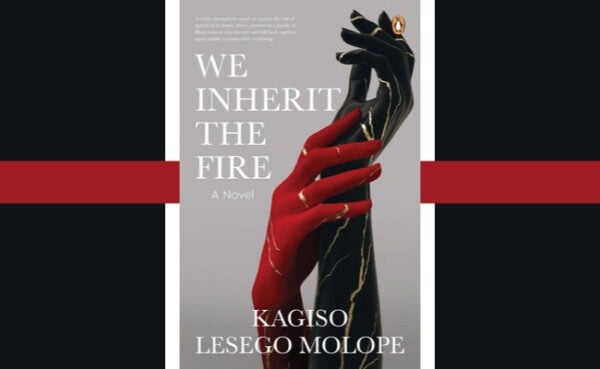
Title: We inherit the fire
Author: Kagiso Lesego Molope
Publisher: Penguin
ISBN: 9781776393244
“Any story worth telling must begin with the women.”
Set in a newly desegregated South Africa in the final years of apartheid, We inherit the fire explores what happens after the fight for freedom. Central to the story is a deeply fractured mother-daughter relationship between Kelelo and her mother, Kewame (aka Dolly), in the personal spaces where the impact of that struggle still lingers.
There’s something quietly devastating about this story. Not because it tries to break you, but because it tells the truth so gently that you don’t even realise how deeply unsettling and traumatic it is.
What stayed with me most was the broken mother-daughter relationships woven across generations, as with the relationship between Kelelo and Kewame. The space between mother and daughter is not defined by loud conflict, but by absence, a silence that carries its own weight. It is a distance shaped by history, by sacrifice and by a kind of pain that does not always have words.
Dolly is celebrated, almost mythologised, by the world, yet at home she remains someone Kelelo cannot quite reach. And that disconnect feels heartbreakingly real.
The novel doesn’t just explore trauma. It shows how it lives on, how it seeps into relationships, into silence, into the way love is given – or withheld. The world sees Dolly’s activism as heroic, something to be admired and remembered, but it rarely witnesses the private aftermath – the quiet fractures, the emotional distance, the parts of her that never made it back home. And through Kelelo, you feel the ache of trying to understand a parent who belongs to something bigger than you, while still needing them in the most ordinary, human ways.
Reading Dolly reflect on the possibility of losing her Oumama, and on the memories that tether her to the past, is also devastating. The novel deepens this grief through the memory of a home bulldozed, and their land dispossessed and later given to white families, showing how loss in this story is not just personal, but historical.
The writing doesn’t overwhelm you all at once; it draws you in slowly, almost gently. Before you realise it, you’re completely immersed in this deeply sad and traumatic story, carrying an ache that lingers long after.
There’s no neat emotional release here. No moment where everything softens and makes sense. Instead, there’s this lingering question of what it means to inherit not just strength, but pain. And whether understanding is ever enough to bridge that gap.
It’s a story about the aftermath, about the private cost of public heroism, and about love that exists but struggles to find its way through the weight of everything that has come before. That’s what makes this story unforgettable: It doesn’t ask you to witness history. It asks you to feel what history leaves behind.