

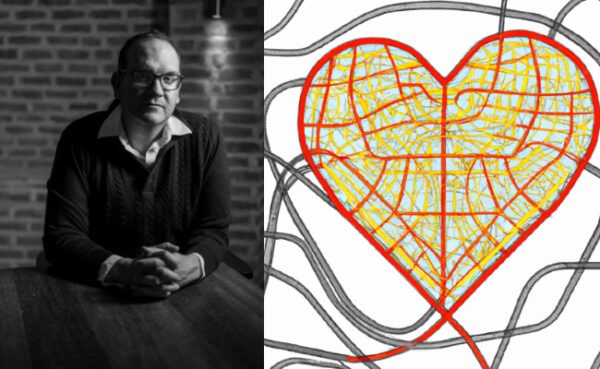
Mike Boyd (photo provided)
...
I listen to Johannesburg move around me, and I wonder how she is still able to act like nothing is wrong. When that is all I can see. Why she is not angry. I’m tired of being angry.
...
I have started to walk everywhere. I tell myself it is because I want to research my next novel. I’ve had an idea, and it involves walking the streets of the city. It’s got a big concept, but I want it to be written with a low-key, tangible realism. There are angels and monsters. I want the reader to experience Johannesburg from the ground. So, I walk to the shops whenever we need anything. I find myself making excuses to go, despite the winter darkness approaching earlier and earlier. Even better. But it’s not just the unwritten novel that pulls me onto the road. It’s not that I need to be healthier now. It’s not that I want to get my 10 000 steps each day. The real reason is more complicated. I want to hold onto the present. Be present. Slow down time. Slow it down so much that I might somehow return to a time before now, when I used to walk more.
I listen to the city move around me. The ever-present highway hums in the distance, in time to my step and the passing cars and the other walkers. To feel a part of this great madness, I realise, makes me feel smaller. And that’s what I need right now. As I pass under the shadows of the bare trees in the pale winter sun, I am reminded of what one of the main characters from my novel says: “I don’t know what to believe anymore … it all feels so heavy on my mind. The weight.” Although I was able to explain this away with convoluted literary ideas when asked about it at book launches, for the first time I understand it for myself. The weight of thoughts can have a bearing on one’s spirit.
...
My life spun out of control in the space of two weeks, and nobody noticed it.
...
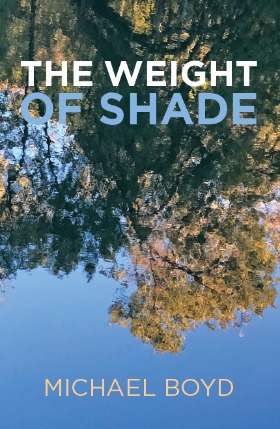 You see, my life spun out of control in the space of two weeks, and nobody noticed it. My first novel, The weight of shade, was released with humbling support from those around me. The school at which I teach held a launch that rivalled those of well-known writers. Everyone was there. Thunderous applause and signing of books. The next day, I spoke at a prestigious book festival. Everyone else was there. Thoughtful conversations and meeting heroes of South African literature. The book took off into the world. It all seemed to be finally happening for me. After all this work, this spinning of myth and imagination and dream – my dream – into reality, I was referred to as a novelist. The impossible was becoming real.
I turn towards the park. The lady selling bags of chips and sweets on the side of an upturned cable roller is there, as ever, and we wave to each other. I remember walking in other parts of Johannesburg when I first moved here. Just to get to know the city. To somehow feel its pulse through the road. I think about the route my character will take into the city centre. All roads leading to other roads. The highway gliding through buildings, on- and off-ramps connecting smaller roads to bigger roads. The arteries and vessels of the city. The cars and people are the blood, the life. But where does the heart of the city lie? And I wonder whether the city has a heart at all.
The heart. My heart. Almost stopped beating. An artery was blocked. A crash on the highway. I started to get a numbing sensation while I walked up toward the beautiful facade of my school one morning. It disappeared when I sat down, and I forgot about it. But it returned the next day, and the following day it started to spread down my left arm. Left arms, like on-ramps, I knew, lead to bigger things, and I was afraid to go to the doctor. So, I didn’t. I thought I would rest for the weekend. But, like the drone of the highway in the distance, the numbness remained constant whenever I walked. I tried not to walk. I made excuses to stay seated. Until I gave in and I made an appointment. Maybe I’ve just had the flu that’s going around, I kept telling myself – even two days later, as I lay waiting for the angiogram that would find the wreckage in my veins. Keyhole. Through the wrist of my writing hand, soon covered with a small plaster. Tiny. “This would have killed you,” the doctor’s words still echo from within the hallucinogenic aftermath. But while unblocking the highway, undoing the unthinkable, I didn’t know I would unravel. And as I unravelled, life continued. When I returned home, I unloaded the dishwasher. The next week, I went back to work. My book was still on everyone’s smiles: Congratulations! It was out in the world, very quietly living its own life now without me. I couldn’t even find it at the biggest chain of bookstores. And I felt abandoned. After all, we had spent four years together. And I felt broken. I started to feel imaginary chest pains that I had never felt throughout the ordeal. Because I was broken, but with a scar the size of a pinprick that nobody else could feel or see.
Although the roads are busier, I don’t enjoy crossing the park. There is safety in a road’s direction. And I remember a time when I didn’t like that. When I lived in England, and I would break out onto Parker’s Peace in Cambridge from the busy road – either walking or cycling – and feel the space open, as if I were taking a breath. But those were smaller streets in a smaller country, and now the skies and the land and the city are huge – and I am older. And smaller. And I nearly died. I like the direction of a road. Its hardness and its grit. I can hold onto it. The park is filled with spaces I can’t see and trees that cause heavy shadows to cross my path.
...
I try to take my finger off the pulse of the road, and to feel my own heartbeat.
...
I heard that the city was crumbling. I watched with fascination, as did the world, when videos showed Lillian Ngoyi Street crack down the middle. Cars flew through the air; people ran. I could feel the city’s pain in that moment. It was said that the old mine shafts were collapsing, that the Zama-Zamas were extending the underground passages too far, forcing out a past that has been forgotten. Pushing the golden city to its limits. Mining for something that is no longer buried there. A city exploited ever since a man kicked a piece of rock in the bushveld and saw gold veins in it. And now the land was finally breaking apart under the weight of life. It turned out it was actually a gas explosion. But I know too well that there is no need to look for reasons when these things happen. I have been spending sleepless nights digging in my own past, searching for causes and reasons, to no avail. I watched the video again and again. I suddenly knew where the heart of the city lay. I knew the wreckage. I knew the direction of my unwritten character. I saw in the split earth, a tiny scar in a giant city, a numbness that had heralded disaster, and which now clouded our lives. The next day, a series of photographs were taken. Models standing in the Lillian Ngoyi Street crack. Celebrations. Smiles. Oh, the resilience of Joburgers. We don’t take ourselves too seriously. Life goes on. Like unloading a dishwasher. And for a moment, I was shocked. That nobody saw what I was able to see.
And now, I walk back home carrying a shopping bag. I think of tunnels beneath me and inside me, a hive of forgotten passageways threatening the stability of life. Spaces I cannot see. Angels and monsters. Shadows that hold up the weight of a city. I listen to Johannesburg move around me, and I wonder how she is still able to act like nothing is wrong. When that is all I can see. Why she is not angry. I’m tired of being angry. I try to slow my pace. Slow down. Be present. I try to take my finger off the pulse of the road, and to feel my own heartbeat. Because my heart is still beating.