

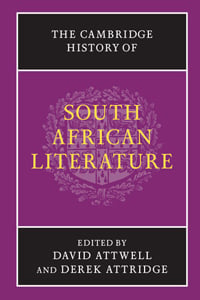
 Titel: The Cambridge History of South African Literature
Edited by: David Attwell and Derek Attridge
Publisher: Cambridge University Press
ISBN: 9781107681873
Click here to buy The Cambridge History of South African Literature from kalahari.com.
The volume consists of six parts; each topic is divided into subtitles, which makes the topic easy to follow. Each subtitle of each topic brings forth new ideas on the topic. Most contributions come from Part V. The question is what reflection this will bring to people who want to know more about South African literary history. Does this mean “Apartheid and its aftermath, 1948 to the present” is the most important issue in the history of South African literature, or that this is the heart of South African literary history? Each language and ethnic group is presented in this part to show that in the history of South Africa every group has been affected by apartheid in one way or another, positively or negatively, and how they managed to survive it until post-apartheid. Creative art and writers who contributed in this era are alluded to by the authors. The contributions in this volume prove the diversity of South African literary history. This volume proves that each ethnic group has a literature. The African indigenous group has the deep African oral literature which marks the uniqueness of this group.
This book presents the literature of distinct ethnic groups with different histories of their own. It is an important contribution to the study of South African literature and its origins. The volume explores the history of different writings of diverse ethnic groups. The history of each language group shows that South Africans have their own complex literature backgrounds. It is indicated in the book that African indigenous literature started with oral tradition and literacy developed later, and writing followed. Newspapers historically played a prominent role in giving African writers a voice, as it was difficult to go through publishing companies of that time. The articles presented in this volume also show that in the past the development of South African literature was somehow blocked by apartheid or prejudice issues.
The question as to what South African literature is has been answered in this volume. South African literature is not South African English literature, but embraces all the languages and cultures of the people of South Africa. In order to understand the present it is important to look back at the past. This volume is an answer to those who want to understand the beginnings of African literature, the ups and downs of its development, up to its current situation. The history of a country plays a role in the literature of that particular country. This volume describes the history of South Africa in order for readers to understand why writers were writing on particular issues. Themes offer themselves, and that is why writers will tend to write about their surroundings. The development of the literature of each language differs, depending on the extent of hindrances during the early years. African languages still suffer a great deal because the writers write in English and some of them translate into their languages thereafter. This is being caused by the extent of readership in indigenous languages as compared with the English market.
 |
|
Russell Kaschula |
 |
|
SEK Mqhayi |
 |
|
Jeff Opland |
 |
Other than presenting the history, South African literature in transition is also presented at length in this volume, which will play an important role in providing non-South Africans with an overview of the history of South African literature and its improvement, or changes therein. The history in this volume will also serve to revive memories of South African literature in the past, so as to see whether it is static or dynamic in its nature. It is noted on p 152 that “Readers (are) to understand the present through the country’s history.” This will help readers to make a clear demarcation between books written before 1990 and those written after 1990.
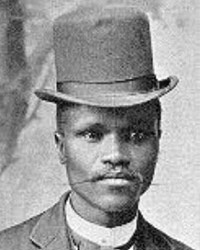
The Cambridge History of South African Literature is presented from the colonial era. Each language group has writers who rose to the occasion and explored themes responding to the era. The literature of indigenous groups started with oral literature, which includes folk tales, folk songs, riddles, oral traditional poetry, proverbs and idioms, etc. In this volume it is noticed that this language group shares similar aspects of oral tradition but they may differ here and there. Russell Kaschula presents the traditional imbongi and gives the history of this type of poet (42). It is important to note that there may be changes and interventions of technology that will change only the form and style of presentation, but they won’t interfere with the spiritual aspect that links the imbongi yomthonyama (traditional oral poet) and the ancestors. The imbongis may change their way of dress, weapons they carry, etc, but the relation with the ancestors is an unknown issue. Kaschula’s presentation brings forth the idea of looking at the characteristics and function of the traditional praise poet and the modern stage poets. In this case, when giving the definition of the two, you can come up with different definitions. It is important to acknowledge the change and technology. But it needs to be remembered that the generation need not understand the traditional poet from the era of Mkiva and other new stage poets, but from the times of the prominent Xhosa poet SEK Mqhayi. The idea raised here brings the idea that we need to look at how oral traditional poetry and literature have influenced the modern traditional poets and other aspects of modern narratives. Kaschula refers to Opland when he says, “[T]he dynamic elements are necessary in our approach since the tradition of Xhosa oral poetry has clearly changed ...” (46). If this refers to the poetry that is performed by the imbongi yomthonyama I have another opinion concerning this. The change will happen only to those poets who pronounce themselves as iimbongi zomthonyama, whereas they are not. They go to the occasions ready with their performance. These are not iimbongi zomthonyama. The latter has a special relation with the ancestors and is told what to say at a certain point in time. They do not attend the occasion prepared to perform - they are driven by the spirit.
The change which Opland mentioned brought about so many things which are disturbing. Today’s iimbongi zomthonyama appear on the programme. Secondly, these days, they are sometimes interrupted if they jump to convey praise singing when there is someone who is still giving a speech and asked to continue after the talk. The imbongi yomthonya who has the calling from the ancestors will never be able to continue praising because the spirit in him will be gone by then.
The papers that follow also show the significance of songs to the African ethnic group. This is also alluded to by one of Gibson Kente’s songs entitled “Africa sings” from the CD How Long, that Africans have a song for each occasion. Izithakazelo in Buthelezi’s presentation are also mentioned as important in the history of the indigenous groups. Izithakazelo in isiXhosa narratives are mostly evident in genres written in earlier times than current genres. Under Buthelezi’s subtitle, “The 1880s and beyond: growth of art and scholarship”, he explores songs, hymns and poems and also mentions maskanda music and hymns of the Nazareth Baptist Church, commonly known as the Shembe Church. Different views might emerge concerning the argument stated on pp 89-90, referring to the Shembe hymn 219. As a member of the Nazareth Baptist Church I have listened to many preachings referring to the reason why the song was composed. “Baba mkhulu” is the founder of the church Prophet Isaiah Shembe. There was a reason why he was begged to ease his word on this particular song, that is according to people who preach and give the background of the song. On p 91 Buthelezi refers to Shembe and other African Independent churches as though they were appositional to white authority in subtle ways in their song and dance. Shembe had a problem of being accused of misleading people by the white people, hence the composition of hymn 183. He refused to be treated as a criminal in his fatherland, proving that the Shembe hymn embraces all nations, black and white – this is evident in hymn 153.
Part I, “Oratures, oral histories, origins”, brings back memories of traditional oral literature and its significance to its indigenous group. It is also noticed that the folklore of different ethnic groups is similar, and it is somehow serving similar purposes. Songs have been used, and are still being used, as powerful tools to communicate a message among Africans. Literacy contributed to the documenting of this oral art and the orality of it has changed with the times.
The development of Dutch writing tradition and also the nature of reading and writing at the Dutch Cape are explored under the topic “Records of the Dutch Settlement and the Contemporary Novel”. The effort applied in developing this section brings back memories of the history of the indigenous kingships, their rules and the wars surrounding that period. The history of indigenous groups is shaped by kings and chiefs and there is a rich history surrounding the movement of the kings which is portrayed in some of the historical books such as the isiXhosa drama Umkhonto kaTshiwo by Ngani. The history surrounding the era of influx control that reveals people's livelihood during that era is also missing in this volume. There are also books, including plays, portraying this issue. What is missing in the volume is the history that will also link the narrative works responding to it. Books that will portray the history of African languages and the lives of African indigenous groups found in the Opland archives, and other relevant researched sources, are needed to add to the few historical books that are already available. Stories of the history of the nation will never be enough. Among the Xhosa group there are many unresolved historical issues surrounding their kingship which need writers to say something about them. The travel account given from p 158 reminds me that even the African group has a history surrounding that, whether it is recorded in the history archives or not, but it is something that existed. On p 176 it is noted that little time is spent on the travel text. This may happen because the history was not recorded or there is a lack of creative initiative concerning this type of creative writing. An account of Makanna is given on p 176, which at least gives South African literature and culture surrounding the travel history.
Looking at the Eastern Cape Colony on pp 210-14, it shows how different newspapers were initiated and some of them never developed further. It is a serious case among the amaXhosa group, because today they cannot say they have a popular established newspaper, whereas history shows that the spadework had been done.
An account given on pp 330 and 333 about some writers like SEK Mqhayi’s conscious choice to write in their indigenous languages gives clarity to the readers that there were writers who wanted to develop their vernacular languages, but also that there were those, like Dhlomo, who wrote in European languages, claiming to gain access to the international market. This had an influence on the less developed indigenous languages, because most of their early writers chose to write not in African languages but in European languages. This resulted in the teaching of African languages in the tertiary institutions of South Africa through the medium of European languages, because of the lack of academic material in those languages.
The development of indigenous prose is also given consideration in this volume. The historical background of these writings is given consideration, and also how modern literary art began under the influence of missionaries. The connectedness between orality and literacy, and how literacy came into being among Africans is discussed. The literary art between the 19th century, the wars and post-war development is highlighted. Political issues encountered by writers through publishing houses, which resulted in some of their work not being published, are explained in this volume. It is also mentioned that writers were expected to write about issues which glorified the state if they wanted their books to be exposed to readers (611). The writers of African languages before 1994 were writing mainly about what affected them. Themes dealing with surrounding lives on the farms and in the mines (609) were very popular, as these were surrounding issues among the people, themes about apartheid systems etc. Olive Schreiner also explores the theme of farm life, which was influenced by her exposure to the Karoo farm. It is also important to mention the fact that African language writers also chose the theme of Christianity because of the pressure and the influence of the missionaries at that particular time. After 1994, new themes like the HIV/AIDS pandemic (620), xenophobia etc have developed to portray the present situation.
The question of translation is also raised. African indigenous languages and their prominent writers translated so many literary works and journals into their languages. This includes the Bible. Afrikaans writers translated their writings into English (751) because of the global status of English. Even indigenous language writers like Jordan translated / were translated from their languages to English and Afrikaans, as is the case with Ingqumbo yeminyanya (752–3). Translation from Afrikaans to an indigenous language, English into an indigenous language, or from one indigenous language into another was a scarce act in the past, and it seems it is still the same currently. The translation of literature adds to the multilingual context of South African literature.
Anti-apartheid writings from writers of different ethnic groups have been highlighted. The writers showed resistance to the system of that time by writing books that were to serve as their mouthpieces. Some wrote under different themes, as mentioned in Part V; they explored themes that surround issues of concern for different political parties. Views about artists, including writers who were detained without trial, are discussed (545), and choosing exile by writers “as the real possibility” (411) is explored by Raditlhalo. The issue of anti-apartheid was evident not only in books, but also in theatre and music. In some cases the writers portray their wounding, recovery and healing during apartheid up to the present. Apartheid might have died, but its effects are still reflected in the writings of many writers, including theatre writers. Writers are still focusing on the past events in their writings. This marks the role of remembrance and memory in literary history. The history of pass laws and racial segregation need to be explored further in this volume, as they form part of the history of South African literature.
This volume is an eye-opener to those who are not South Africans, to enable them to understand the history of South African writing and its present situation. Orality and literacy, the advent of missionaries, history and the beginnings of each South African language group, political influences and the hindrances because of the matters of the past are explored extensively. This volume gives understanding of why indigenous language writings are not as developed as English and Afrikaans. How political issues affected the writings in South Africa is also mentioned. The issues of translation are also mentioned in order to accentuate the fact that South Africa is a multilingual country. History and literature that explore the indigenous knowledge system need to be part of this volume. There are many books which highlight these issues.
- Read a review by Helize van Vuuren
- Read a review by Andries Oliphant
- Click here to return to the contents page
- Click here to view photographs of the UK launch of The Cambridge History of South African Literature.
- Click here to view photographs of the Cape Town launch of The Cambridge History of South African Literature.