

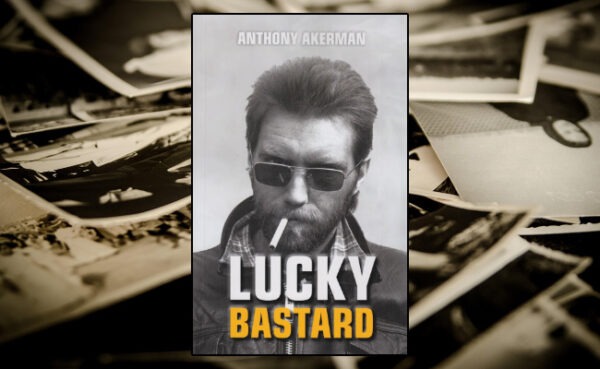
Lucky bastard
Anthony Akerman
Johannesburg, 2024
ISBN 978-0-7961-4915-2
eISBN 978-0-7961-4916-9
...
My academic output has included biography. As a result, I generally avoid biographies and autobiographies like the plague. I am simply too critical of them. This is one of the few books that I have read in full in long sessions over two days and enjoyed every minute of doing so. I even reread some parts more than once.
...
Like Anthony Akerman, I am adopted. Taking contemporary figures, the UN estimates that 260 000 adoptions take place worldwide each year.1 In 2022, about 4,1 million (one fifth) of the 19,7 million children in South Africa were not living with their biological parents. Not all of these have been adopted. In recent years, an average of 1 400 children have been adopted in South Africa each year.2 In the past, largely due to the stigmatisation of children born out of wedlock and other social norms, numbers were higher. I’ve never been particularly interested in researching these figures, but reading Lucky bastard sent me on an internet search. So, we are part of a more exclusive club than I thought.
My issue is, what does being adopted mean? For Akerman, being told that he was adopted “was a seismic event that turned his world upside down”. His parents were not his parents, his sister was not his sister, his grandparents were not his grandparents, he was not related to those whom he had viewed as his relatives, and “he didn’t know where he came from or who he was”. He longed to find people whom he looked like – he didn’t look like those whom he had formerly thought of as his closest kin. The published sources that he cites in his book support the interpretation of the trauma of adoption. My own experience has been completely different.
Unlike Akerman, I was not told that I was adopted when I was ten – my parents always told me that I was. This is nevertheless not the reason for our different experience. I grew up with two other adopted kids, who – nearly 67 years later – are still friends of mine. They were both told from the beginning that they were adopted and each had different mothers and fathers from their adoptive parents. One of the two was as cool with it as I was. The other has never accepted it, went in search of his birth mother, and was disappointed in what he found. This doesn’t make him any less capable a person than his sister – we are all different and react to events differently, however significant or insignificant, traumatic or atraumatic, they are.
I have never found the need to look for other parents – I always had a mother and a father who loved me deeply, cared for me and whom I loved in return (they are both dead now). Yes, I rebelled when I was about 16, but this was not because I was adopted – I was just full of shit at that age and felt the need to exert my autonomy and make my own mistakes. Is this any different from many other 16-year-olds? Ja, my one aunt apparently said to my mother after we had had a screaming and shouting match in her presence: “Jeannie, you need to be careful; you never know what may be hidden there.” My mother reportedly told her in no uncertain terms that I was her son and if my aunt felt otherwise, she had no place in our family. Surprisingly enough, she learned from this and we became very close. Because they were my parents, they were fated to be the people that got to deal with my adolescent tantrums and attempts to find myself. I also knew that whatever I did – even later on when it involved detention under apartheid security legislation – they would be there for me and support me (even if they told me exactly what they thought afterwards). If somebody had appeared and told me they were my birth mother or father (not permissible under the law of closed adoptions at the time), I wouldn’t have chased them away or spurned them, but they would simply have been people whom I would have considered getting to know in the same way that I had learned to know any other strangers. I bear them no ill will and hope that they have had fulfilling and satisfying lives, but I don’t really want or need anything from them. Unlike some of my adopted friends, I felt no need to speculate about my purported backstory; I was (and still am) happy with the one that I have.
I don’t want to make it sound as if there were no issues at all. Like Akerman, I sometimes felt that my parents put up with more crap than they may have, had I not been adopted, just in case I doubted their love. Luckily, though, I was not as wild as Akerman and, bar occasional dramatic events and spectacular stuff-ups, did not give them much to worry about. They also really didn’t need to prove their love for me – although they were very Scottish and not really demonstrative in expressing their feelings, I never doubted it. I remain sorry to this day that I never told my father how much he meant to me. Not wanting to make the same mistake with my mother, in the final month of her life I visited her in Cape Town from Grahamstown. She was suffering from dementia, was bed-ridden and was under care. I don’t quite know why, but I decided that the only way to tell her was by reverting to the Scottish dialect of my youth. (This had been knocked out of me at the private school that they sent me to in order to give me the best chance of success in life.) I kind of stammered out that she and my father could not have been better parents or done more for me. In what at that stage was a rare moment of clarity, she looked me straight in the eye and said in a firm voice, “I’m nae deid yet!”
Although they would have got over it, my parents would have felt threatened (perhaps that they had failed to show love sufficiently) if I had expressed the desire to track down my birth parents. Fortunately for all of us, as I have already alluded to, I had no desire to do so. I find it annoying when people make assumptions about my relationship with my parents, my children, my relatives or others based on the fact of my adoption. Visits to medical specialists usually involve explanations of the reason why I don’t know my family medical history. I got bored of trotting this out very early on in my life. Even this had occasional moments of amusement, though. A plastic surgeon who had set my broken nose skew hadn’t asked the family history questions, and assured my mum and me that my nose was the spitting image of hers! By the way, sometimes I would like to know what my medical history is. For example, both my daughter and I have diabetes. I would like to know if any of our biological ancestors did. I occasionally wonder if I have siblings out there somewhere, but not with enough intensity to attempt to do anything about it. These kinds of frustrations are experienced, to varying degrees, by all adopted people I know of, including Akerman.
This is supposed to be a review of Akerman’s book, not an autobiography. I nevertheless felt it important to present an alternative version to the highly readable one he so strongly portrays. We are all different and our experiences of, and reactions to, similar circumstances can differ widely. That said, this is probably the best book that I have read in a long time. I am a historian and more recently a mediator by profession. My academic output has included biography. As a result, I generally avoid biographies and autobiographies like the plague. I am simply too critical of them. This is one of the few books that I have read in full in long sessions over two days and enjoyed every minute of doing so. I even reread some parts more than once. While it is clear that there is much that I did not agree with, I read it with the kind of fascination that I remember last experiencing with reading the first Harry Potter book just after its release. Not because of its content but because it is so compellingly and interestingly written. I have since recommended it to others, have lent my copy to friends and will be giving it as a gift to a number of people.
Akerman is about a decade older than me, but we have a fair degree in common in our middle-class upbringing, including holidays at Fairy Knowe Hotel, being sent to private schools, having graduated from Rhodes University and having opposed apartheid and other forms of racism. For me, one of the great strengths of the book lies in the skill with which it portrays a slice of life from the 1960s onwards. Utilising his skill as a dramatist, Akerman writes compellingly and with great courage and honesty. Humour, self-reflection, anguish and passion are skilfully woven together with a true gift for storytelling. A carefully chosen range of images complement the text. Without giving any spoilers, I found his account of the ups and downs of his relationship with his birth mother and siblings (once he had traced them) particularly compelling. His birth father’s refusal to acknowledge or develop any kind of relationship with him, while possibly understandable, inspired great pathos in me. His wife sounds wonderful, and I would love to get to know her (and him). I found solace in the fact that he eventually found peace with his adoptive parents. I was deeply moved by this book.
One of the things that really hit home for me was Akerman’s assertion that adopted children do not know their own name. While I have known that I am adopted for as long as I can remember, the thought that I may have been called something else never occurred to me. When I was already a university student, I needed my original matric certificate. I went to the family safe and started rummaging around among the papers inside. Opening a promising-looking A4 envelope, I came across my adoption papers. This was a bit of a shock to the system; I had never given their probable existence any thought before. Reading through them fairly assiduously, I discovered that my (unidentified) birth mother had given me the name Robert. This actually freaked me out to a surprising degree – I cannot imagine the shock that would have ensued if this had been the way that I discovered that I was adopted. I went to my mother and asked her why I wasn’t called Robert anymore. She stated, I think truthfully, that she and my father had discussed keeping the name, but in our family Roberts either soar to great heights or plumb the depths, and they hadn’t wanted to take the risk. For me, this saved the day, and I came to see it as amusing. It obviously deeply upset Mum, though, as a couple of years later I wanted to see the papers again and she told me that she had destroyed them. They were not in the safe when she died, and so I presume that this was also true.
Anthony, you have done us all a favour in writing this book, and given us much to think about and discuss. Thank you, it’s great.
Notes:
1 Genevive Serra, “Adoption – not as simple as placing a child in parent’s arms”, Weekend Argus, https://www.iol.co.za/weekend-argus/news/adoption-not-as-simple-as-placing-a-child-in-parents-arms-70fa0140-dada-4693-b13e-a393cf7352c5, accessed 6 February 2025.
2 Samantha Herbst, “How do we humanise a dehumanising system? Adoption NPO on advocating for family preservation”, News24 Life, 25 July 2022, https://www.news24.com/life/archive/how-do-we-humanise-a-dehumanising-system-adoption-npo-on-advocating-for-family-preservation-20220725, accessed 6 February 2025.