

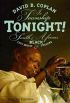
 Title: In township tonight! Three centuries of South African black city music and theatre (Second Edition, 2007)
Publisher: Jacana
ISBN: 9780226115672
Pages: 455
Masakanda and marabi, isicathulo and isicathamiya, ndhlamu and ndunduma, famo and focho, tsaba-tsaba and patha patha - the glossary of In Township Tonight! – gives a sense of the countless dance steps, guitar riffs and vocal styles which are lovingly detailed in David Coplan's history of South African performance culture. First published by Ravan Press in 1985, the work was a landmark, "appearing in a desert of writing about South African music but rapidly becoming the most quoted source in the literature". Over 20 years later we have a second edition, written in the voice of the same but different observer today, "reinstructing both his readers and himself from the vantage point of the future, at that time unimagined, but now demanding its own narration".
So what has changed? The cover for a start: rather than a stark black-and-white photograph from the grim 1980s, we see a thickset Hugh Masakela blowing at full tilt into his flugelhorn at a concert celebrating ten years of freedom. It sets the tone for an energetic, deeply engaged and sometimes scatty account of the whole spectrum of South African popular culture, one which begins with Khoisan resonating gourds, ends with kwaito, ranges all over the place, but, like a good jazz solo, still manages to keep the audience engaged through fluent command of its material and some deep, anchoring logic.
As the subtitle tells us, that underlying key signature is urbanisation. Alert as Coplan is to the perennial link between music and migrancy, his account of the complex cultural back-and-forth between the town and countryside over three centuries is always sophisticated, but for our purposes well summarised by Bra Hugh:
The only thing you could relate to from a rural and traditional life was music, that was your way into like industrial life, you know.
South Africa's urban agglomerations are envisioned as the site of multiple, perpetual fusion, a crucible where (in James Clifford's words) "the pure forms go crazy", and in a way which always gave the lie to apartheid's attempt at cultural balkanisation. Ancient African root progressions met modern rhythm sections and the contours of folk melody were superimposed over propulsive city vamps. New hybrids evolved constantly from the meeting of local performance practice (which itself had already absorbed the mission harmonies of Protestant hymnbooks) with wave after wave of musical forms arriving from America: blackface minstrelsy of the 1860s, vaudeville acts and spirituals in the late 19th century, big band swing, bebop and hip hop in the 20th.
Beginning with the slave orchestras and ghommaliedjies of the Cape, Coplan goes on to describe how acts like Orpheus McAdoo's Virginia Jubilee Singers inspired the formation of the performing troupes which still exist today. The New Year minstrels joined an already complex tradition of intertwined Malay, Dutch and English folk idioms in a city which Abdullah Ibrahim has compared to New Orleans in its mix of slaves and Creoles, street funerals and carnivals. From there we shift north to track the evolving music of choral groups, mission brass bands and mineworkers as they moved between eDiamine and eGoli, the cities of diamonds and gold, during South Africa’s breakneck industrial revolution. Via Sotho accordionists, Zulu strolling guitarists and Xhosa pianists Coplan examines the emergence of a distinctively modern urban sound by 1920. He shows how the skokiaan and slumyard-fuelled vamps of marabi exist as a kind of prehistory to mbaqanga (the African jazz which came of age in Sophiatown's Fabulous 1950s) in much the same way as the delta blues served as an aquifer of the American tradition.
And that's just the first chapter.
Looking back on his original work after half a lifetime, the author writes that he was "struck not only by the perhaps forgivable naivete and less forgivable arrogance, but also by the passion for discovery, documentation, and celebration in the young American ethnomusicologist who wrote it". With the double perspective permitted by this reissue, we still have that same voice narrating a previously neglected history with great excitement and detail, but now overlaid by a survey of all the work that has been done on South African popular music since.
Although Coplan writes that the field still seems in its infancy, In Township Tonight! has been extensively revised to take account of the handful of fine studies that have appeared since 1985: Christopher Ballantine's Marabi Nights (1993), which comes with its own cassette of scratchy archival recordings of The Merry Blackbirds, The Darktown Strutters and others; Basil Breakey's photographic portrait of the 1970s Cape jazz scene in Beyond the Blues (1997); and Gwen Ansell's Soweto Blues (2005), with its wealth of interview material drawn from the radio documentary Ubuyile / Jazz Coming Home. Always generous in acknowledging his new sources or pointing one in the direction of further reading, Coplan recommends Veit Erlmann's Nightsong (1996), an account of isicathamiya and ingoma busuku, no less than three times.
Since the first edition, Coplan has also immersed himself in a different but related strain of performance culture, one which more than any other has tried to comprehend a traumatic history of migrancy, mining and rapid urbanisation. His 1994 account of the "word music" of South Africa’s Basotho migrants, In the Time of Cannibals, is the product of decades of research and recording in Lesotho, evidently the place he went to for a different angle on the popular forms that bridge rural and urban worlds once he was prohibited from entering the apartheid state between 1977 and 1991. For generations of labourers leaving home, these "inveterate traveller songs" have been a way "to retain continuity between a country boyhood spent a mile high under a mountain sun and a mine manhood spent a mile deep under a mountain of rock". Several performances recorded and translated by Coplan appear in this latest edition, displaying “a play of tropes so protean and inventive, so layered with history, so allusive that no ethnography of Basotho custom, no history of colonial invasion, no sociology of migrant labour, no political treatise on underdevelopment, no ‘oral literary’ analysis could capture them".
In Township Tonight! is written with a great respect for this kind of verbal agility, which means that although some chewy analytical terms imported from the University of Chicago do slip through the net – "embeddedness", "syncretic", "inscribed" – for the most part we are treated to a grounded, highly readable prose which averts what could be the uncomfortable spectacle of an academic addressing popular forms inherently allergic to classification: “If you gotta ask, you’ll never know,” in Louis Armstrong’s apocryphal words. Coplan makes short work of terms like "traditional" and "indigenous", particularly since such concepts were debased by the apartheid government itself. Performances or works are African "not because they display a preponderance of 'indigenous' elements, but because Africans have chosen to perform them".
The ease with which Coplan negotiates the world of black city music is explained when one realises that he was not only an observer but also a participant in many of the events he writes about. One photograph shows the author with a browbeaten Kippie Moeketsi in Soweto 1976; in another he performs as assistant percussionist with Malombo, the highly respected "Afro-expressionist duo" of Philip Thabane and Gabriel Thobejane, at the Market Cafe in 1977. The fierce dynamism and sense of multiracial possibility that he felt during these concerts, he tells us, made them some of the most memorable experiences of his life.
"Word music" is a good description for Coplan's approach as a whole: his writing deftly preserves some of the excitement of performance, smuggling it into the scholarly paragraphs by paying particular attention to the etymologies and linguistic energy surrounding all those terms listed in the glossary. The derivation of marabi is unclear - perhaps it comes from the Sotho ho raba raba ("to fly around") after the wild shebeen dancing, or maybe from the boisterous Pretoria location of Marabastad. Some suggest that it might even have something to do with the train junctions in west downtown Johannesburg called morabarabeng after the Sotho game of draughts, whose board features many crossing lines. As Coplan remarks, it is "an apt association for a music whose creation involved so many crisscrossing cultural influences, forms and styles". Among them were the Zulu idiom of ndunduma (named after the mine dumps of Johannesburg) and the Xhosa ragtime tula n'divile, taken from the words of a popular song which seemed to encapsulate an archetypal dialogue between urban and rural: "You keep quiet - I'll tell you how it is." The continuous overlapping of musical styles and more general forms of social performance is such that one musician explains marabi as a kind of musical mensetaal, the "people's tongue", or "clever language", later known as tsotsitaal, which now finds an equivalent in the contemporary urban slang of isicamtho.
Always alert to the interesting things that happen when music passes into language, the author quotes with relish the censorious criticism from middle-class black journalists of the 1930s "jazzing craze," the "syncopating, brothel-born, war-fattened and noise-drunk" madness which (in the words RRR Dhlomo) "has its victims in its octopus like grasp". And ever the champion of the popular, Coplan shows a distinct lack of indignation when describing the notorious famo dances of Sotho women (from ho re famo meaning to open nostrils, to raise garments, displaying the genitals) who performed for city-hardened migrants known as sebono morao ("buttocks behind") - those who intend never to return home and thus "show only their ass to Lesotho".
Turning to the more restrained and religious tradition of Zulu a cappella, Coplan describes how Joseph Shabalala chose the name Ladysmith Black Mambazo because he imagined their vocal phrasing as the sharp attack of an axe (imbazo). The stealthy, stalking approach evoked by the term isicathamiya is explained by the singers' need to keep the torso rigid and project their harmonies while the legs go through the motions of finely choreographed istep. This delicate vocal style has also gone by other names, however, including mbube after Solomon Linda's hit of 1939. Here an entire, international musical trajectory (or perhaps, tragicomedy) is contained in a single word: the deep male chant of uyimbube was misheard by Pete Seeger as wimoweh and transformed into one of the world's most famous melodies.
In the later, entirely new parts of this edition, Coplan attempts to track new directions in music and theatre since the country emerged from its cultural isolation "like a miner from a shaft, blinking in the sun". It is to his credit that he does this without once raising that tired and patronising question about how African artists coped once their prime subject - oppression and resistance - was removed. By contrast, the chapter "Jazz and other (con)fusions since 1990" evokes the scene in clubs like Johannesburg's Bassline or Cape gatherings like the North Sea Jazz Festival to show how, more than any other form, it was music which provided a soundtrack to celebration and a release of long repressed cultural energies.
Yet as we approach the present, the narrative inevitably becomes more piecemeal, at times descending into a kind of catalogue which reads more like album liner notes than book length analysis. Perhaps in the age of studio production and electronic loops there is just less to discuss, yet Coplan strides bravely into the cultural politics of the mzansi generation for a discussion amid the pounding bass lines of kwaito, the all-conquering musical hybrid formed when house music arrived here and was promptly slowed right down and overlaid with samples of current slang.
He concedes that this genre "has attracted few admirers outside its youthful fan base", but as current Chair of the Department of Anthropology at the University of the Witwatersrand, he is able to explain that "much in kwaito and youth culture in general which appears simply to be about sex is really about the high-pressure, productive renegotiations surrounding gender relations among the post-apartheid urban generation."
Determined not to be on the side of stuffy elitists, he places current debates about slavish imitation of America put in the context of two centuries of cultural borrowing and recombination, treats us to an exegesis of the hit "Fohloza" (the sound supposedly made "when the rolls of fat along an overly voluptuous woman’s flanks rubbed together"), and pays more attention to the likes of Skwatta Kamp than the late jazz virtuoso Moses Taiwa Molelekwa. Yet despite exploring the most avant garde and otherworldly realms, the latter did collaborate with kwaito producers TKZee, and for Coplan it is further evidence of the sense in which all black music in South Africa is popular music:
[C]ontemporary African cultures do not recognize the problematic conceptual distinctions between folk, popular, classical, jazz or "world" music, unnaturally naturalised in the record store terminology of the West.
If "word music" is a source of enduring fascination in this book, then "world music", one senses, is something of a dirty phrase, perhaps because it often denotes a bland international sound where hybrids are sometimes celebrated for their own sake, whether or not they happen to produce qualitatively new forms. In one of the most interesting additions, the Zulu guitar style masakanda (from the Afrikaans musikant, "musician") is traced from early 20th-century ukuvamba (vamping) to the more intricate style of ukupika (picking), through the "crossover" phenomenon of Johnny Clegg and Sipho Mchunu to the present-day popularity of artists like Busi Mhlongo and Phuzekhemisi. The close relation between masakanda and an indigenous Zuluness is unique among stars of popular music in South Africa, Coplan tells us, and it explains why this sound is so different from the familiar Latin-influenced "worldbeat" of Central and West Africa. Yet at the same time it is a use of tradition which would have provoked nightmares in the apartheid controllers of Radio Bantu:
Electric guitars, basses and keyboards, five- and six-tone scales, and staggered linear melodic polyphonies; shiny drum kits thumping out rhythms of centuries-old stamping dances; faux leopard tails, antelope skin or string skirts with sneakers and spandex underwear, miraculously balanced beaded headdresses and Kangol caps worn backwards; rhythmically bouncing breasts; antiphonal lead vocalists and a chorus of backup singers; synchronised hip swinging and stealthy Afro-Christian step-dancing; all are part of Zulu traditional popular music.
Rather than some hangover from a rural past, in other words, the choices made by artists with regard to so-called "traditional" styles are playful and knowing ones; their performances show that "there is no contradiction between routes and roots, and that a community's popular culture is not only a movable feast but also home cooking."
Coplan obviously developed a real taste for this musical fare back in the 1970s, and has been exploring its essential ingredients ever since: the melody lines which stay close to the human voice, the rocking ostinati and foot-stamping beats, the staggered entries, which create a sense of perpetual motion, the harmonic DNA of marabi, which gives African jazz its warm, reverent vibe.
In Township Tonight! remains the most comprehensive and lively account of black city music, balancing a love of this infectious sound with an awareness that many of its most talented purveyors had awful lives, and that even today, music making remains a precarious mode of existence. "What's the difference between a jazz musician and a pizza?" asks one of the interviewees in the words of the old joke: "A pizza can feed a family." Or as the Zulu proverb has it, Isigingc' asakh' umuzi - “A guitar does not build a homestead."