

Healers, helpers and Hospitals – A History of Military Medicine in the Anglo-Boer War Volumes I and Volume II
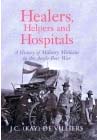 Author: JC (Kay) de Villiers
ISBN: 9781869192777
Publication year: 2009
Pages: 772 (Volume I) and 324 (Volume II)
Publishers: Protea Book House, Pretoria
The Anglo-Boer War features widely in the annals of military history. British forces for three years from 1899 until 1902 waged a so-called “little war”, deploying 450 000 men against the Boer forces of 87 000. Of the 22 000 British deaths, 7 582 were as a result of wounds sustained in the fighting and the balance from accidents and disease.
The way armies took care of their soldiers in the Anglo-Boer War is a watershed in military medical history. De Villiers's opus magnum, Healers, helpers and Hospitals – A History of Military Medicine in the Anglo-Boer War, is the inaugural work on the subject of military medicine as practised during the war and is now the definitive work by an author who enjoys international acclaim in the field of medicine. Included in the publication are 64 photographs of the Anglo-Boer War never before published.
Emeritus Professor JC (Kay) de Villiers, former holder of the Helen and Morris Mauerberger Chair of Neurosurgery at the University of Cape Town, recipient of many awards and member of several societies around the world, as visiting professor to several academic departments, both locally and abroad, and as the recipient of two doctorates, has over the years displayed a great deal of interest in historical matters, not least as founder of the Cape Medical Museum.
It should be noted that medical problems experienced in the concentration camps during the war do not feature in this book since they do not fall within the scope and ambit of military medicine at the time of the Anglo-Boer War. The medical aspects of the Anglo-Boer War, however, are of enormous importance, as the author explains in the opening chapter. Even though there were distinct deficiencies in the British medical services this far outweighed the practically non-existent military medical organisation of the Boers. For this reason Boer medical services relied heavily on the assistance and aid from foreign ambulances.
Severe challenges to medical staff operating in conditions of extreme climate, across a harsh terrain, with little or no running water, in glaring sunlight or in nigh totally dark conditions, all had to be overcome by the medical practitioners at the time of the Anglo-Boer Boer War. The elements often proved more challenging than the medical case at hand – sandstorms, windstorms and especially flies, so much so that "if a piece of bowel came out it was covered with flies … you cannot keep the South African fly away."
Transport served as the major problem, especially in the face of such large distances to be covered. The medical nightmare was the horse-, mule- and ox-drawn ambulances, across the uneven veld, through riverbeds or rivers in spate, trying desperately to get the wounded in time to railway transport, to the closest town's hospital. The claims laid on draught animals in war, especially if it was a guerrilla war as the Anglo-Boer War later became, were high and requisitioning even from military medical practice was by no means a rarity. Other complex problems arising out of difficulties with the transport networks in the war are interesting to note. Apart from being able to read the explanations of military medicine in such an interesting way in this book, it is unlikely that the lay person would have had access to the information had it not been for its publication. In this sense alone the book's appearance is a remarkable accomplishment. Due to the nature of its outlay, so wonderfully illustrated and discussing topic by topic, the reader has the choice of reading lengthy or shorter pieces, as his or her time permits.
Insights into the hardship and loss of life in the war incurred by civilians and combatants alike and the absolute necessity of hygiene in the face of outbreaks of fatal diseases, not omitting the significance of lessons about field hospitals and bearer companies to be learnt for subsequent wars, are no doubt as significant as they are rare. The book would not be complete were it not for the tribute to the men and women "from both sides who, willingly or even reluctantly, attempted to honour the tenets of the healing professions". For the reader to appreciate the extent to which the research for the book was conducted, for the writing of the first seven pages which make up the first chapter, no fewer than seventeen works were consulted, of which twelve predate the middle of the previous century, and out of the twelve, eleven are pre-1903. So impeccable is the research and yet the reading is uncomplicated and both hugely informative and enjoyable.
Chapter 2 discusses the origins both internationally and in Britain of the Red Cross Organisations, with special interest for the war in South Africa. The complications with these organisations, for instance that "British military authorities refused to allow ambulances from neutral countries to pass through their lines to serve the Boers", is a case in point. To research eleven pages dealing with the chapter entitled "The Geneva Convention, the British Red Cross Society and war in South Africa", there are 53 endnotes, indicating, as already mentioned but certainly worth stressing, the phenomenal depth of research; yet, as said, the reading is enjoyable as the writing is not cumbersome, and certainly not belaboured in any way. The vast amount of primary research testifies to the point made earlier that the work is an inaugural one in the field of military medicine at the time of the Anglo-Boer War.
Chapter 3 follows with an account of the Red Cross organisations in the Boer Republics. It was indeed fortunate that the South African Republic (later to be called the Transvaal and now Gauteng) and the Orange Free State (now the Free State) accepted offers of help from the Red Cross Society of the Netherlands "about assistance in the management of the sick and wounded in the event of war being declared against the two Republics".
The Information Bureau (Identification Department) of the Transvaal Red Cross serves as examples. Identifying combatants in the wake of a large number of casualties is an essential requirement and "[M]ore likely than not", writes De Villiers, "it was the most practical humanitarian innovation to emerge from the war in South Africa." The disaster of the Battle of Elandslaagte fought in October 1899 amid chaotic circumstances and possessing scant knowledge of the wounded, killed, missing or captured, precipitated Prof GAF Molengraaf, from the South African Republic, to devise a system for providing dependable information which, according to De Villiers, thus fulfilled "a function far beyond its original intent".
Chapter 6 discusses the medical care of British prisoners of war in the South African Republic – especially in view of the Anglo-Boer War as the first “modern” armed conflict on the African continent. Whilst the British had experience of the management of prisoners of war, the South African Republic was clearly unprepared for the sudden influx of the large numbers of prisoners that arrived in Pretoria already at an early stage of the war. So unprepared were the military authorities that 1 500 prisoners were held at the racecourse in Pretoria.
Consequently, the Racecourse Hospital was set up there and conditions, at first unsatisfactory, gradually ameliorated as further interest accrued in the matter. Around 50 prisoners of war for some unknown reason were incarcerated in the civilian prison, evoking widespread criticism.
Chapter 7 deals with the transgressions of the Geneva Convention and puts into context the status of the Articles contained in the Convention of 1864, although these were redrafted four years later. The fact remains that whilst the Principles of the Convention were widely accepted, in the Anglo-Boer War, as in subsequent wars, propagandists could use situations to their advantage, by twisting the facts, against the enemy. De Villiers gives several accounts in both the British and Boer camps of how ignorance of the Convention, even on the part of responsible officers, caused the failure of its application. The case of the misuse of Red Cross insignia and the flag is discussed. Combatants posing under Red Cross insignia were known to discard them, and take up arms. Equally contentious was the carrying of the arms of the wounded by the ambulances, but these issues were clearly set out in the Articles of the Convention. The issues, however, remain contentious.
A number of ensuing chapters discuss matters such as medical organisation and services. This is a wide-ranging topic and stretches across the text as a whole, for instance the Royal Army Medical Corps (RAMC); the role of Civil Surgeons; Colonial Medical Services; Militia Medical Services; Nursing Services; Orderlies; and the St John Ambulance Brigade. Needless to say, this is a vast field to cover, but such detail so meticulously researched brings such a rich dimension to this history. Of particular interest must be the sensitive and complex issue of confusing sentiment and divided loyalty, as in the British Cape Colony, where Afrikaners had mixed loyalties and sympathies. But the chapter is rich in interesting detail, and brings home just how wide was the wave of patriotism, "much more astonishing than the home variety" according to Thomas Packenham.
The inaugural history of the Royal Army Medical Corps (RAMC) is explained and the history behind its formation is fascinating. An unhappy relationship between the War Office and the Director-General of the RAMC, and the scope and ambit of the South African War, led to the widely acknowledged fact that there were shortages of medical officers. This influenced General Buller's military strategy and "he had to reorganize his entire force when he arrived in Cape Town in October 1899". As the war progressed in South Africa the arena of war greatly expanded and this required exceptional commitment and dedication from the RAMC, which sometimes found itself in an invidious position, such as the "hospital scandal" (p 157).
The section "The Doctor's Dilemma in a Gentleman's War" explains how medical practitioners could find themselves torn between personal conviction and military duty, no less sensitive an issue being that of the concentration camps. Twenty-one officers of the RAMC, two warrant officers and 291 non-commissioned officers and men lost their lives in the Anglo-Boer War. Five of the seven Victoria Cross medals awarded to medical officers during the Anglo-Boer War were earned by RAMC officers; King Edward VII unveiled a memorial to the memory of the fallen RAMC members at Aldershot in 1905; and it is said "Many RAMC officers who gained their spurs in the war in South Africa rose to great eminence in the Medical Services of the British army in World War I."
Whilst the doctors are the healers, they cannot possibly function without the helpers, nurses and orderlies. The legacy of Florence Nightingale and her arduous work in the field rank high among the many reasons why the war in South Africa attracted so many women into the vocation. The work for nurses was demanding and by no means easy. Whilst nursing sisters came from the colonies there was the arrival of hundreds of women to nurse the sick, and these women were without training. Frederick Treves wrote: "So far as the sick were concerned, there were two plagues in South Africa – the plague of flies and the plague of women."
The chapter dealing with the British privately donated hospitals tells an interesting story, aptly captured in the words of Arthur Canon Doyle: "I do not think that any men have ever expended money better than those who fitted out the private hospitals. The officers of the Army Medical Corps freely admit that they do not know what they would have done without their aid." The hospitals, nine in number, arrived just in time for the typhoid epidemic, and their mobility was their greatest feature, being able to travel where their services were needed more than the larger hospitals could. The story of the British hospitals in Cape Town is interesting and the history behind them fascinating – especially those such as the No 3 General Hospital on Sandown Estate, comprising 73 double marquees. The hospital on the Green Point Common treated minor illnesses, whilst patients with more serious ailments were sent the Woodstock Military Hospital. Then there were hospitals which served the purposes of convalescing homes – disputably called hospitals, or rather "The 'Hospitals' that were not."
Chapters 16–19 cover the medical services provided in the central and eastern Cape Colony from De Aar to Modder River (including graphic details of the battles of Modder River and Magersfontein, 1899); in and around besieged Kimberley (with details of the siege); and from Paardenberg to Pretoria. Magersfontein required the British to approach the Boer position over barren land and therefore it required British soldiers to lie for hours on end in the fierce African sun before they could be collected. A letter ten years after Magersfontein revealed the seriousness of the situation: “The day was very hot and the chief sufferings of the wounded were from want of water which in most cases it was impossible to relieve.” But what greatly favoured the wounded British was the propinquity of the field hospitals to the railway lines so the wounded could get attention sooner rather than later.
Because of the anticipation of hostilities in Natal, more preparation of medical services took place there than in other areas, hence the following comment: "Of all the medical arrangements during the war, those during Sir Redvers Buller's campaign in Natal presented the most satisfactory features." Hospital ships provided convalescent cabins; hospital trains were used, not only for nursing but also as ambulances (this topic is dealt with further in Chapter 21, "Transport of British sick and wounded"); there were hospitals in Pietermaritzburg, Dundee, Ladysmith, Intombi Camp, Mooi River, Estcourt, Newcastle and Howick, among others. These hospitals were active at the time of the beginning of hostilities in 1899, but following the Boer withdrawal from Natal early in 1900, they became less involved in the active warfare to the degree that the Cape Colony was. They did, however, play an important role in relieving the overflow of patients from the Transvaal, and served as the area for invaliding. Once recovered, many from here went back into the field, whilst others were transferred home via Durban.
More or less halfway through Volume I there are 56 pages of crystal-clear, historical photographs in sepia, with captions and descriptions. The first of the photographs is aptly of Lord Wantage of Lockinge VC, KCB (1832–1901), first chairman of the British Red Cross Society; the photographs range from significant persons through to hospitals and camps, maps, and a photograph of MK Gandhi, Attorney, taken with members of his office staff in Johannesburg. Some of the photographs, such as the stretcher-bearers on the veld, are of scenes in action. There is a photograph of a wounded soldier from the Battle of Elandslaagte being landed at Cape Town. An interesting photograph shows the ambulance cart given by the citizens of Carcassonne to the Boers. There are several photographs of foreign medical persons, from Sweden, Russia and Holland. The big Dutch Reformed Church in Jacobsdal was used as a typhoid hospital by the First German Red Cross Ambulance, and there is a fascinating shot of the vast interior of this building.
The Boer military medical organisation is in contrast to that of the British. Most of the doctors in the Republics were foreigners since there was no formal training in medical education in Southern Africa at that time. Whilst the ZAR (Transvaal) kept a register of certified practitioners, the OFS ( Orange Free State) allowed so-called "practitioners" to ply their trade. For instance, at the time of the Boer War there were about 500 medical practitioners of British extraction practising in Southern Africa, of whom 87 were in the ZAR and 42 in the OFS. Qualified nurses in the Republics were very scarce. Apart from well-equipped hospitals in Pretoria and Johannesburg, the other institutions scattered across the territory were small. Only after the Jameson Raid (1895) was the Transvaal Red Cross (TRK) established – it was clear at the time of the Raid that the ZAR Government had been unable to deal effectively with the wounded in any military encounter. There is not much praise for the work that it did, for several reasons, mainly as a result of poor leadership and organisation. But the conditions under which the Boer Republics had to operate were harsh, difficult and cumbersome, as one reads in this chapter, and it does not seem that matters improved in any significant way: "During the guerilla phase of the war, only the scattered remnants of a medical service remained due to the ingenuity, self-reliance and tenacity of the few medical practitioners who remained in the field and provided medical services with minimal means at their disposal." This was a far cry from the organisation of the British medical organisation.
There were a great number of Russians, Germans, French, Americans, Scandinavians and other foreigners in the Transvaal, known as uitlanders, and many of them were in sympathy with the Boer cause. A significant amount of assistance was given to the Boers, for instance in the form of the French Hospital in Johannesburg, the Jewish Ambulance Corps of Johannesburg, and the Scandinavian Ambulance service, to name some. One of the most significant moments in the ZAR was the assistance by the Nederlandsche Zuid-Afrikaansche Spoorwegmaatschappij (NZASM) to the Boer medical services at the time. The account of the NZASM in South Africa is a big story, and the effects of its involvement are profound, as explained in Chapter 24. Circumstances alter the direction of wars, and for the NZASM it was no exception. As the British war efforts escalated, and with the capitulation of Pretoria in 1900, the work of the NZASM came to an end, and sadly, all properties were seized and transferred to the Imperial Military Railways.
Always difficult in any war is the question of loyalties, allegiance and sympathies, which for citizens of the Cape Colony, essentially British, was problematic if they wanted to show solidarity with their relatives in the ZAR and OFS. Permission from the governor by Afrikaner doctors from the Cape Colony, from Sir Alfred Milner, was obtained and several of them were consequently permitted to supply medical services across the border to their blood brothers. Further assistance to the Republics came from sympathisers through the perception that they (the Republics) were the underdogs. The Boer authorities considered ways of exploiting the situation to redress the deficiencies in military aid for the Boers. Their efforts were certainly not in vain, as contributions came from as far afield as the German and Dutch Red Cross Societies, France and the United States of America. Matters did not always go according to plan, though, and many of these foreigners providing aid and working with the Boers sometimes were very critical of the lack of discipline.
As the Boers realised their efforts against the conventional lines that the British had drawn up would be hard to match, their tactics changed to guerrilla warfare and this new wave of fighting brought for them different requirements in the field of medical aid and services. There are three fascinating chapters that deal with the phase of the war before the move to guerrilla fighting, and we read here especially of the humanitarian aid contributed by the Dutch, first in the form of the First Dutch Red Cross Ambulance, followed by the Second, Third and Fourth. The activities of these ambulances extended into the OFS, and often they could go only so far and the rest of the journey was by ox-wagon, such as at Smith's Crossing. Reading about their peregrinations is fascinating, including temporary arrests of the ambulances by the British and the ceaseless duties carried out by the indomitable Dr Van der Goot. Extremely interesting accounts of several of the Dutch doctors accompanying the commandos is provided for the reader and s/he will see the extent to which these doctors acquitted themselves under harsh and trying conditions – conditions with which the Boers themselves had to contend.
Further interesting chapters continue: "The ambulance from the Dutch East Indies" (colonial sympathisers); "German Red Cross Ambulances" (only for the period 1899–1900 and especially in the OFS and the most sophisticated of the foreign ambulances and experienced in surgery); "The Russian medical contribution to the war" ("a gift in the true spirit of the Geneva Convention"); "The Swiss Red Cross Ambulance" (initially offering their services to both sides, although the British did not require their assistance); "The Sivewright Ambulance" alias "The Afrikaner Ambulance" (a fascinating story of medical assistance to the Boers wounded in the Cape Colony, provided by South African medical students who came to the assistance of their Boer "brothers" from abroad, and about which information, according to De Villiers, "is lacking"); "The Belgian Section of the Belgian-German Ambulance" (which emanated from the Algemeen Nederlandsche Verbond (ANV) formed in Brussels in 1895, at the time of the Jameson Raid and confirmed the vehement opposition to British imperialism by the Flemish); "The German Section of the Belgian-German Ambulance" (which showed solidarity with the Boers and strong anti-British sentiment); "The Chicago Irish-American Ambulance and other Irish humanitarian aid" (not so much pro-Boer as anti-British).
Volume I ends with a discussion of Boer medical organisation on the Natal, western and southern fronts (Chapters 38–40), followed by a discussion of medical arrangements in the western Transvaal, Mafeking, the south-eastern, eastern and northern Transvaal and in the north-western Cape Colony as far as Windhoek (Chapters 41 et seq). The great difficulties with which medical activities were conducted in these areas, and the difficult conditions under which medical services had to be administered, are thoroughly explained. There is a strong blend in these chapters of valuable biographical information, explanations of important war strategy, insightful accounts by the author on a range of interesting topics, and finally, thorough research into the great contributions of the three H's: healers, helpers and hospitals.
Whereas the first volume recounts the history behind the healers, helpers and hospitals, the second volume is mostly concerned with the clinical aspects of military medical care. Amongst other topics, themes and areas, it examines the effect of new weapons and how the refinement of the "gunsmith's creativity" changed the way wounds previously inflicted were now dealt with. This meant a new approach to surgical practice. The Boer War was thus the “golden age” of bacteriology. It changed the role of hospitals in South Africa. There was a new demand for managing wounds caused by bullets and shells (such as wounds of the nervous system and the practice of lifesaving amputations). Surgery management of wounds caused by high-velocity missiles in the period 1899–1902 is another important feature of this section of the book, which contains no fewer than 187 references. Anaesthetics used during the war forms an important chapter, and the point made is that during the time of the Anglo-Boer War the trends followed there were as advanced as those to be found in civilian practice. The problem with typhoid and other infective disorders is discussed in Chapter 8 of Volume II, especially the effects of measles, malaria and Malta fever. There is a fascinating account of some remarkable wounds: the death of Commandant Joubert, the story of the blinded Captain Towse VC and others are tear-jerking (even Queen Victoria did not seem to hold back her tears!).
The Anglo-Boer War, through its ferocious methods, brought on severe trauma such as functional and psychiatric disorders explained in context. The esoteric field of traditional remedies used by the burghers on commando, such as cleaning wounds with maggots, might make the reader squeamish … but the remedy must have served as a suitable replacement for the more conventional! With the shortage of doctors on the Boer side, there were a number of informal “doctors”, a list of which appears on pp 205–14; and according to De Villiers there must certainly have been those who applied their skills to the best of their ability, "albeit in obscurity".
This great work by JC (Kay) de Villiers ends with a full bibliography – of secondary sources, electronic sources (a minimum); twelve university theses; official reports; published and unpublished documents; official records; and three important Blue Books. Volume II has twelve pages of photographs and contains the Index, which takes up 22 pages! Biographical details run from pp 217–79 and this in itself constitutes a valuable monograph. As mentioned elsewhere in this review, the endnotes are staggering, showing the meticulous research, mostly from primary resources. The double volume comes in a box and is suitable as a gift. Apart from the fact that it serves as research material, it is also an instant collector's item and undoubtedly instant Boer War Africana.
But above all, it does what no other writing on the Boer War has ever yet done: it is immaculate research in the field of medical military history of the period. Books like these do not just appear. The time-honoured tradition of research, passion for the subject, expertise knowledge, inherent wisdom and deep understanding, all together, make it happen.
Protea Book House must be highly commended for the publication. De Villiers will forever receive great acclaim for this definitive work on a subject that is great as it is universal.