

...
I started learning something essential but sobering: This is publishing. The mundane, repetitive and invisible. The “decidedly unsexy”, Jessica calls it.
...
When my South African community hears that I work in publishing for an American press, they tend to conjure a very specific image: the “bookish glamour” version of the job. Wine-fuelled launches. Neat stacks of annotated manuscripts. Tote bags. Sunlit offices lined with books. For example, just the other day, I was watching The proposal with my family. Sandra Bullock appeared on screen in stilettos and tight pencil skirt, Starbucks in hand, talking to one of her authors while dodging New York City crowds. My dad lit up. “That’s you, Tayles!” he said, pointing at the screen, proud. I winced. At that exact moment, she was trying to convince an author to go on The Oprah Winfrey Show.
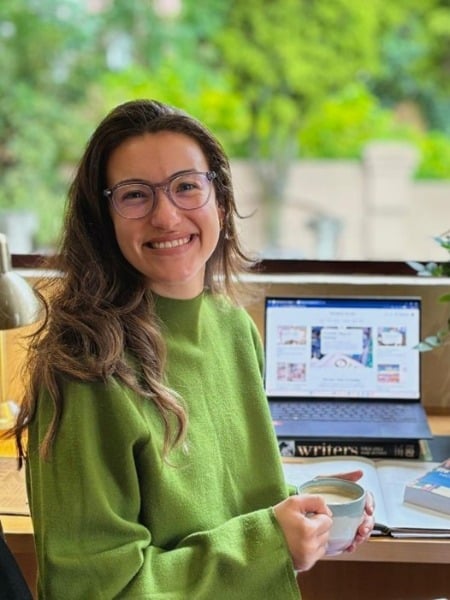
I didn’t know whether to laugh or explain that my big career milestone so far has been sending an email that actually gets a reply. Or that I’m not a publisher. I don’t work in a glass skyscraper in New York City. I don’t have a corner office. I don’t belong to a Big Five house. I don’t drink Starbucks. And I haven’t (yet) gotten anyone on Oprah. What I do have is a big desk in our old gym-turned-art-studio. The windows open onto a garden, not a skyline. There’s a monitor for spreadsheets, shelves lined with sample copies from our small press, a full inbox, and a plant I try not to forget to water. I work from home, in South Africa, for an independent press based in El Paso, Texas. And right now, I’m the publicist for 30 authors.
Starting in publishing quickly dismantled that Hollywood image. The work is far more layered.
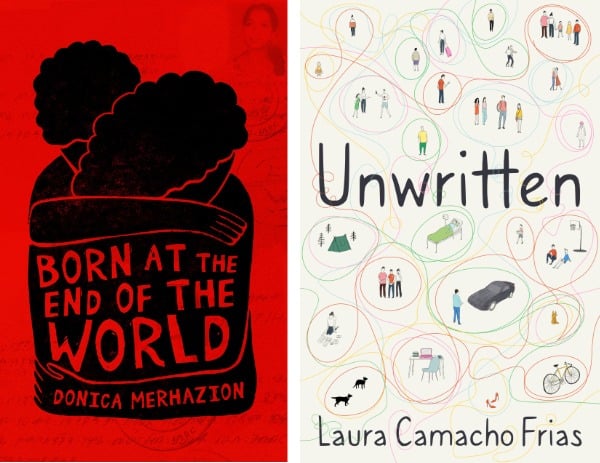
One of my first projects as a first-time publicist was reaching out to bookstores across the Netherlands and the US for two authors with upcoming releases (Unwritten by Laura Camacho Frias and Born at the end of the world by Donica Merhazion). Before I began, my boss, Jessica Powers, offered a gentle warning: “We don’t typically encourage book tours,” she said. “They’re expensive, time-consuming and don’t lead to many sales.”
I nodded, but inwardly hesitated. If not book tours, then what? I had imagined authors travelling from city to city, speaking to packed rooms and building visible momentum. Instead, I was given a list: 40-plus contacts, most of whom probably receive hundreds of emails a day.
So, I wrote. I drafted careful messages, personalised each one, followed up and then followed up again. And after three months, three replies came back. Two were rejections. Oprah was fast becoming a pipe dream. But somewhere in that stretch of sending and waiting (and waiting again), I started learning something essential but sobering: This is publishing. The mundane, repetitive and invisible. The “decidedly unsexy”, Jessica calls it. But also, the relational – at a distance.
I work as a full-time publicist at Catalyst Press, an independent press known for publishing African writers and African-based stories. Through its different imprints, the list reaches far beyond that, bringing together authors from many parts of the world. So, my days move across continents: emails to New York, Zoom calls with El Paso, shared documents with Cape Town – while I remain in one place.
...
The work is relational, but those relationships live online, stretched across time zones rather than gathered in one room.
...
Most of the people I work with, I may never meet in person. Book launches happen over email announcements and Zoom calls, rather than in crowded bookstores. The work is relational, but those relationships live online, stretched across time zones rather than gathered in one room. I feel that distance most clearly in the mornings. I sit at my desk in the sun, sending emails to booksellers, librarians, authors and event coordinators, knowing that many of them are on the other side of the world, fast asleep and in winter.
Yet, as mundane as they are, these emails are small signs to me of how connected the book world actually is.
I started to understand this even before I joined Catalyst. In 2025, I interned with Colleen Higgs at Modjaji Books. A lot of the work was, well, invisible and unglamorous: answering emails, helping with newsletters, reading submissions. It didn’t look like much from the outside, but it changed how I saw publishing. Each email was part of an ongoing conversation. Each newsletter showed the behind-the-scenes of a small, busy press. Each manuscript in the slush pile represented months (sometimes years) of a writer’s heart and work.
It was also through that time that I found my way to Catalyst. Last year, Modjaji and Catalyst announced an international publishing partnership. At the time, it felt like industry news, something happening at a distance. I didn’t expect it to shape my own career path.
The idea behind the partnership is simple. Independent presses in southern Africa continue to publish and shape their books locally, while Catalyst helps those same books travel further – into international bookstores, libraries and distribution networks. Stories stay rooted in place, but they are given a wider reach. It means a book that begins with a small press in South Africa can find its way onto shelves across the world. And, in a strange way, this mirrors what my work has been teaching me. Publishing is not one place, or one moment, or one visible success of featuring on Oprah’s talk show. It is a network. And it’s built through relationships that stretch across seasons and time zones. That same sense of movement and connection mirrors something I’ve been thinking about in reading African literature.
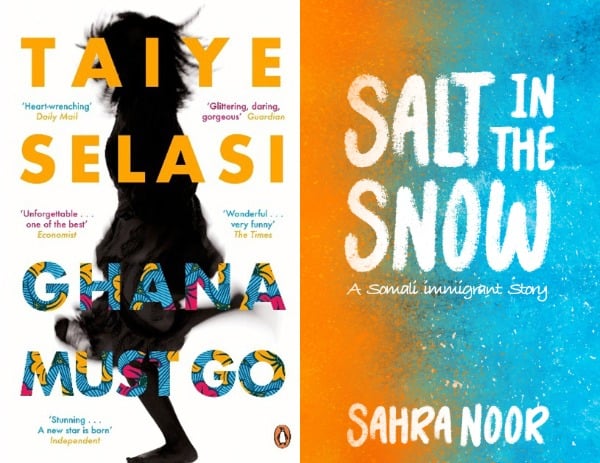
In Ghana must go, Taiye Selasi traces the Sai family across Ghana, Nigeria and the United States. The novel shows that identity, like belonging, is not fixed to one place. It is shaped by migration, experience and relationships. Selasi’s characters are African, but their identities exist across borders, hybrid and evolving. This is something I’ve also recently read in Sahra Noor's memoir, Salt in the snow: A Somali immigrant story, which is set to be published in June this year. Noor writes about migration, motherhood and her journey to belonging between two worlds – from Mogadishu to Minneapolis. Scholars like Achille Mbembe and Chielozona Eze argue that modern African identity is relational and transnational, not defined only by birthplace or ancestry. Afropolitanism, as a framework, captures this fluidity: being connected to multiple places at once, shaped by movement and global networks.
I see parallels with my own work. In some ways, the networks I navigate in publishing remind me of the way Afropolitan identity is described: fluid, cross-border and relational. I am an African publicist working for an American press, connecting authors, editors and readers across continents. My career, like Afropolitan identity, exists across places – digital, professional and cultural networks. I learned early that publishing, much like the African diasporic identity, is about navigating multiple spaces at once. It’s about making connections across borders, managing relationships that exist digitally, and shaping work that resonates globally. All the while, rooted locally.
My first real taste of this was with #ReadingAfrica, one of Catalyst Press’s online campaigns. Catalyst started Reading Africa Week in 2017 as an annual celebration of African literature, spotlighting writers from across the continent working in diverse genres. Last year, our theme was “Open horizons: Creating connections across continents”. The campaign unfolded across social media and Zoom, but its reach was far beyond screens – connecting people from Kenya, Eswatini, Cape Town, Egypt, France and the United States in real-time conversations about literature, identity and shared stories.
In one of our written panels, “‘Yes, we are that’: A conversation on queer African writing”, Chike Frankie Edozien, director of New York University, Accra, and author of Lives of great men, said: “What do we do with our literature; what do we do with the things we produce? We show the nuance. Because Africa is not one thing, right?”
He’s right. African literature is often treated as a single “genre”, but it spans everything from crime writing to poetry, children’s books to memoir. Africa is not one thing. And publishing African and diasporic writers makes that complexity especially visible because we live that complexity in our daily work.
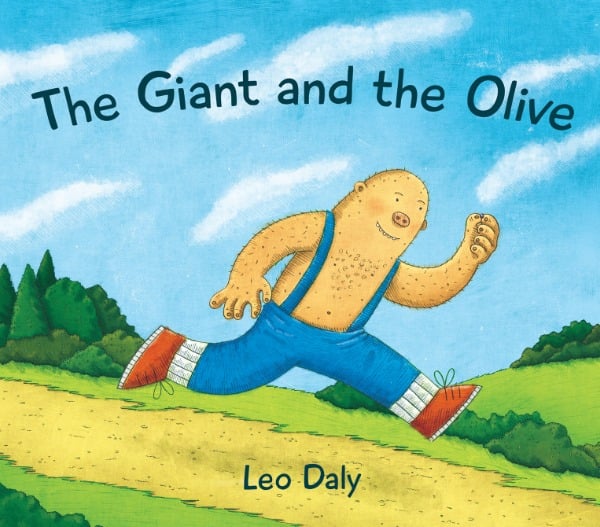
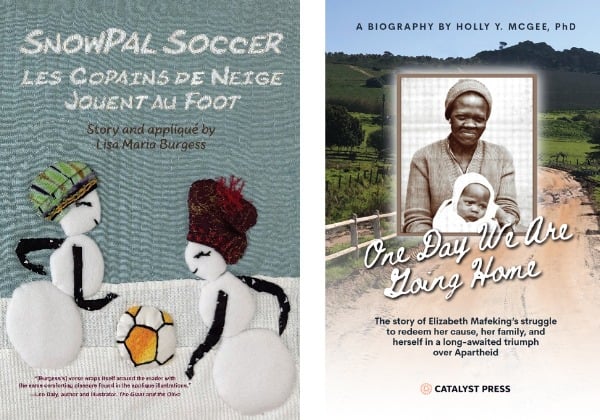
We connect a Kenyan author with an Ethiopian author for a cross-genre conversation about inherited histories. I email a children’s bookstore about two very different picture books: one about soccer and immigrant children by an American artist (Snowpal soccer by Lisa Maria Burgess), another about grief and a giant by a South African author (The giant and the olive by Leo Daly). I gather South African publicity efforts to include in press kits for promotion in the US. We send three emails just to coordinate a Zoom call across three time zones (daylight savings included). Last year, we published a biography about a South African activist, researched and written by an American scholar of African-American and African history (One day we are going home: Radical antiapartheid internationalism and exile by Holly McGee, PhD). And recently, I’ve started opening my emails like this: “Hi, I’m Tayla – writing from a sunny desk in South Africa (a somewhat small reminder of how connected the book world is, even when we’re in different time zones and seasons!).” Most days, I still wait for responses. But my note of connection has already arrived in someone’s inbox, oceans away.
In these digital, transcontinental and often invisible spaces, I’m learning what it means to engage fully – not just as a publicist, but as a professional, a writer, a reader and a South African working at an American press – in a globally connected, book-loving world.
See also:
In conversation with Jessica Powers, owner of Catalyst Press