

Hello
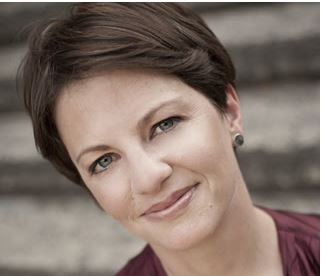
Amanda Ripley is the author of The Smartest Kids in the World--and How They Got That Way, a New York Times bestseller, and The Unthinkable. She writesfeature stories for Time Magazine and the Atlantic and speaks on various topics, including global competitiveness, education and parenting.
Bill Gates het 'n webwerf met die titel, Gates Notes, vol van Bill Gates se aktiwiteite en sy uitkyk op die bestaan en nog meer "belangrik" die boeke wat hy lees, en sonder enige twyfel is Bill Gates 'n briljante persoon en daarmee tesame 'n briljante leser. Vir 2013 is die aanhef van die boeke wat hy as die beste boeke beskou soos volg:
"I read mostly nonfiction because I always want to learn more about how the world works. And reading is how I learn best".
(Daarmee is ek in akkoord en seker hoekom ek nie op "eie pote" kan staan nie).
Hoe anders gaan 'n mens leer.
Onderwys is een aspek waarby Bill Gates weens sy Bill and Melinda Gates Foundation en persoonlike belangstelling 'n groot belang het. Daar is dus tonne boeke wat die onderwerp aanspreek en uitgelig deur hom en my aangepor het om van dit te begin lees. Onderwys is ook 'n belangstelling van my kant af en het ek soveel deernis vir die jonges wat aan die begin van hulle studies staan dat ek almal wil aanpor, "leer so hard soos jy kan" en ook om te verstaan wat die gebreke in onderwys sou wees. Daar is drie boeke op my Kindle & Ipad wat die onderwerp aanspreek en begin ek met die eerste een. The Smartest kids in the world and how they got that way van Amanda Ripley. Amanda Ripley is 'n ondersoekende joernalis by Time en 'n verskeidenheid van ander Amerikaanse publikasies.
Amanda Ripley is aan die woord:
=======================
The United States remained basically flat over time. Finland rocketed from the bottom of the world to the top and Norway, right next door, seemed to be slip sliding into the abyss, despite having virtually no child poverty? Canada, careening up from mediocrity to the heights of Japan. If education was a function of culture, could culture change that dramatically-that fast?
The vast majority of countries did not manage to educate all their kids to high levels, not even all of their better-off kids. Compared to most countries, the United States was typical, not much better nor much worse. But, in a small number of countries, really just a handful of eclectic nations, something incredible was happening.
Virtually all kids were learning critical thinking skills in math, science, and reading. They weren't just memorizing facts; they were learning to solve problems and adapt. That is to say, they were training to survive in the modern economy.
Education pundits had worked mightily to explain different countries' wildly different results. They insisted that Finland had attained this bliss partly because it had very low rates of child poverty. Poor kids lived with the kind of grinding stress that children should not have had to manage. They learned less at home, on average, and needed more help at school. If poverty was the main problem, then what to make of Norway?
Amanda Ripley in 'n poging om dit te ondersoek stuur toe drie studente na die lande wat die beste doen in onderwys:
Their names were Kim, Eric, and Tom. Kim traveled from Oklahoma to Finland, Eric from Minnesota to South Korea, and Tom from Pennsylvania to Poland.. (Video interviews with my student sources can be found on the website for this book at www.AmandaRipley.com.)
Maar eers moet PISA verstaan word.
In the spring of 2000, a third of a million teenagers in forty-three countries sat down for two hours and took a test unlike any they had ever seen. This strange new test was called PISA, which stood for the Program for International Student Assessment.PISA was developed by a kind of think tank for the developed world, called the Organisation for Economic Co-operation and Development, and the scientist at the center of the experiment was Andreas Schleicher.A test could that could measure the kind of advanced thinking and communication skills that people needed to thrive in the modern world. The promise of PISA was that it would reveal which countries were teaching kids to think for themselves.
Die land se leerlinge wat die beste gedoen het in hierdie toets en die bevindinge oor die hele spektrum van lande wat deel was van hierdie opname en toetsing:
The number-one country in the world was . . . Finland.
"In Finland, everyone does well and social background has little impact." The Germans, meanwhile, were devastated.
A student's race and family income mattered, but how much such things mattered varied wildly from country to country. Rich parents did not always presage high scores, and poor parents did not always presage low scores. PISA revealed that spending on education did not make kids smarter. Everything-everything-depended on what teachers, parents, and students did with those investments. Excellence depended on execution, the hardest thing to get right. The smart kids had not always been so smart. Historical test results showed that Finnish kids were not born smart; they had gotten that way fairly recently. Change, it turned out, could come within a
single generation.
Vir die kritici, is dit belangrik om die volgende te onthou en dit as 'n mantra te sien.
"Without data, you are just another person with an opinion . . . Without data, you are just another person with an opinion . . ."
Economists had found an almost one-to-one match between PISA scores and a nation's long-term economic growth. Many other things influenced economic growth, of course, but the ability of a workforce to learn, think, and adapt was the ultimate stimulus package.
Dit wat volg is die ervarings van die skoliere soos dit afspeel in die drie land en word daar begin met Kim in Finland en word daar begin met die standaarde wat gestel word aan die onderwysers en word dit soos volg beskryf. Kim se onderwyseres se naam is Stara en haar verhaal is soos volg:
To become a teacher in Finland, Stara had had to first get accepted into one of only eight prestigious teacher-training universities. She had high test scores and good grades, but she knew the odds were still against her.
She'd wanted to teach Finnish, so she'd applied to the Finnish department at the University of Jyväskylä. In addition to sending them her graduation-exam scores, she'd had to read four books selected by the university, then sit for a special Finnish literature exam. Then she'd waited: Only 20 percent of applicants were accepted.
All of Finland's teacher-training colleges had similarly high standards, making them about as selective as Georgetown or the University of California, Berkeley in the United States. Today, Finland's education programs are even more selective, on the order of MIT. Getting into a teacher-training program there was as prestigious as getting into medical school "elsewhere". The rigor started in the beginning, where it belonged, not years into a teacher's career with complex evaluation schemes designed to weed out the worst performers, and destined to demoralize everyone else.
A teacher union advertisement from the late 1980s began with this breathtaking boast:
"A Finnish teacher has received the highest level of education in the world."
All Finnish teachers were required to get a master's degree as part of six years of study. For one full year of her master's program, Stara got to train in one of the best public schools in the country. She had three teacher mentors there, and she watched their classes closely. When she taught her own classes, her mentors and fellow student teachers took notes. Afterward, she got feedback, some of it harsh, in much the way medical residents are critiqued in teaching hospitals.
The Finns decided that the only way to get serious about education was to select highly educated teachers, the best and brightest of each generation, and train them rigorously. So, that's what they did. It was a radically obvious strategy that few countries have attempted.The government abolished school inspections. It didn't need them anymore. Now that teachers had been carefully chosen and trained, they were trusted to help develop a national core curriculum, to run their own classrooms, and to choose their own textbooks. They were trained the way teachers should be trained and treated the way teachers should be treated. In Finland, the government paid
tuition for Stara and all university students. Stara was earning about $67,000. The cost of living was higher in Finland, but Stara's salary was still higher. And her salary was closer to what other college graduates earned in Finland.
Interestingly, large salaries did not necessarily coincide with greatness worldwide. But in higher-functioning education systems, larger salaries could help schools attract better-educated teachers and retain them over time, establishing a baseline of professionalism and prestige. In all the education superpowers, teachers' incomes were closer to the salaries of other college-educated professionals.
Wat gebeur dan:
Because teacher colleges selected only the top applicants in Finland and other education superpowers, those schools could spend less time doing catch-up instruction and more time on rigorous, hands-on training; because teachers entered the classroom with rigorous training and a solid education, they were less likely than American teachers to quit in frustration. This model of preparation and stability made it possible to give teachers larger class sizes and pay them decently, since the turnover costs were much lower than in other countries. And, since they had all this training and support, they had the tools to help kids learn, year after year, and to finally pass a truly demanding graduation test at the end of high school.
The subconscious effects were just as powerful:
"My Finnish school fostered a great deal of respect for the institution and faculty in the students. This can be partly explained by the academic rigors that teachers had to endure in their journeys to becoming educators. The students were well aware of how accomplished their teachers were."
Nou vir Eric in Korea en die rol wat ouers het om te speel in 'n kind se opvoeding en is die bevindinge in kort soos volg. Eric gaan tuis by 'n gesin in Korea en die volgende word gevind:
Eric's host mother did not send mixed messages. Her kids had to work hard-especially in English-and school took priority over everything else. She dealt with her own kids the way a coach might treat his star players. Her job was to train those kids, to push them, and even bench them to prove a point. Her job was not to protect them from strain. Most Korean parents saw themselves as coaches. Coach parents cared deeply about their children, too. Reading to them, quizzing them on their multiplication tables while they were cooking dinner, and pushing them to try harder. They saw education as one of their jobs.
When children were young, parents who read to them every day or almost every day had kids who performed much better in reading, all around the world, by the time there were fifteen.
It sounded like a public-service cliché:
Read to your kids.
Could it be that simple?
Yes, it could, which was not to say that it was uninteresting. After all, what did reading to your kids mean? Done well, it meant teaching them about the world. It meant asking them questions about the book, questions that encouraged them to think for themselves. It meant sending a signal to kids about the importance of not just reading but of learning about all kinds of new things.
As kids got older, the parental involvement that matter most was the following. All over the world, parents who discussed movies, books, and current affairs with their kids had teenagers who performed better in reading. Here again, parents who engaged their kids in conversation about things larger than themselves were essentially teaching their kids to become thinking adults. In fact, fifteen-year-olds whose parents talked about complicated social issues with them not only scored better on PISA but reported enjoying reading more overall. In New Zealand and Germany, students whose parents had read to them regularly in their early elementary years performed almost a year and a half ahead of students whose parents had not.
'n Kort samevatting in konteks tot die twee lande ondersoek:
In Korea and Finland, despite all their differences, everyone-kids, parents, and teachers-saw getting an education as a serious quest. This consensus about the importance of a rigorous education led to all kinds of natural consequences: not just a more sophisticated and focused curriculum but more serious teacher-training colleges, more challenging tests, even more rigorous conversations at home around the dining room table. Everything was more demanding, through and through.
In these countries, people thought learning was so important that only the most educated, high-achieving citizens could be allowed to do the teaching. Public respect for learning led to great teaching. Of course people respected teachers; their jobs were complex and demanding, and they had to work hard to get there.
One thing led to another. Highly educated teachers also chose material that was more rigorous, and they had the fluency to teach it. Because they were serious people doing hard jobs and everyone knew it, they got a lot of autonomy to do their work. That autonomy was another symptom of rigor. Teachers and principals had enough leeway to do their jobs like true professionals. They were accountable for results, but autonomous in their methods.
Kids had more freedom, too. This freedom was important, and it wasn't a gift. By definition, rigorous work required failure; you simply could not do it without failing. That meant that teenagers had the freedom to fail when they were still young enough to learn how to recover. When they didn't work hard, they got worse grades. The consequences were clear and reliable. They didn't take a lot of standardized tests, but they had to take a very serious one at the end of high school, which had real implications for their futures.
In the mid-1970s, a small number of economists and sociologists started noticing that academic skills were not all important. Over the next three decades, more and more studies showed that when it came to predicting which kids grew up to be thriving adults-who succeeded in life and in their jobs-cognitive abilities only went so far.
Hard work, these were core habits, workhorse traits sometimes summed up by the old-fashioned word character.
The problem with the word character was that it sounded like something you couldn't change. But these same researchers discovered something wonderful: Character was malleable, more malleable in fact than IQ. Character could change dramatically and relatively quickly-for better and for worse-from place to place and time to time.
So it was fair to assume that different communities and cultures did more-or less-to promote these traits in their children.
Could drive be cultivated in places that needed more of it?
Hierdie dryfkrag is toe getoets aan die hand van 'n opname wat studente in 'n verskeidenheid van lande voltooi het en gebaseer op die manier en volledigheid waarvolgens die studente die opname voltooi het. Is die volgende slotsom gevorm.
Conscientiousness-a tendency to be responsible, hardworking, and organized-mattered at every point in the human life cycle. It even predicted how long people lived-with more accuracy than intelligence or background. In fact, the country with the highest response rate on the survey had nearly the same level of child poverty as that of the United States.
That country was Poland.
Dit bring ons by die derde student.
Tom.
Tom was living in the transition that Finland and Korea had finished decades earlier. To see this change up close was the next best thing to time travel. Poland still had not joined the top tier of education superpowers, but it had dramatically improved its results in just a few years.
Die vordering in Pole blyk nie volbring te wees nie en is die reaksie van die minister, Miros?aw Handke, wat dit geloods het en uiteindelik weens omstandighede moes tou opgooi se reaksie soos volg:
Looking back, Miros?aw Handke wished he and his colleagues had done a better job selling the reforms. They had focused more on the policy than public relations, when they should have done the reverse. That was another common mistake, lamented too late in every time zone. Politics, history, and fear mattered more than policy, always and everywhere. Still, he consoled himself with the knowledge that controversy was inevitable.
"Every reform hurts. People want peace. When you're used to something, it's better when nothing is happening."
I asked him what he would do if he could go back and push for one last change before he died. He did not hesitate.
"The teachers. Everything is based on the teachers. We need good teachers-well-prepared, well-chosen. I wouldn't change anything else."
Poland had made a breakthrough nevertheless. It had proven that even troubled countries could do better for their children in just a few years. Rigor could be cultivated. It didn't have to appear organically. In fact, there was no evidence that it ever had, in any country. Expectations could be raised. Bold leaders who didn't know better could help to raise an entire generation of smarter kids.
======================
Daarmee dan 'n oorsig geneem uit die eerste agt hoofstukke van Amanda Ripley se boek en oop vir oorweging.
(Daar is nog twee titels waarby ek Saterdag wil kom om te publiseer vir volgende week).
Wat sal dan gedoen word om die skoliere hier ook te help?
Baie dankie
Wouter
Kommentaar
Hallo Wouter, hierdie keer het jy vir ons meer gegee as iets om oor te dink. Dis iets wat die land aan die brand kan steek – en nou verwys ek nie na die tradisionele en huidige gebruik van vuurhoutjies nie, maar na metodes wat ware hoop en resultate aan selfs die allerarmstes bied.
Self is ek maar dom en as ek werklik 'n artikel geniet, het ek die manier om die belangrikste punte te herhaal – dit help minstens vir die ouens wat te lui is om jou hele artikel te lees!
Laat ek begin: “... critical thinking skills in math, science, and reading.” Dis die enigste plek waar ek nie heeltemal saamstem nie – lees is nommer een. Intelligente lees gevolg deur skriftelike en mondelinge taallesse en mettertyd het jy kommunikasievermoë waarmee die wêreld aangedurf kan word. 'n Wiskundige of wetenskaplike wat nie kan kommunikeer sit met kennis wat nie aangewend kan word nie.
Nog aanhalings:
Economists had found an almost one-to-one match between PISA scores and a nation's long-term economic growth. Many other things influenced economic growth, of course, but the ability of a workforce to learn, think, and adapt was the ultimate stimulus package. [Hierdie woorde = 'n doodsvonnis vir ons land.]
It was a radically obvious strategy (hoë opleidingstandaarde) that few countries have attempted.
… parents who engaged their kids in conversation about things larger than themselves were essentially teaching their kids to become thinking adults.
Public respect for learning led to great teaching. Of course people respected teachers; ...
The problem with the word character was that it sounded like something you couldn't change. But these same researchers discovered something wonderful: Character was malleable, more malleable in fact than IQ. Character could change dramatically and relatively quickly-for better and for worse-from place to place and time to time. [Daar is HOOP!]
Poland. They had focused more on the policy than public relations, when they should have done the reverse.
Everything is based on the teachers. We need good teachers-well-prepared, well-chosen. Wouter se opsomming is die antwoord op ons land se onderwysprobleme – ek oordryf nie. Eerstens moet net die beste matrieks vir onderwys gekeur word en opleiding van die hoogste standaarde verskaf word. Dis nie nodig om lang ondersoeke te loods nie. Ons kan net Finland navolg. Natuurlik moet alle gemors uitgeskakel word (ek verwys na mense) en daar kan by Number One begin word.
Dankie Wouter!
Wel...'n hele bekvol...maar ek het verskeie Koreaanse studente gehad al, en een van hulle was briljant, maar die res was werklik power, veel swakker as enige student wat ek al in SA raakgeloop het bv.
Hello George,
Hello FW,
Wat om te maak met staaltjies. Vir elke staaltjie van jou het ek ook 'n staaltjie, dit is hoekom argumente gevoer deur staaltjies nie die manier is om te gaan nie, wanneer daar sou gepoog word om werklik sin te maak van die werklikheid rondom ons.
Daarom is sekerlik vir elke "dom Korean" wat jy ontmoet het, 'n slim een ook.
Onthou die brief het duidelik melding gemaak van die resultate van die toets gedoen in die vorm van PISA en hoe die studente daarin gevaar het.
Dit toets nie hoe goed jy onthou nie, maar hoe goed jy dink en daarvolgens het Korea en Finland uitstekend gevaar en die top plekke behaal.
Maar wat jou Sjina betref, in die volgende brief word Sjina se sukses ook bespreek en sal dit sekerlik jou verbaas.
Baie dankie
WF