Walter Whall Battiss was one of South Africa’s most innovative and rightly most celebrated artists. His jocular personality combined fine disregard for the hypocrisy of the South African cultural and political establishment with a passionate commitment to free thought, which throughout his career enabled him to exercise his artistic talents without conforming to any expectations. This gentle anarchistic element in his disposition resulted in the creation of the imaginary Fook island in the middle of Pretoria with all the necessary trapping of an idiosyncratic language, currency, travel documentation and postage stamps that were put to good effect by Battiss where ever he could. His artistic oeuvre was multifaceted and seemed to draw as much from the celebrated rock paintings Battiss became intimately acquainted with, as it did from contemporaries such as Picasso and various exponents of the pop art movement he experienced whilst travelling throughout Europe and the Unites States..
Battiss was born and spent is his boyhood in Somerset East where his parents managed the Battiss Private Hotel at 45 Paulet Street is now the Walter Battiss Art Museum. The museum was opened still in Walter Battiss’s life time on 24 October 1981 after a long iteration of possibilities were investigated going back as far 1975 when he announced at a post exhibition talk his intentions to establish an art gallery in the town. His involvement was continuous and with the benefaction of two local medical practitioners Dr Vosloo and Dr Erasmus a suitable building was acquired and renovated. Battis promise a donation of 80 works at the time andf Prof Murray Schoonraad invited artist friends of Battiss to contribute to the holdings of the museum.
Prof Schoonraad’s who was actively involved in establishing the museum assessted the nature of the collection as follows:
“The collection eventually brought together in the museum consists of 58 works by Walter Battiss, 17 by invited artists,4 by Somerset East artists and a portfolio of 20 graphics by various South African artists. The paintings by Walter Battiss are of varied quality: some are outstanding, other are merely preparatory sketches for larger works. Generally, the standard of the watercolours and drawings is very high. The works do not represent a definite period of his art, nor do they represent a comprehensive collection. With the exception of two paintings, all the works date fomr the ‘70s and early ‘80s. Probably the most important painting on the exhibition is Father and Son in the Rocks, 1949. This work was on of the South African entries for the 25th Venice Biennale. It caused a furore in the South African press and even had repercussions in Parliament when, after a photograph of the painting had appeared in a newspaper, the public complained that it was an unworthy representative of South African art. This oil painting shows to flattened elongated figures embracing each other among fifteen symbolic rocks represented by flat patches of toned-down colour on a background of well-textured paint applied with a palette-knife. It reminds one of prehistoric rock shelters, and it represents an important stage in the development of abstraction in Battiss’s work. It was the culmination of several years’ work in which he strove to achieve simplification of form and expression. He had begun it in 1942 and altered it some years later – for Battiss an unsual procedure.
The collection consiste mainly of paintings, drawings and graphics available in Battiss’s studio after his touring retrospective exhibition of 1979/80. His intention was to make the collection more representative by adding paintings of his choice from time to time. Despite the fact that the collection does not reveal the versatility of the artist or provide a comprehensive overview of his oeuvre, it affords the viewer the largest public collection of his works and it is well worth a visit”
A selection of 33 works including the controversial Venice Biennale entry will be on view at the at the Sanlam Art Gallery from 20 March 2012.
Images Available:
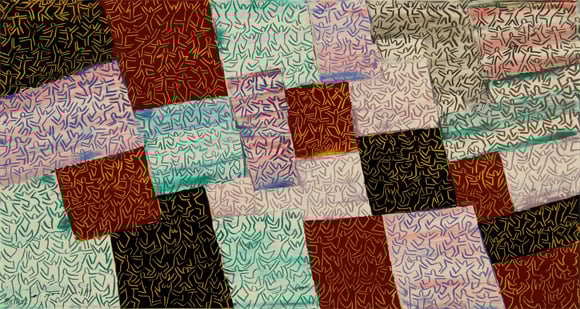
1. Running Pegile, 1979, oil on canvas, 670 x 1230 mm
2. Figures and Rocks, n.d. oil on canvas, 610 x 760 mm
3. Aristophanes’ Dog, n.d., oil on canvas with wooden totem, 410 x 510 mm
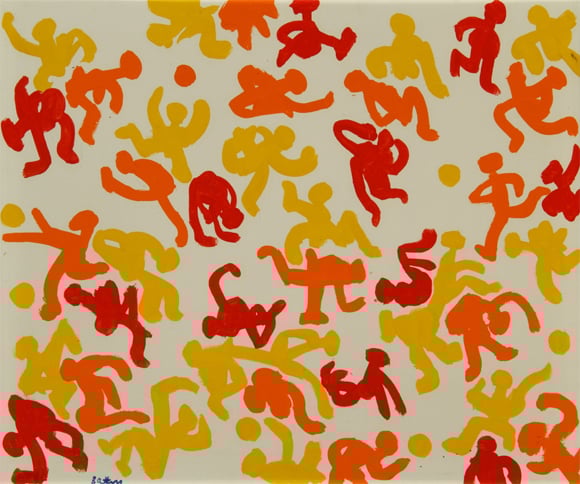
4. It’s a Ball Game, 1979, oil on canvas, 500 x 600 mm
5. Bird Making a Nest on a Man’s Back, n.d., screenprint, 430 x 620 mm
6. Polynesia, 1981, oil and mixed media collage on canvas, 600 x 800 mm
7. Man exploding,n.d., oil on canvas, 350 x 450 mm
8. Fragments, 1981, oil on canvas, 600 x 800 mm
9. Father and Son in the Rocks, 1946 – 1949, oil on canvas 600 x 760 mm
10. Karoo Ghost, n.d., oil on canvas, 450 x 510 mm
11. Strange Karoo Object, n.d., oil on canvas, 350 x 460 mm
12. Girl and BirdI, 1981, oil on canvas, 600 x 510 mm
13. Ball GamesI, 1980, oil on canvas, 360 x 460 mm
14. Birds at Sunset, n.d., oil on canvas, 400 x 520 mm
15. Girl dancing in the wind, oil on canvas, 410 x 500 mm
16. Morning, n.d., oil on canvas, 360 x 460 mm
17. St Francis, 1980, oil on canvas, 400 x 300 mm
18. Polynesian Bed, 1979, water-colour on paper, 260 x 340 mm
19. Mask, 1979, oil on canvas, 250 x 450 mm
|
Running Pegile, 1979, oil on canvas, 670 x 1230 mm
|
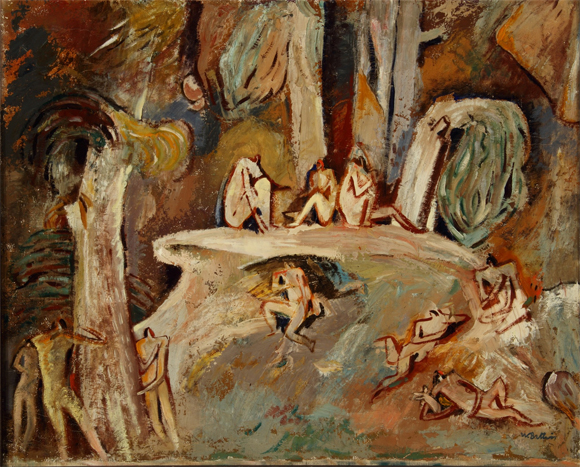
Figures and Rocks, n.d. oil on canvas, 610 x 760 mm
|
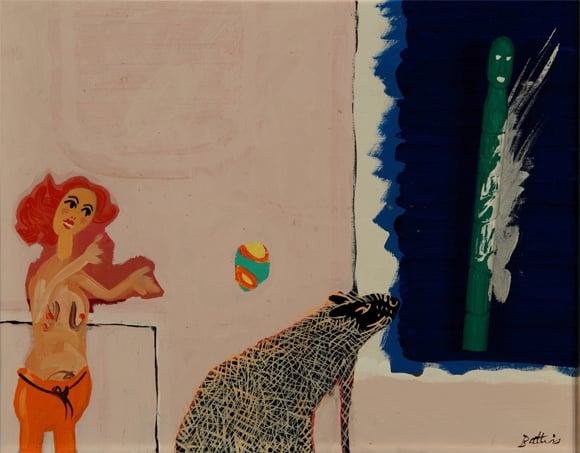
Aristophanes’ Dog, n.d., oil on canvas with wooden totem, 410 x 510 mm
|
|
It’s a Ball Game, 1979, oil on canvas, 500 x 600 mm
|
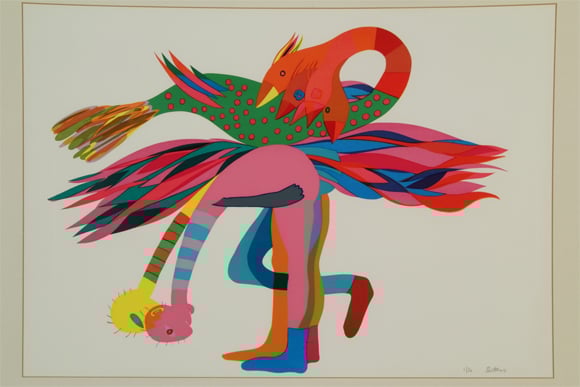
Bird Making a Nest on a Man’s Back, n.d., screenprint, 430 x 620 mm
|
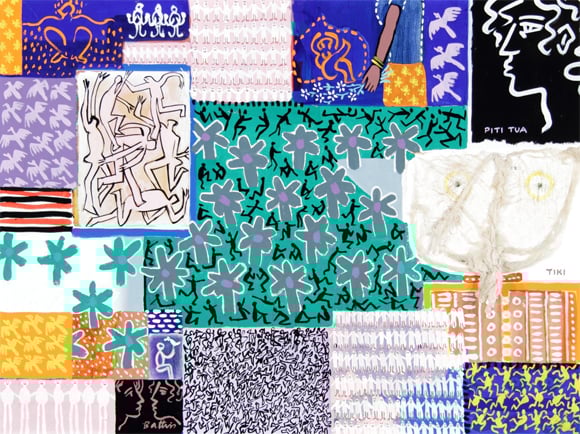
Polynesia, 1981, oil and mixed media collage on canvas, 600 x 800 mm
|
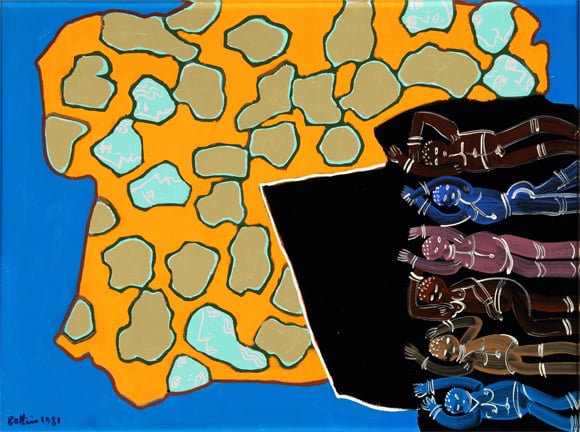
Man exploding,n.d., oil on canvas, 350 x 450 mm
|
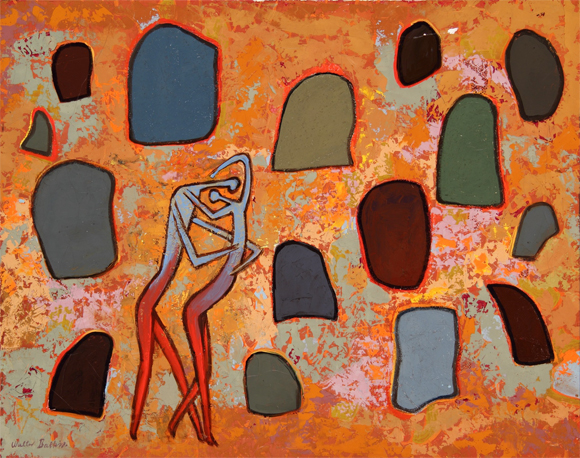
Fragments, 1981, oil on canvas, 600 x 800 mm
|
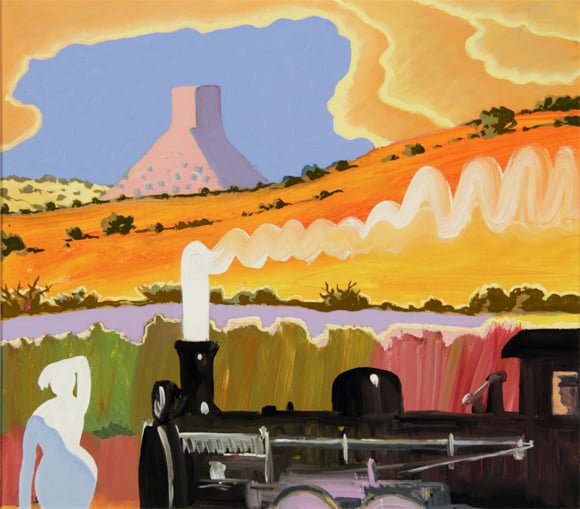
Father and Son in the Rocks, 1946 – 1949, oil on canvas 600 x 760 mm |
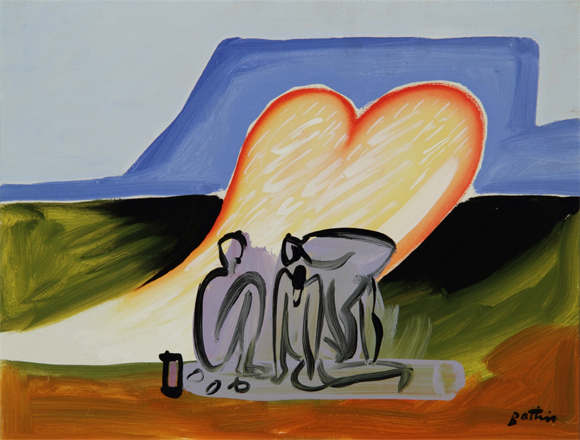
Karoo Ghost, n.d., oil on canvas, 450 x 510 mm
|
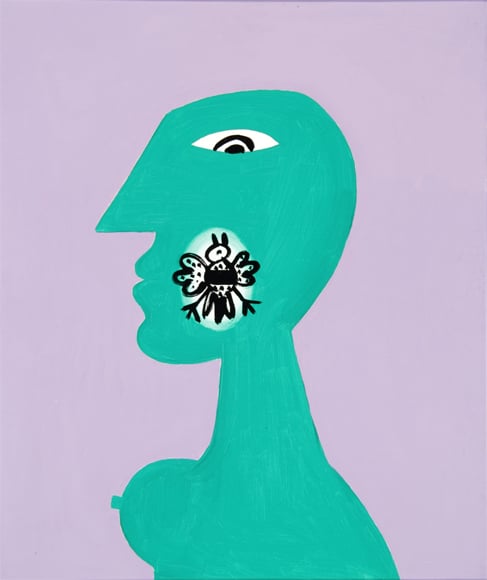 Girl and BirdI, 1981, oil on canvas, 600 x 510 mm |
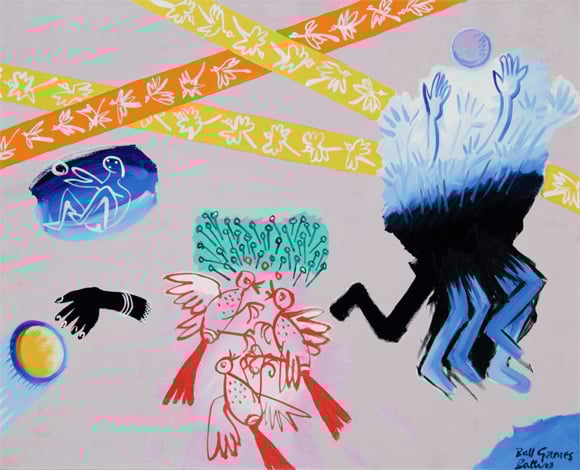
Ball GamesI, 1980, oil on canvas, 360 x 460 mm
|
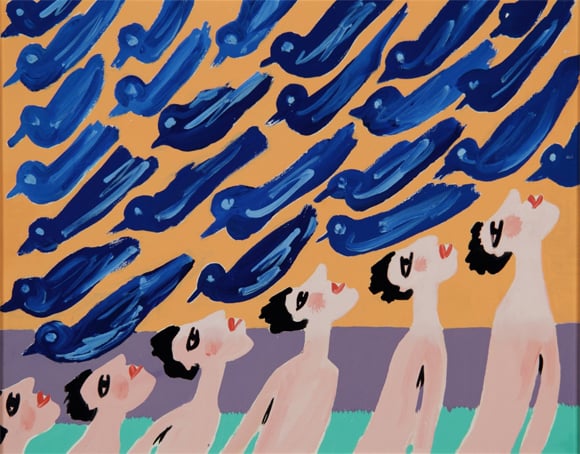
Birds at Sunset, n.d., oil on canvas, 400 x 520 mm
|
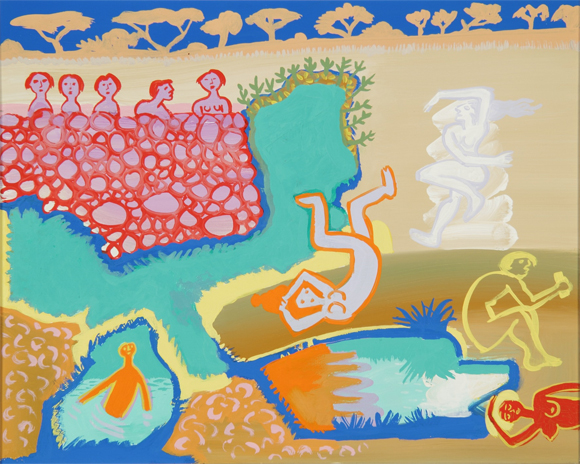
Girl dancing in the wind, oil on canvas, 410 x 500 mm
|
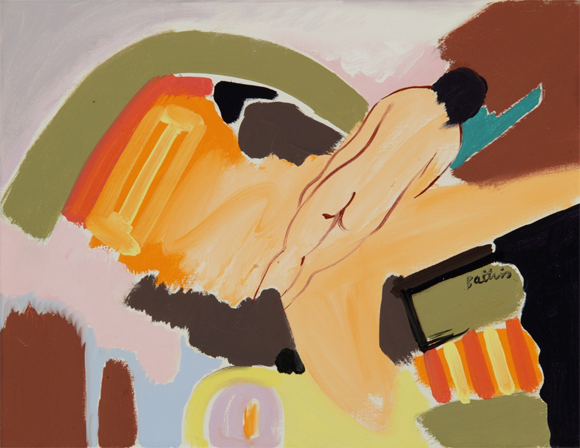
Morning, n.d., oil on canvas, 360 x 460 mm
|
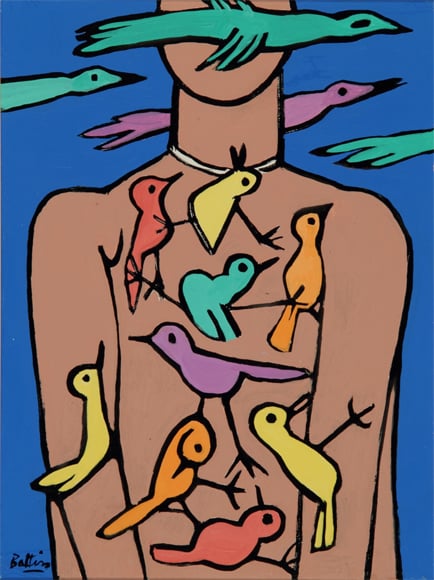 St Francis, 1980, oil on canvas, 400 x 300 mm
|
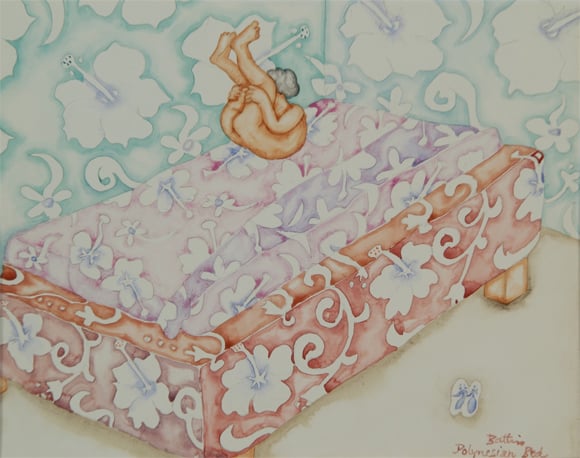
Polynesian Bed, 1979, water-colour on paper, 260 x 340 mm |
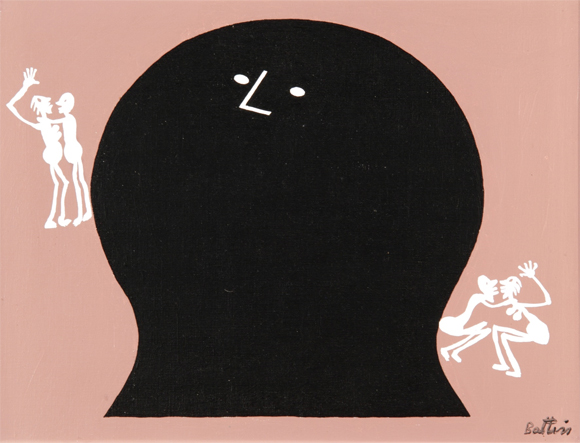
Mask, 1979, oil on canvas, 250 x 450 mm
|