
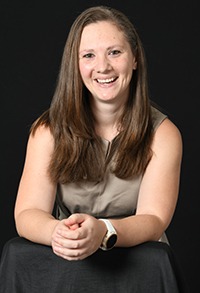
Anja du Plessis
Anja du Plessis is an associate professor and an NRF Y2-rated researcher specialising in water resource management. She has written three books, published several peer-reviewed journal articles and conference proceedings papers, contributed to various reports, and written commentary research articles related to the current global, regional, national and local water challenges. She is a known water management expert with a wide-ranging public expert profile.
Her research has been featured in several international, continental and national television and radio interviews, as well as in other forms of media. She is actively involved in engaged scholarship, providing comments and consultative services on current water-related issues on varying scales, and has acted as a speaker and panellist at several conferences and conventions. She has also served as a consultant since 2015, completed various projects, and been appointed as a research associate and/or consultant for companies in the private sector as well as for government. She is a core member of the Johannesburg Water Forum. She is a member of the leadership group of the Department of Water and Sanitation’s Platform for Water Secure Gauteng as well as the Vaal Anti-Pollution task team as an expert, on invitation and request from the Director-General, Sean Phillips. She has also been selected by the Presidency to be a part of and to assist with the comprehensive South African Climate Plan Project.
Du Plessis has an established public expert profile as a known water management expert due to her continued research, engaged scholarship, consulting and community outreach. Her research is focused on evaluating the current state of water resources (availability and quality), assessment of water-related risks (environmental, human health and socio-economic activities), evaluation of the possible effects of increased climate variability, possibilities of nature-based wastewater treatment solutions and/or opportunities, as well as good governance and water management within different contexts to ensure current and future water security.
The fundamental part of her continued work is the assessment of water quality and availability (surface and groundwater resources), analyses of access to water and sanitation infrastructure, reliability and standard of potable water supply, water and sanitation service delivery, and the evaluation of the possible effects of increased climate variability on water resources, human livelihoods and socio-economic development. Her work also focuses on the value of engaged scholarship, the use of citizen science and the important role which her work can play in creating awareness and ultimately the empowerment of vulnerable and rural communities. Lastly, her research focuses on water governance and management decisions, and on water-related risks to ultimately provide suitable recommendations, strategies and/or action plans for informed decision-making and overall water security.

Watervoorsiening in Suid-Afrika
2024-12-05Watervoorsiening is onder druk weens wanfunksionele en korrupte munisipaliteite, diefstal, besoedeling, waterskaarste, en so meer: Stuur die land op ’n ramp af?