

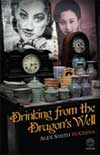
 Drinking from the dragon's well
by Alex Smith
ISBN: 9781415200612
Category: Fiction
RRP: R155.00
Click here to find out more about the book
Alex Smith's first novel, Algeria's Way, was published in 2007 and was partly written and amplified on the visit to China. Her latest book, Drinking from the Dragon's Well (2008), is, among other things, part memoir, part travelogue, telling of her amazing experiences as a teacher of English in China in the city of Wuhan in 2006.
Wuhan is inland, about 500 miles west of Shanghai. It's terribly cold in winter and the opposite in summer. Her descriptions of the place make it abundantly clear that it is certainly not as nice as Shanghai, and far from the complexities and intricacies of Beijing, which, as we come to read about later, she adores.
Of the place and her initial, general impressions she writes: "It's chaste, like Coetzee's (JM - PLM) writing. No room for frivolity or ornament for the sake of ornament. Hot, humid, mossies hissing, raining, bleak and lonely ... Not sure if I'll survive. It's worse than I imagined."
As they inevitably do, things change and she grows into the place and the place grows on her. Her storytelling ability is a strong one, and she engages the reader throughout the book.
It can be no easy task writing a book about the experiences of a subculture. Not having any knowledge of the language does not help. But Alex Smith provides a highly readable account of her teaching experiences and time spent in China and Taiwan. Her determination and progress to get to know something of one of the world's largest cultures come through richly in her descriptions.
As any aspiring foreign teacher looking for a job in a vast land would do be doing, she is effectively exploring uncharted territory, but her expectations are high. Naturally, the paramount challenge for anyone finding him- or herself in a foreign country is the language. And Chinese is known to be one of the hardest, even for native Chinese, let alone foreigners! The irony is that a teacher of English in China has to learn Chinese to communicate ... at least to arrive at some level of proficiency.
And it is said you need to know 5 000 characters well before you can even begin to think about reading a newspaper.
Writing characters - strokes are from left to right and top down, radicals are left to right, top to bottom, and outside before inside - can get you into all kinds of trouble if you get it wrong, something that is bound to happen. Most of all, however, explains Smith, writing characters requires discipline, and perfecting them "within the restraints of good order is meditative and soothing".
Practising writing characters is ongoing if you want to learn properly, and so there was every reason to buy the special notebooks with squares for writing the characters.
Appointing the room where she stayed meant having to find local material for the decor: "eight lucky metres of excellent silk - half of it embroidered with turquoise, gold and pink peonies and the other half woven with red and purple symbols of something certainly auspicious".
Writing to close friends and family gives the opportunity to share the Chinese experience with someone as close as her beloved grandmother. In between sipping green tea Alex composes postcards which she sends home. She tells about her friends, some of whom are also teachers of English, while some are students who become friends "when class ends".
It is a tough task to get the students to speak English - the main reason for her for being in China! They are initially shy and tired after the day's work, but her creative methods invoke the necessary interest. She introduces her lessons around a world hero, Nelson Mandela. Time spent with her students enables her to learn from them, as they do from her.
When they were asked about their favourite journeys, one student replied: "Beijing is my favoured journey. I like to live in the sky." Another says, in pidgin English, "One day when I honeymoon, then live in a city with middle-class scale." Yet another: "My journey of life I'd like to live somewhere over the rainbow."
The book has notes to the text, explaining important information for the reader. Being in China enables Smith to give inside information. She dispels the myth that China is capitalist. Despite the opening of borders to international trade, which is certainly evidence of some capitalism flourishing in the country, China is in essence communistic. There is only one party - the Communist Party.
Each of the chapters in the book begins with "an auspicious blessing" in writing and pictures representing traditional Chinese good luck. In one of the chapters there is a picture of three sheep and three suns represented by flowers. This is in contrast to a visit to icy Beijing, where there was no one to talk to over the Christmas period, and she lived on a diet of rice cookies.
Travelling has its trying, lonely and tough moments. But there was something good to come out of the journey. The city warmed her. She found digs close to Tiananmen Square, Leo Hostel, full of people who could speak English.
Avid reader that she is, Alex shares her eclectic choice of books in the novel; finding a city with lots of books was sheer delight for her. Her laudatory remarks that Disgrace could be found in a bookshop in China shows just how much she values reading and writing. For her as a passionate tea drinker, finding Lao She's The Teahouse was a joy.
The itinerant Smith walked Beijing and surrounds flat to the extent that her "long black coat from London dragged through the Beijing sludge until its good cashmere and wool fibers were soaked and crinkled". A letter to Grandmother Connie in Cape Town tells the story of Alex in Beijing: it's cold but heavenly; she visited the "king of all teahouses"; she spoke to many people about nothing and that was bliss; Beijing restored her, she loves it dearly; she likes dumplings; she enjoys the restaurant owner cum photographer whose work hangs on the walls, and these works tell the story of a bygone age, as a new city waits to flourish; and she says progress does not like "squalid teapots in dirty alleys and soon there will be none, so I'm making a point of drinking copious cups of tea". Appropriately, the chapter is about the story of the last book she bought in China, (The Teahouse), which includes the tale of a magnificently squalid teapot.
The tea-drinking motif from Alex's side, and her experiences, are a strong theme throughout the novel. Before you can have tea, of course, you need water, hence the saying she uses for one of her chapters: "Water benefits people. Make sacrifices to the God of wells."
And if there is no tea, it can change everything. This was evident on the day there was no water, and hence no tea. Having to face her recalcitrant class 4.4.12, Alex came up with some questions: "First, what inspires you most in life? Second, if you had one message of wisdom to pass on to humanity, to all the people in the world, what would it be?"
The nineteen-year-old Ping said as her message of wisdom for humanity: "Nobody stand (sic) still. If you're not going ahead, you're falling behind. In our highly technological society the number of jobs for unskilled workers is shrinking. So we must promote ourselves at any time. Learn more and more knowledge. Master more and more useful skills." From this kind of answer it is clear that Alex had honed her skills as an effective teacher of English to the Chinese, even though she did not think so herself.
Another recurring theme in the book is the reference to her Spanish novel, inspired by a trip to Spain. Before she left for China, fellow student Nicholas Dall back in South Africa had encouraged the acquisition of a novel that would occupy her with a lot of reading, and since Nicholas was a student in the Romance languages, he recommended Cervantes, hence Don Quixote in China: "Whenever I read Don Quixote, it reminded me of my own much thinner Spanish novel, and I wondered if it would ever be published." Before leaving South Africa for China, she delivered her skinny Spanish novel to Umuzi. Perhaps a visit to China would offer opportunities to write it up more, something we read of when working through Drinking from the Dragon's Well. It must have been a challenging task immersing oneself in two totally different subcultures as Alex did!
Judging from reading Drinking from the Dragon's Well, Alex is upbeat about almost everything, apart from minor disappointments. And so she looks forward to luck: "There is a bat in the sky" is the inscription she uses to introduce one of the chapters. This is another lucky charm idiom. And she thinks about the manuscript of the Spanish novel, currently with the reader in Johannesburg, and at the same time she is told of the option that Umuzi has on her "travels in the East". Things are moving for Alex.
Alex's experiences as a teacher of English included time spent in Taiwan. Written Taiwanese uses traditional Chinese characters, which embrace the 5 000-year-old culture, whereas mainland China simplified the writing during the Cultural Revolution. So it remains a hard task if you want to learn the language! The stories behind her attempt to get a job in Taiwan is a story in itself - the people she meets, the tests she has to undergo, and meeting another writer! His is a novel about a dirty old man who writes to the world about what masturbation is really like. In the novel the dirty old man dies and is saved by a porn star angel. The two writers shared their experiences about writing, Alex recounted that she has written a Spanish novel.
Alex shares her insights into life in Taipei: traffic roaring, mopeds and scooters flitting by. It's not a place she could easily survive in, she thought at first, and "prayed to God and the god of publishers and green tea that my Spanish novel would be a book soon, and that it would sell well". But living in Taipei was certainly an education. She changes from tea to Gin Fizz, a drink with bubbles and tang. The tea is as different as the countries China and Taiwan are. One thing in common, though, is the universal language of searching to find "that pearl of a Chinese story", and this is "through the language".
Teaching in Taiwan was a different experience, because the demand there was from high flyers such as bankers, accountants, stockbrokers and marketing directors. Yet without them Alex would certainly never have learnt about the real behind-the-scenes differences between Taiwan and China, "of the island's warring Blue and Green governing parties, of manifold corruptions, and of the loved and hated, nearly assassinated president of that island of legendary bookshops".
Constant references back to South Africa, Cape Town and environs are her nostalgia: Lourensford, 95 Keerom Street, UCT, Nick Dall in Mendoza, Wine-WP, L'Ormarins and other references; and these show her great love for other spaces. She fits them into her writer's memory, as she does her experiences of Spain, and now China and Taiwan.
In many places in the book Smith refers to JM Coetzee's Disgrace, which as a well-travelled copy she leaves behind in Taiwan; and as she ends her writing she thinks back to her inspirational grandmother with her green typewriter. One day, even in the absence of the much searched for Chinese pearl, something will come in its place, although for Alex Smith, acknowledging her inspirational grandmother as the fons et origo for her writing, it really is all about the story, the story which should be allowed to come, to go, as is suggested by the idiom from West Africa.
And so, her story is the pearl, uncultivated, produced through hard grind, splendid in its final form. Drinking from the Dragon's Well is a true gem.