

...
There are some schools of thought which say that art shouldn’t be political. Expecting humans to remove their experience of art from the social and political environment they are immersed in is not only unfair, but foolish.
...
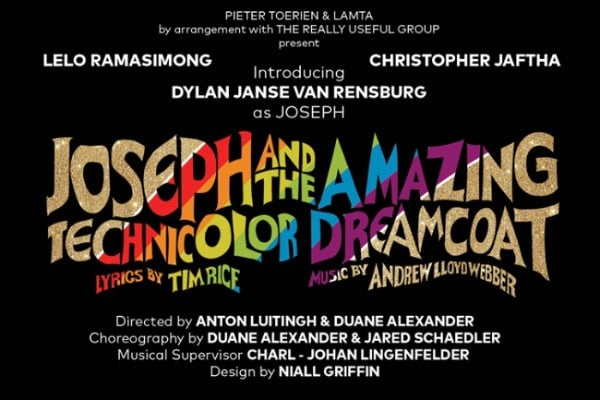
The first time I watched Joseph and the amazing technicolour dreamcoat (with music by Andrew Lloyd Webber and lyrics by Tim Rice) was on the screen of a box TV at my junior school. The music teacher put it on for us. A Bible story from my childhood, put to music and dance. It was perfect. And so, I was thrilled to arrive at the Theatre on the Bay for an evening performance of this iconic show.
The venue is intimate, but still large enough for a buzzing atmosphere. I haven’t heard the music in years, and so this will be like hearing and watching it for the first time. The sound of crickets and chirping night-time creatures sets the mood in the auditorium. The stage is bathed in tawny beams of light and framed in hieroglyphs. The earthy tones are swallowed by a riot of colour, and the audience roars in excitement. They know what they are here for, and there is no holding back.
Lelo Ramasimong, as our narrator, introduces us to the titular character, Joseph. He is sleepless in a spotlight, with shrouded figures curled up in shadows around him. The stage lights up again with “Jacob and sons” to introduce us to the rest of the cast, a band of hippies in denim and earthy tones with colourfully patterned shorts and jackets and long hair. A few bare chests flash through open buttons to complete the ’60s-inspired look.
Dylan Janse van Rensburg plays Joseph with a starry-eyed sense of innocence and just a hint of boastfulness. In the first act, the plot happens to him rather than being driven by his decisions, but he transforms as the second act unfolds – a young man who grows to meet his destiny. Janse van Rensburg has cultivated a distinctive vocal sound. It is, at times, too nasal for my taste, but he sings very well, with heart and sincerity in every word.
My partner next to me remarks that those who admire the male body seem to be having the most fun, as Joseph is rendered shirtless most of the time and many cast members show off athletic physiques. I do agree with him. The show is family-friendly, despite Potiphar’s wife’s (Yethu Kibi) best efforts to change that.
Chris Jaftha as Pharaoh summons the spirit of Elvis into the building, complete with adoring fans and screaming groupies. Most of his words are unintelligible, but the character and energy are there. I do not begrudge the task of emulating the suave Tennessee accent while still being heard over a rock and roll track. It is challenging, to say the least. Perhaps that is why it is already written in, that Pharaoh might repeat his verse for Joseph’s clarity. King of my heart is better articulated and heard more easily over thinner instrumentation. It is also amusing to watch Pharaoh’s boys take over from the ladies in trying to flatter their king.
It is always evident when directors have properly supported their cast in realising and portraying fully formed characters. This production is one in which it shows. Anton Luitingh and Duane Alexander have eyes for detail. It is the details in how each performer moves and relates to those around them that make their characters as vivid and colourful as the technicolour coat itself.
Aside from a few props now and then, the stage is bare. The flashing background with moving doors and the lighting really create the set changes from the yellowy tones of Canaan to the darkness of a cell and the stars of celebration whirling across the floor. Solid set pieces would only obstruct the dance sequences in this production.
Duane Alexander and Jared Schaedler’s choreography creates a driving energy propelling the narrative. The asynchronous sequences are particularly impressive, weaving together seamlessly. There are no missteps. Each moment is blocked with the perfect gesture or step to enhance the mood. Each character carries their emotions through their bodies in a way that is hard to capture in words. You just have to see it to know!
Throughout the show, Ramasimong stands out for me. Not only is the narrator an anchoring presence in the plot, but her soulful voice is rich in expressivity. She is perfectly cast for the role of a guide through this adventure.
One more angel in heaven is by far my favourite part of the show. Jasmine Minter as Girl 1 really steals the show for a minute, swinging into the song with a wail more beautiful than that of any mourner I’ve ever heard. Her vocals and acting are at once gorgeous and hilarious. The tempo picks up, and the ensemble unleashes a flurry of stunning dance moves and fantastic singing. It is outrageous in the best way possible, and the comedic beats within the scene make it the highlight.
A story based on the bestselling book of all time is bound to have direct references to it. Joseph is a figure from the Old Testament, and Tim Rice chose his lyrics in order to reflect the prophecies and promises of God to his children – the steadfastness of their Father in heaven and a promised land. From a biblical perspective, it seems only right that the Israelites – having been in bondage and in exile – would place their hope in the promise of a land without these ills. This comes through during one of the few serious moments in the show. “Children of Israel are never alone. For we have been promised a land of our own.”
The lyrics of Close every door might have been conceived as an expression of hope and resilience, but today they echo the justifications for genocide and settler colonialism that have been spat at those decrying the slaughter in Gaza and the sacking of the West Bank. Indeed, these words have been used since the Nakba in 1948, when thousands of Palestinians were murdered and ethnically cleansed from their ancestral home. It is why Gaza exists in the first place. An open-air prison from which some can see their stolen lands and houses in the distance.
Joseph might dream of bowing stars and sheaves of wheat, but for two years, millions have lived a waking nightmare. Mothers and fathers searching through rubble, doctors kidnapped from their hospitals, journalists martyred in their “Press” vests, teenagers braving bullets for flour and infants starved to death. It is these images that I have in my mind during the interval.
The show finishes with the audience on their feet, clapping to the beat of Joseph megamix. The cast take their bows in between dance moves and final melodies.
Joseph and the amazing technicolour dreamcoat will dazzle and amuse most of Cape Town. An unfortunate (or maybe fortunate) minority may find themselves alone with a sense of despair.
There are some schools of thought which say that art shouldn’t be political. Expecting humans to remove their experience of art from the social and political environment they are immersed in is not only unfair, but foolish. Art is political by its very nature. It emerges from politics and through politics, and it sometimes shapes politics. Similarly, there are some people whose very existence is politicised, and they often concern themselves with reading between the lines and interrogating artists and their art out of necessity. I could go on for pages and pages, but I will end this review with a question.
What is our responsibility, as lovers of music, dance and storytelling, when presented with a canonical work that is no longer aging gracefully? To me, one thing is certain: such works will continue unchallenged as long as paying crowds still cheer for them.